What Guests Really Want to See on Your Hotel Website
(To Book Direct)
Category: Booking Engine | Reading Time: 10 Minutes | Author : William Tang
Every hotel has a website, but very few are strategically built to convert casual visitors into paying guests. Across highly competitive hospitality markets in Malaysia, Singapore, Indonesia, and the Philippines, simply maintaining a digital brochure isn’t enough. Understanding exactly what guests really want to see on your hotel website the second they land on your homepage is the critical difference between a high bounce rate and a confirmed reservation.
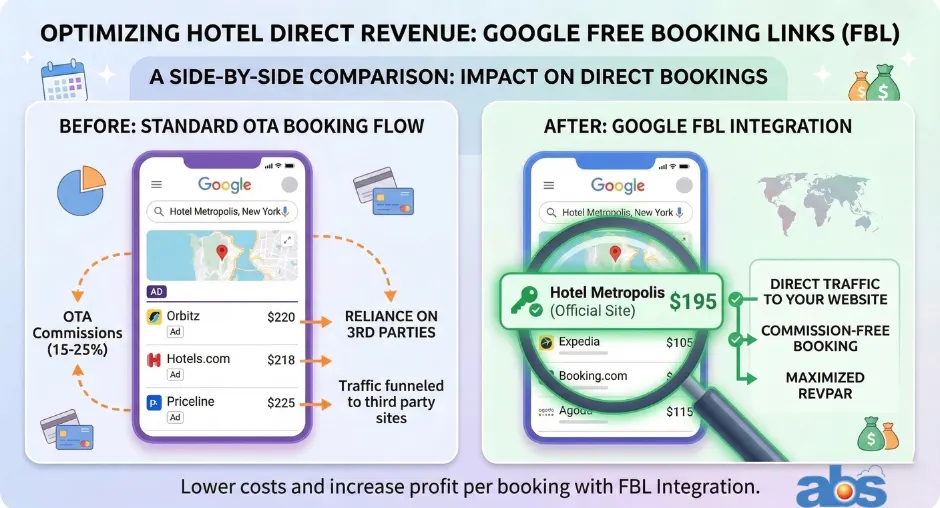
To effectively reduce OTA (Online Travel Agency) reliance, bypass steep commission fees, and drive a profitable direct booking strategy, your frontend design must work seamlessly with a powerful backend, like the ABS Property Management System. If you want to turn browsers into loyal bookers, here are the six essential features modern travelers are actively looking for before they hit “Book Now.”
1. High-Quality Visuals Potential Guests Want to See
Your website’s visual impact is your first and often your only chance to make a spectacular impression. When travelers search for what they want from a hotel website, stunning imagery tops the list.
The Power of Professional Photography
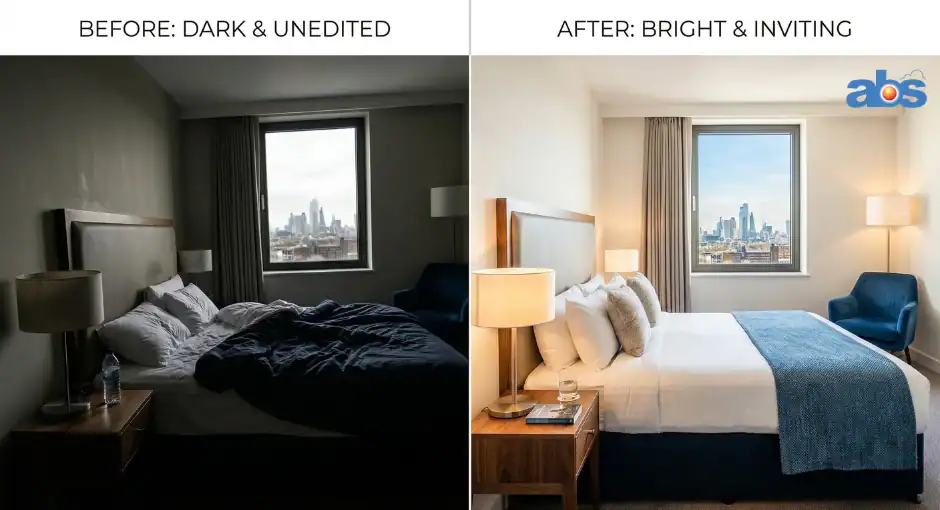
High-resolution images are non-negotiable. If a visitor lands on your site and is greeted by blurry, poorly lit, or badly composed photos, they will assume your property shares that same low quality and bounce to a competitor.
Professional imagery does more than showcase your rooms; it builds instant credibility. Great photos reassure guests that “what they see is what they get,” alleviating the fear of misrepresentation and encouraging them to explore your booking engine.
2. Amenities and Comforts Travelers Expect to Find
Today’s travelers are seeking an experience, not just a bed for the night. Clearly showcasing your top-tier amenities helps guests envision their stay and actively justifies your room rates.
Highlighting Unique On-Site Facilities
Don’t just list your facilities like a boring inventory—sell them. Whether it’s a fully-equipped fitness center, a tranquil spa, or a pristine swimming pool, make sure these features are front and center.
To truly stand out, emphasize unique offerings that your local competitors lack:
-
Indoor game rooms (carrom boards, mini table tennis, arcade football)
-
Co-working spaces with high-speed Wi-Fi
-
Family-friendly kids’ zones
These thoughtful additions are exactly what potential guests look for on a hotel website when deciding between two similar properties.
3. Local Experiences and Activities Guests Look For
To position your hotel as a true destination rather than just a quick stopover, you need to highlight the exclusive experiences available in your area.
Positioning Your Hotel as a Destination Hub
By promoting adventurous or unique local activities, you create opportunities for guests to build lasting memories. This strategy directly leads to longer stays and higher guest satisfaction. Depending on your geography, promote experiences such as:
-
ATV tours and off-road trails
-
Kayaking, paddleboarding, or scuba diving
-
Flying fox and canopy adventures
-
Guided camping or hiking excursions
Showcasing these activities proves that a stay at your hotel offers value and adventure that extends far beyond your lobby.
4. The Seamless Booking Experience Every Guest Desires
A clunky booking process is the fastest way to lose a sale. When discussing hotel website essentials, a frictionless path to purchase is critical.
Prominent Direct Booking Buttons
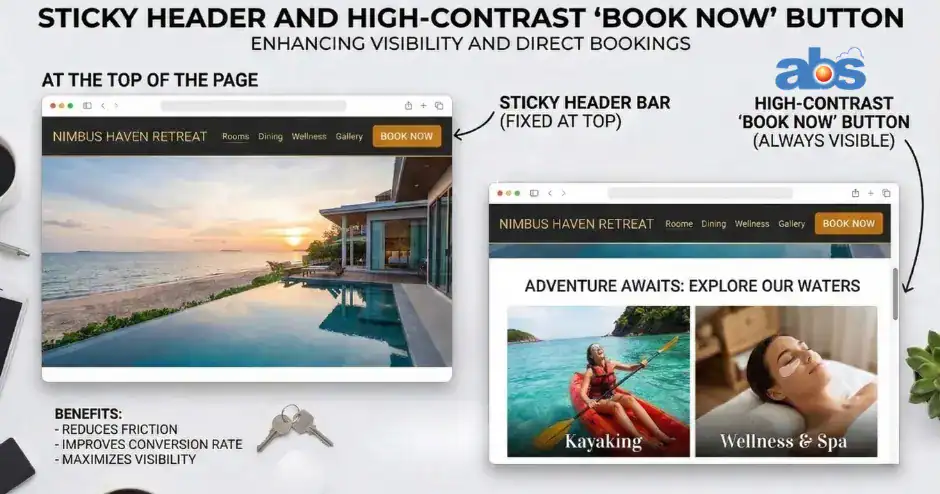
Your “Book Now” button should be prominently displayed on the main page and follow the user on every subsequent page. Direct bookings are the lifeblood of hotel profitability, allowing you to bypass steep commission fees from OTAs.
Placing a clear, unmissable call-to-action (CTA) allows guests to reserve their room the second they are convinced by your content. This lowers customer acquisition costs and opens the door for direct upselling (like room upgrades or spa packages), increasing your overall revenue per guest.
5. Accessible Contact Details Travelers Look For
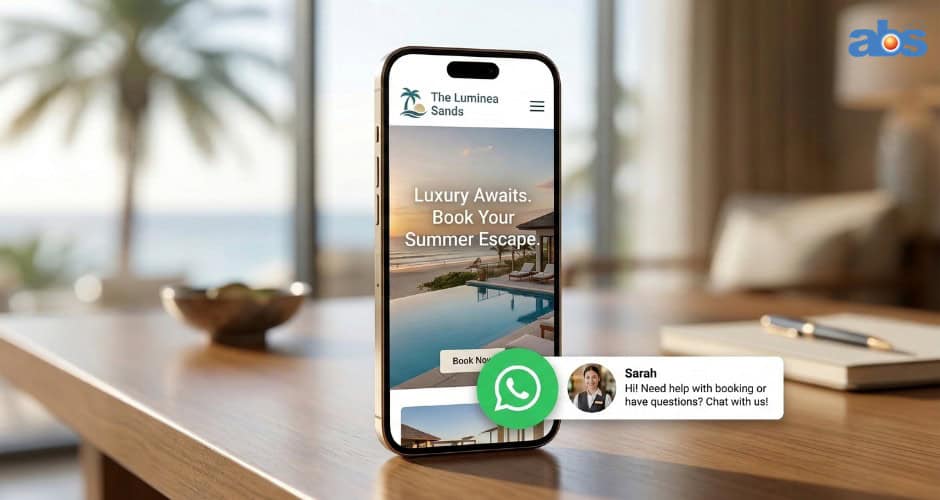
There is nothing more frustrating for a potential guest than hunting for outdated contact information. Ensuring your phone numbers, email addresses, and physical address are accurate is a simple but vital trust-building exercise.
Integrating Instant Messaging
To elevate your guest communication, you must provide the immediacy modern travelers expect.
-
The Problem: Traditional email can feel too slow for quick questions.
-
The Solution: Integrate instant messaging options like a direct WhatsApp link or live chat.
Offering a quick way to ask questions (“Does the room have a crib?”, “How far are you from the airport?”) significantly improves the customer service experience and fosters loyalty before they even hit “book.”
6. Social Proof: The Trust Factor Guests Want to See
Your website visitors come from all over the world, and many have never heard of your hotel until this exact moment. To bridge that trust gap, you need robust social proof.
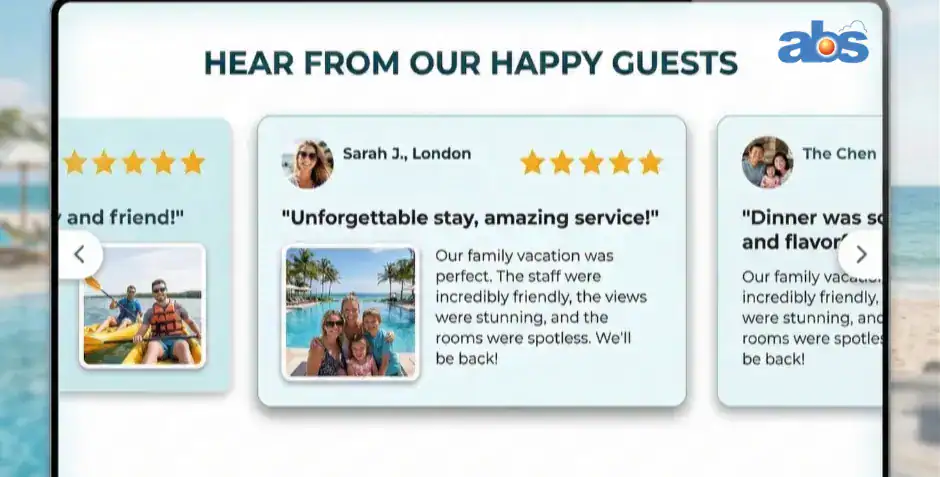
Dedicated Guest Testimonial Sections
A dedicated section featuring authentic reviews and feedback from past guests is incredibly persuasive. Positive reviews validate your marketing claims through the eyes of real customers. Furthermore, highlighting these reviews makes previous visitors feel valued, reinforcing their positive connection to your brand and encouraging repeat visits.
Summing Up
Your hotel website is your most powerful, 24/7 sales tool. By organizing it to feature high-quality visuals, clear amenities, exciting local experiences, frictionless booking options, accessible contact details, and authentic social proof, you deliver exactly what guests really want to see on your hotel website. Ignoring these essential elements leaves money on the table and risks losing potential guests to competitors who present their brand more effectively.
Frequently Asked Questions (FAQ)
Q: Why is my hotel website getting traffic but no bookings? A: High traffic with low conversions usually points to a friction point on your site. This could be due to a lack of clear “Book Now” buttons, poor-quality photography, a confusing mobile experience, or hidden contact information. Guests need a seamless, trustworthy experience to confidently book direct.
Q: How important are photos for a hotel website? A: They are arguably the most important element. Studies show that high-quality, professional photography is the #1 factor in a guest’s decision-making process. It builds immediate trust and accurately sets expectations.
Q: How can I increase direct bookings on my hotel website? A: Ensure your booking engine is mobile-friendly, display a sticky “Book Now” button, offer a “Best Rate Guarantee” for direct bookers, and provide unique perks (like free late checkout or a complimentary welcome drink) that guests can’t get by booking through an OTA.
Q: Should I include negative reviews on my testimonial page? A: While you want to highlight your best features on your website, transparency is key. You don’t need to spotlight negative reviews on your homepage, but managing and politely responding to mixed reviews on external platforms (like Google or TripAdvisor) shows potential guests that you care about customer service.
About the Author: William Tang is a Hotel Technology Consultant at BMS Solution, specializing in the Southeast Asian hospitality market. He helps streamline operations and maximize revenue for over 1,500 hotels across Malaysia, Singapore, Indonesia, and the Philippines.