
The Personalization Paradox:
How Smart Hotels Are Growing Revenue When Guests
Are Spending Less
Category: Hotel Revenue Management / Hospitality Technology | Reading Time: 5 Minutes | Author: Javier Tang
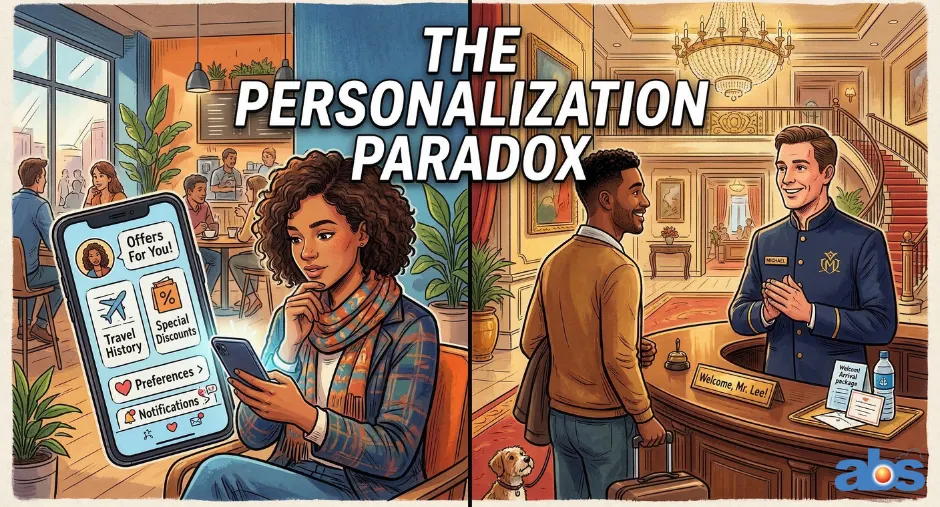
Let’s be honest: maximizing revenue per guest feels harder than ever right now.
On the surface, the hospitality industry looks healthy, boasting a solid 6.8% CAGR between 2023 and 2024. But if you dig into the long-term forecast, there’s a massive red flag waving: the global average spend per paying hotel guest is expected to drop by 17.3% by 2029. Combine that alarming statistic with rising operational costs, persistent staffing shortages, and guests whose expectations are higher than ever, and the dilemma becomes clear. How are you supposed to grow revenue when the average guest is actively tightening their wallet?
Welcome to the Personalization Paradox.
The answer isn’t to push harder with aggressive upselling. It’s to get smarter. Growing revenue when guests are spending less starts with ditching the guesswork and truly understanding who your guests are. And that requires leaning into your most valuable, untapped asset: First-Party Data.
Why Traditional Marketing Fails When Hotel Guests Are Spending Less
For years, hoteliers relied on third-party cookies to cast a wide marketing net. But in today’s privacy-first world, that net is full of holes. The only way to deliver the kind of personalized, memorable experiences that actually drive hospitality revenue growth is to use data that comes directly from your guests.
First-party data is the information guests willingly volunteer through every interaction they have with your brand. It includes:
-
Browsing your website
-
Opening and clicking your promotional emails
-
Chatting with your concierge
-
Logging into your property’s Wi-Fi
When you connect these dots, you stop seeing a generic “booking” and start seeing a person. You can know their preferences before they arrive, anticipate their needs while they stay, and entice them back with targeted offers that actually matter to them.
Decoding the Personalization Paradox: What “Knowing Your Guest” Actually Means
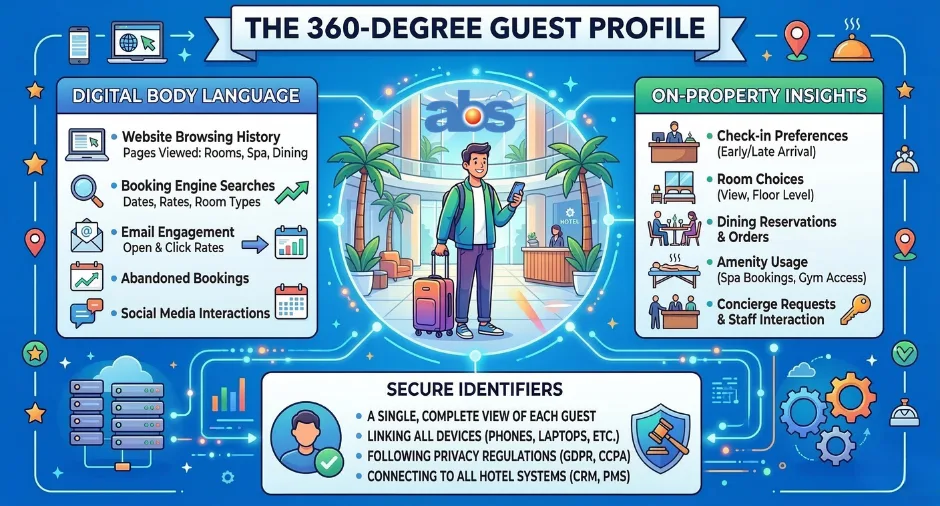
It sounds abstract, but first-party data is simply the sum of every digital handshake between the guest and your hotel. To successfully navigate the personalization paradox, smart hotels focus on three distinct areas:
1. Digital Body Language
This tracks how a guest interacts with you online before they even arrive. It includes website browsing behavior, email click-through rates, and historical booking patterns.
2. On-Property Insights
These are the physical touchpoints during their stay. It encompasses front desk interactions, spa and amenity bookings, room service requests, and specific dining preferences.
3. Secure Identifiers
These are privacy-compliant tools—like hashed email algorithms—that allow you to recognize and reconnect with guests across the web safely and anonymously, without ever relying on outdated third-party cookies.
By unifying these signals, you move from a static, one-dimensional profile to a dynamic, 360-degree view of your guest. That is the exact difference between sending a generic “Welcome back” email and sending a perfectly timed offer for a late checkout because your system knows their return flight departs at 8 PM.
The 25% Lift: How Smart Hotels Grow Revenue Through Personalization
This isn’t just about being nice; it’s about your bottom line. Properties using advanced hotel personalization strategies see an average 25% lift in revenue per guest.
Why? Because having real-time data allows you to strike while the iron is hot. Consider these scenarios:
-
The Upgrade Prompt: A guest is lingering on your “Suites” page. A smart system triggers an upgrade pop-up with a special rate right before they finalize their standard booking.
-
The VIP Treatment: A regular business traveler always orders a specific bottle of red wine at dinner. You increase on-property spend by having it waiting in their room upon arrival.
-
The Seasonal Re-engagement: A family visited your resort during spring break last year. You send them a highly curated, tailored package for this year’s school holiday before they even start searching.
When personalization is executed correctly, it doesn’t feel like a sales pitch. It feels like thoughtful, effortless service. That is how smart hotels secure guest loyalty and maximize hotel revenue per guest, even in a down economy.
Activating Guest Data: A Framework for Maximizing Revenue Per Guest
Most hoteliers are leaving money on the table. According to industry research, only 1 in 4 hoteliers currently use personalized offers to encourage repeat stays.
To help you capture that missed opportunity and increase hotel guest spend, here is a simple, three-step framework to activate first-party data at every phase of the guest journey.
1. Pre-Stay: Spark the Booking with Tailored Offers
The pre-stay phase is all about anticipation and conversion. Don’t just wait for guests to find you or rely on generic promotional blasts. Instead, use their past digital body language and booking history to actively inspire their next trip.
When you leverage first-party data pre-arrival, you can transform a passive website visitor into a confirmed booking by showing them exactly what they want to see. This involves:
-
Dynamic Website Content: If a recognized user frequently looks at family suites, your website homepage should automatically highlight family-friendly packages and spacious room layouts the moment they land on the page.
-
Targeted Re-engagement: If a guest abandons the booking engine after searching for dates, an automated email can follow up offering a small perk—like free breakfast or a welcome amenity—to push them over the finish line.
-
Anticipatory Upselling: Before they even arrive, send targeted pre-arrival emails offering room upgrades, early check-in, or spa bookings based on what similar guest profiles have purchased in the past.
For example: A guest who booked a spa weekend last winter receives an automated email showcasing your new “Valentine’s Day Wellness Retreat” featuring a personalized discount on a couples massage.
2. During Stay: Drive On-Property Revenue in the Moment
The moment a guest steps foot on your property is your absolute best opportunity to capture ancillary revenue. During the stay, personalization shifts from marketing to operations. The goal is to remove friction and empower your staff with the insights they need to deliver exceptional, proactive service.
Real-time data activation during a stay means anticipating needs before the guest even has to ask. Strategies include:
-
Empowered Front-Line Staff: Integrating your CRM with your property management system (PMS) ensures the front desk knows it’s a guest’s anniversary or that they prefer extra pillows before they even hand over their credit card.
-
Location-Based Mobile Prompts: If your property uses a native app, you can trigger geo-fenced push notifications. If a guest is walking past the hotel restaurant around 5 PM, they receive a prompt offering a complimentary appetizer if they dine in that evening.
-
Frictionless Upgrades: Identifying high-value guests at the desk and offering them highly relevant, discounted upgrades to premium suites that would otherwise sit empty for the night.
For example: A guest who ordered room service during their last stay receives a push notification via your hotel app as they check in: “Welcome back! The Chef’s special tonight is the truffle pasta you loved last time! Tap here to reserve a table.”
3. Post-Stay: Build Lifetime Value and Repeat Bookings
Checkout is not the end of the guest journey; it is the crucial beginning of the next booking cycle. How you handle the post-stay experience dictates whether a guest becomes a one-time visitor or a lifelong brand advocate.
This phase is about closing the “loyalty loop.” You want to capture feedback, update their data profile with new insights learned during their stay, and seamlessly plant the seed for their next visit.
-
Profile Enrichment: Did the guest request a late checkout or spend a lot of time at the golf course? Log this newly acquired first-party data into their profile so your next pre-stay campaign is even more targeted.
-
Segmented Win-Back Campaigns: Instead of sending the same newsletter to everyone, segment your audience. Send business travelers mid-week corporate rate promotions, while sending weekend leisure guests holiday packages.
-
Incentivized Direct Rebooking: Capitalize on the post-vacation high by offering a time-sensitive, exclusive perk for booking their next stay directly through your site, bypassing expensive OTA (Online Travel Agency) commissions.
For example: 48 hours after checkout, send a personalized “Welcome Home” email. Thank them by name, reference a specific amenity they used (like the golf course), and offer a “10% off your next stay” code that expires in 60 days to incentivize an immediate direct re-booking.
Conclusion: Turn First-Party Data Into Your Competitive Advantage
In a climate of declining average guest spend, the hotels that win will be the ones that can justify every single dollar their guests part with. You simply cannot do that with generic website banners and mass “blast” emails. You can only do it by proving you understand them.
First-party data is the engine behind that understanding. It transforms your hotel marketing from a one-way monologue into a two-way conversation. It helps you stop chasing isolated bookings and start cultivating profitable, long-term relationships.
In hospitality, every interaction is an opportunity. Make sure you have the technology and insights to make every single one count.
Ready to Get Smarter About Your Revenue?
Don’t let the personalization paradox hold your property back. Discover how our software can help you harness first-party data, automate personalized guest journeys, and drive that 25% revenue lift.
Click Here to Request a Demo and Contact our software consultants to see our platform in action!
Frequently Asked Questions (FAQs) About Hotel Personalization and Revenue Growth
Q: What is the personalization paradox in the hotel industry? A: The personalization paradox refers to the phenomenon where smart hotels are successfully growing their overall revenue and profits, even as global forecasts predict a decline in the average spend per individual hotel guest. They achieve this by using personalized, data-driven offers that convert at much higher rates than traditional marketing.
Q: How can first-party data increase hotel guest spend? A: First-party data (information guests provide directly, like booking history, email clicks, and on-property preferences) allows hotels to send highly relevant offers. Instead of generic discounts, hotels can offer targeted room upgrades, dining specials, or spa packages that align perfectly with what the guest actually wants, increasing the likelihood of purchase.
Q: Why are third-party cookies no longer effective for hotel revenue management? A: With increasing privacy regulations and the phasing out of third-party cookies by major web browsers, tracking users across the internet is becoming difficult and inaccurate. Hotels must now rely on secure, first-party data to safely and legally understand their guests’ digital behavior.
Q: What is a realistic revenue lift I can expect from implementing hotel personalization strategies? A: Industry data shows that properties utilizing advanced personalization and first-party data strategies see an average 25% lift in revenue per guest through optimized direct bookings, targeted upselling, and increased on-property ancillary spend.
About the Author: Javier Tang is a Hotel Technology Consultant at BMS Solution, specializing in the Southeast Asian hospitality market. He helps streamline operations and maximize revenue for over 1,500 hotels across Malaysia, Singapore, Indonesia, and the Philippines.