
What is a Hotel CRS and How It Boosts Your Bottom Line
(+ 6 Top CRS Providers)
Category: Hotel Technology & Revenue Management | Reading Time: 7 Minutes | Author: Javier Tang
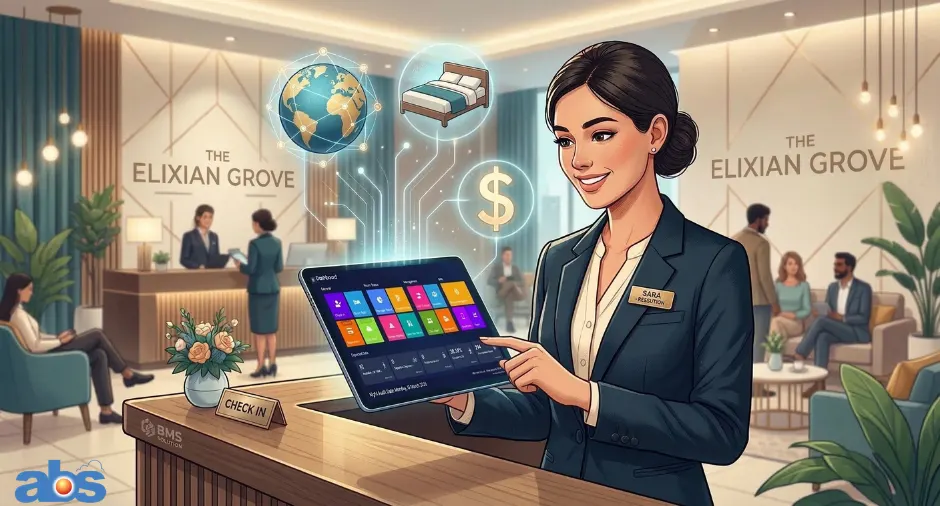
Every channel is a revenue opportunity. However, keeping rates aligned and reservations flowing without added complexity is a constant challenge for modern hoteliers. Booking channels keep multiplying: your direct website, online travel agencies (OTAs), metasearch engines, the Global Distribution System (GDS), and whatever new platform guests discover tomorrow. Each one brings opportunity, but also operational complexity.
Without the right reservation software, managing room rates and inventory across all these channels turns into an error-prone juggling act. That’s exactly why successful hotels turn to a Central Reservation System (CRS).
In today’s fragmented booking landscape, a hotel’s survival depends on real-time agility. A CRS isn’t just about preventing overbookings; it’s the central nervous system that empowers independent and mid-sized hotels to compete on a global scale without burning out their staff.
A hotel CRS is much more than a simple booking tool. It is the backbone of hotel distribution, giving hoteliers control, consistency, and the agility to meet guests wherever they choose to book. In this article, we’ll break down exactly what a Central Reservation System is, how it works, and highlight the leading hotel CRS providers—including tailored solutions for small to medium-sized properties.
What is a Hotel Central Reservation System (CRS)?
A hotel central reservation system is a core software platform that manages all reservations for a property. It provides a centralized repository of your available room inventory and its characteristics—such as room types, maximum occupancy, and stay restrictions. Most importantly, it serves as the master record for your current availability and rates (often referred to as ARI).
Unlike a basic channel manager that simply pushes data back and forth, a dedicated CRS can actually service search requests and create new reservations in real-time. It acts as the ultimate traffic controller for your entire distribution strategy.
Where a Hotel CRS Fits in Your Technology Stack
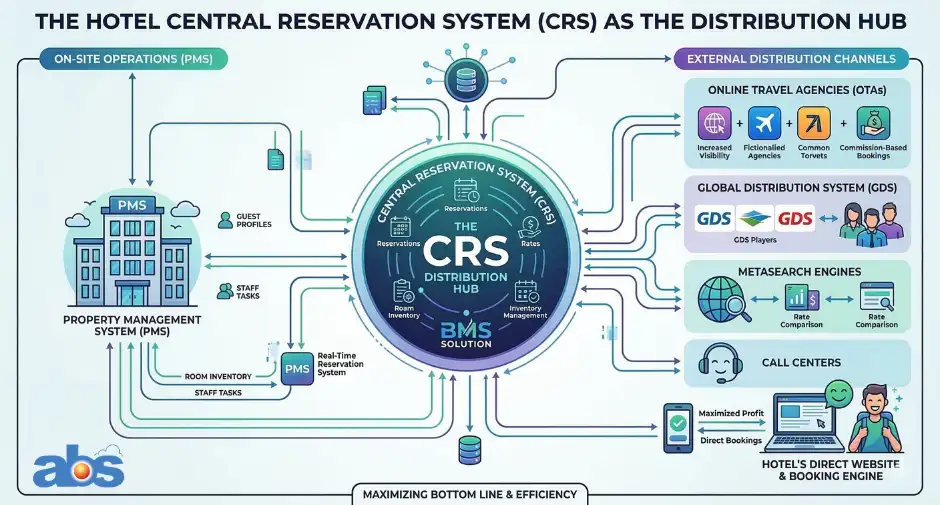
In a hotel’s technology ecosystem, the CRS sits perfectly between your internal and external operations. On one side, you have the property management system (PMS) [Internal Link: Link to your PMS feature page], which helps your staff manage all back-office and front-desk operations. On the other side are your distribution channels. The CRS bridges the gap, ensuring seamless communication between what you have available and what the world sees.
How Hotel CRS Software Works: The Distribution Hub
As the central hub of distribution, a CRS plays a critical role in executing strategic rate plans and promotions. Using data from your PMS, revenue management system (RMS), and customer relationship management (CRM) platform, your hotel can leverage a CRS to implement dynamic pricing strategies and highly segmented marketing campaigns.
No matter how a room is booked—whether direct or via a third party—the reservation request is sent to the CRS. The software instantly confirms or denies the request based on real-time room availability. If confirmed, the room is blocked for those specific dates, and the ARI is updated globally.
Real-Time Syncing Across Your Hotel Systems
Once a booking is made, the CRS instantly syncs with the rest of your tech stack:
-
Distribution Channels: The booked room is immediately removed from all other reservation channels, effectively preventing costly double bookings.
-
Property Management System (PMS): Reservation details flow into the PMS so housekeeping can prepare the room and the front desk can organize a smooth check-in.
-
Revenue Management System (RMS): The RMS pulls the latest occupancy data from the CRS to optimize room rates based on your dynamic pricing strategy.
-
Customer Relationship Management (CRM): The CRS feeds valuable reservation data to your sales and marketing teams, helping them identify high-value returning guests.
-
Payment Systems: Securely syncs booking deposits and check-out payments.
5 Bottom-Line Benefits of Using a Hospitality CRS
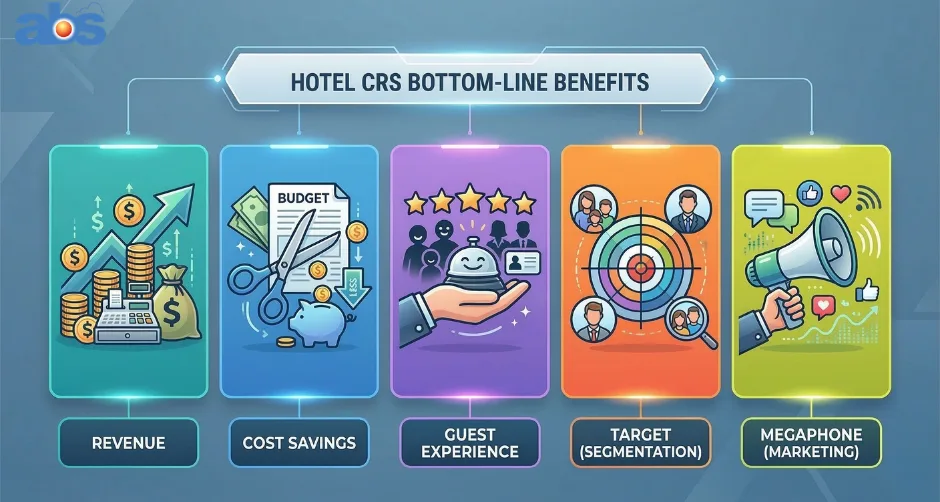
Implementing a robust central reservation system brings five major benefits to a hotel’s bottom line:
-
Increased Revenue and RevPAR: As soon as rooms become available, they are instantly bookable by travelers and agents worldwide. Seamless integrations allow you to adjust rates on the fly and push last-minute discounts without friction.
-
Lowered Operational Costs: Automation saves your staff countless hours. By syncing with the PMS, it stops overbookings and helps operational teams forecast their daily workloads accurately.
-
Better, More Personalized Guest Experience: Getting the basics right—like avoiding double bookings and ensuring a room is ready upon arrival—builds trust and allows staff to focus on VIP treatment.
-
Support for Complex Rate Plans: A CRS has the processing power to support corporate rates, wholesale agreements, and dynamic seasonal pricing across multiple global markets simultaneously.
-
Advanced Market Segmentation & Visibility: Powerful data segmentation allows you to slice your audience data and conduct highly tailored marketing campaigns.
Top 6 Hotel CRS Providers in the Industry
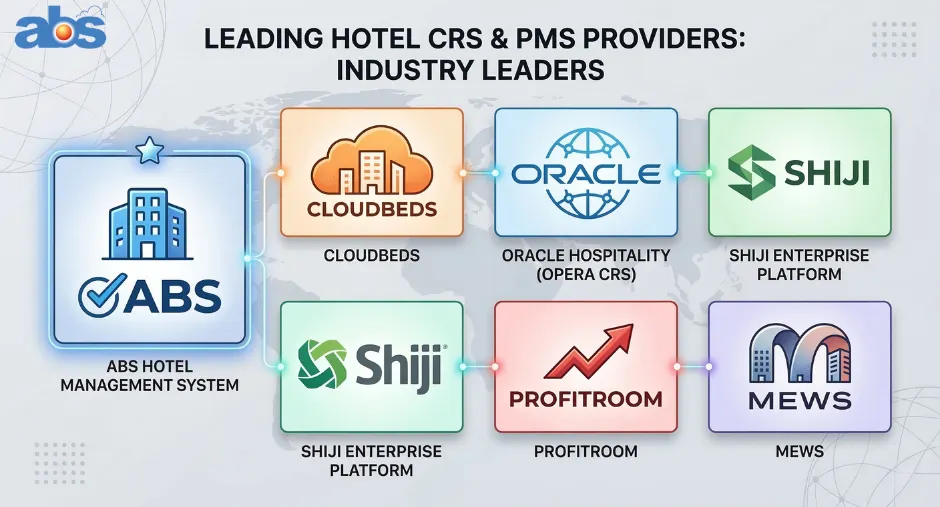
If you are evaluating your technology stack, here are six of the top CRS platforms making waves in the hospitality industry today, starting with the premier choice for SMEs:
1. ABS Hotel Management System
Designed specifically for small and medium-sized properties, the ABS Hotel Management System offers a deeply integrated PMS and reservation infrastructure. Currently trusted by over 1,500 hotels, ABS eliminates the friction of piecing together disparate software. It provides a unified, highly reliable ecosystem that maximizes OTA visibility and direct bookings while keeping daily operations incredibly intuitive for hotel staff. [Internal Link: Link to bmssolution.com.my About Us or Core Features]
2. Cloudbeds
An award-winning platform that unifies a CRS, PMS, and channel manager into a single cloud-based dashboard, making it a solid choice for boutique properties looking to consolidate their tech stack.
3. Oracle Hospitality (OPERA CRS)
An enterprise-grade powerhouse designed for large-scale hotel chains and global operators. OPERA offers unparalleled capability in handling complex multi-property reservations, extensive loyalty programs, and high-volume data processing.
4. Shiji Enterprise Platform
Built on a modern, API-first architecture, Shiji’s CRS is designed for absolute scalability. It is highly customizable and integrates beautifully with existing tech stacks, making it a top choice for luxury hotel groups and enterprise brands demanding deep technical flexibility.
5. Profitroom
Highly focused on maximizing direct revenue, Profitroom combines an intuitive CRS with an award-winning booking engine. It is highly regarded by premium resorts and leisure hotels that want to prioritize direct bookings and reduce reliance on third-party commissions.
6. Mews
Mews is a modern, cloud-native hospitality platform. While famously known for its innovative PMS, Mews offers exceptionally robust reservation and distribution management tools that rethink the traditional guest journey, making it perfect for forward-thinking hotel brands.
Conclusion: Streamline Operations with a Central Reservation System
A Hotel CRS is the invisible engine powering your property’s commercial success. It seamlessly connects every aspect of your operations—from reservation management to revenue optimization and guest experience. By providing a centralized repository of inventory and syncing in real-time with your essential software tools, a CRS significantly increases your revenue, lowers operational costs, and keeps your guests coming back.
Ready to stop juggling channels and start maximizing your hotel’s revenue? Join over 1,500 hotels that trust our ecosystem to drive their daily operations and global distribution. Let’s build a strategy that works for your property.
Click Here to Request a Demo and Contact our software consultants today!
Frequently Asked Questions (FAQs) About Hotel CRS
Q: What is the difference between a Hotel CRS and a PMS? A: A Property Management System (PMS) handles on-site, physical operations like check-ins, room assignments, housekeeping, and billing. A Central Reservation System (CRS) handles off-site distribution, managing your inventory and rates across online booking channels and funneling those incoming reservations back into the PMS.
Q: Does a Hotel CRS replace a Channel Manager? A: Not necessarily, though their features often overlap. A channel manager primarily pushes rates and pulls reservations from OTAs. A CRS is a much more comprehensive hub that actually processes search requests, generates reservations in real-time, executes complex revenue management strategies, and connects directly to the GDS.
Q: Can a Central Reservation System integrate with my existing tech stack? A: Yes. Top-tier CRS platforms are built with open APIs designed to integrate seamlessly with your existing PMS, RMS, CRM, and payment gateways, ensuring data flows continuously without manual entry.
Q: Is a CRS worth the investment for an independent hotel? A: For very small bed-and-breakfasts, a combined PMS and booking engine might suffice. However, for growing independent and mid-sized hotels aiming to scale their OTA and GDS visibility, investing in a robust solution like the ABS Hotel Management System is highly recommended to protect against overbookings and maximize RevPAR.
About the Author: Javier Tang is a Hotel Technology Consultant at BMS Solution, specializing in the Southeast Asian hospitality market. He helps streamline operations and maximize revenue for over 1,500 hotels across Malaysia, Singapore, Indonesia, and the Philippines.