
How to Write Hotel SOPs Your Team Will Actually Use: A
2026 Guide
Category: Hotel Operations & Management | Reading Time: 5-7 minutes | Author: William Tang
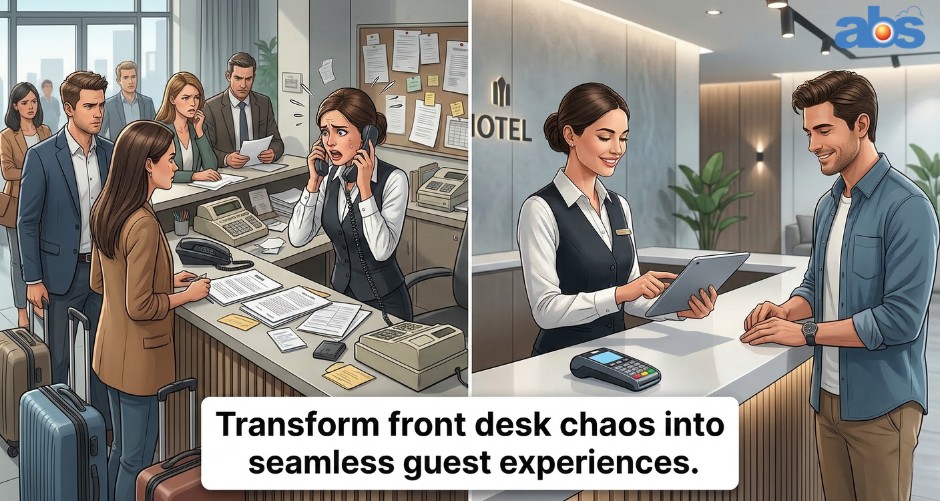
Hope is not a strategy. If your team is constantly “winging it,” your guest experience—and ultimately, your hotel’s reputation—is paying the price.
In the fast-paced hospitality industry, high turnover and rapid training are par for the course. That’s where Hotel Standard Operating Procedures (SOPs) become your secret weapon. They are the blueprint for operational consistency, ensuring that whether a guest is checked in by a seasoned veteran or a first-week trainee, they receive the exact same flawless experience.
Effective hotel SOPs transform chaos into clarity, turning anxious new hires into confident team members from day one. They aren’t just dusty manuals sitting on a back-office shelf; they are the muscle memory of your hotel.
In this guide, we’ll show you exactly how to write hotel SOPs that empower your staff, protect your business, and elevate your property.
What is a Hotel Standard Operating Procedure (SOP)?
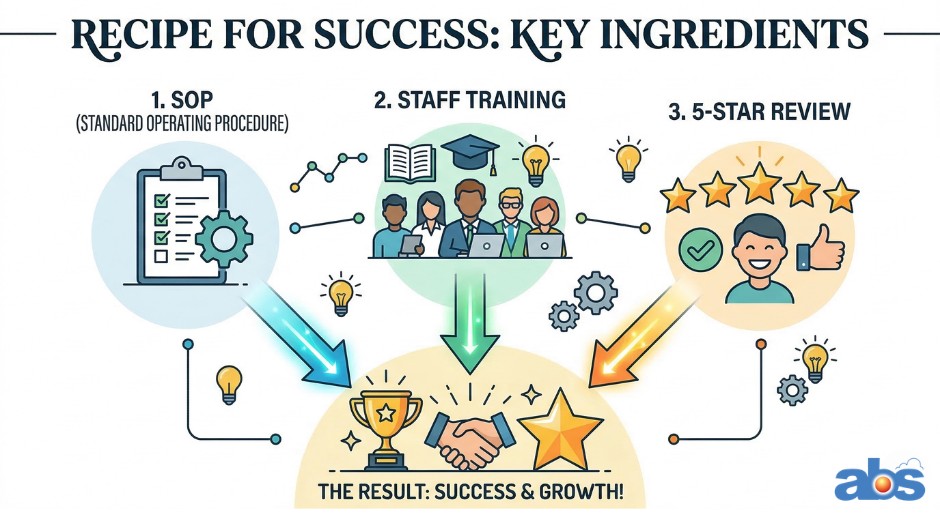
Think of a hotel SOP like a recipe card for a signature dish in your restaurant. It lists every necessary ingredient and every exact step. When the kitchen follows the recipe, the result is perfect every single time, regardless of who the chef is that night.
In hospitality, hotel standard operating procedures are the documented workflows that keep your property running smoothly, safely, and efficiently. They go far beyond simple checklists. A proper SOP documents the exact actions required for tasks that impact the guest experience, team safety, and your bottom line. Whether it’s processing a VIP check-in at a boutique property like Muari Boutique Hotel or handling a sudden power outage, an SOP ensures the right outcome, every single time.
How to Create Hotel SOPs: A 4-Step Framework
Waiting for a crisis to realize you need a documented procedure is too late. Proactive management is key. Here is a simple, collaborative framework to start building your hotel’s operating procedures today.
Step 1: Pinpoint Operational Pain Points
Don’t try to document every single process in one day. Start by identifying the areas of your hotel operations that need the most immediate help.
-
Analyze your departments: Look at the Front Desk, Housekeeping, Maintenance, F&B, Sales, and HR.
-
Identify the friction: Where do mistakes happen most often? What tasks do new hires struggle with? Where do guest complaints typically cluster? Make these areas your priority.
Step 2: Map the Daily Hospitality Grind (With Your Team)
Your frontline staff knows the reality of the job better than anyone. Sit down with them and map out their daily shifts.
-
Ask for direct input: Ask questions like, “What part of your shift is the most stressful?” or “What task is most confusing for new employees?”
-
List repetitive tasks: Identify the routines that happen multiple times a day.
-
Prioritize by impact: Focus first on tasks that are high-visibility (directly impacting the guest experience) and high-risk (impacting safety, security, or compliance).
Step 3: Understand Your End-User
A meticulously written hospitality SOP is entirely useless if the person doing the job can’t understand it. Before you draft anything, consider:
-
Who is reading this? Write for the employee doing the work. Use their everyday language, not dense corporate jargon.
-
Are there language barriers? Hospitality is a diverse industry. Overcome language barriers by using photos, diagrams, and universally understood icons. A picture of a properly made bed or a visual map of a fire exit speaks louder than words.
-
Is this a new or existing process? If introducing a brand-new workflow, allocate extra time for hands-on training.
Step 4: Document, Test, and Refine
Watch the task being performed in real-time, document the steps, and then refine the instructions.
-
Format visually: Use bullet points, checklists, or flowcharts. Avoid long, dense paragraphs.
-
Choose the right medium: Will your team access SOPs via a mobile app, a tablet, or a laminated card on a housekeeping cart? Digital access is fantastic for quick updates, but always keep laminated printouts available for Wi-Fi failures or power outages.
-
The ultimate test: Hand your drafted SOP to a brand-new hire. If they can execute the task easily, it’s a success. If they stumble, revise the document.
4 Best Practices: Writing Hotel SOPs That Don’t Gather Dust
The best operational manual in the world offers zero value if it’s stuffed in a drawer. Here’s how to make your hotel standard operating procedures indispensable.
1. Ditch the Corporate Speak
Write exactly how you talk. Infuse your hotel’s brand voice into the documents so the instructions feel familiar and easy to digest—which is especially crucial during a crisis.
2. Get Straight to the Point
Be ruthless about brevity. Include only what is strictly necessary to complete the task. When a guest is waiting at the front desk, your team needs quick answers, not a novel.
3. Show, Don’t Just Tell
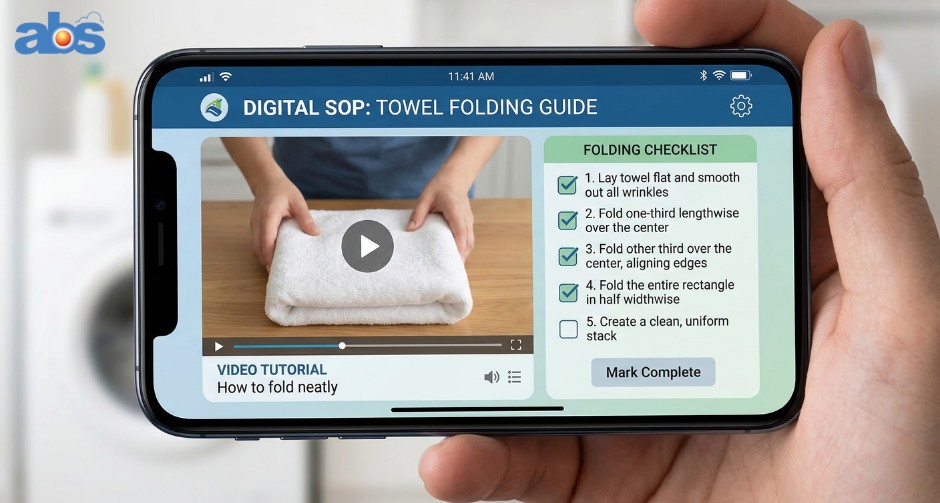
Mix text with rich visuals. A photograph of a correctly set dining table or a 15-second video of a check-in script is often far more effective than a full page of text.
4. Make Training a Habit
Don’t just hand a thick binder to a new hire on their first day and expect perfection. Walk them through the relevant SOPs, role-play common guest scenarios, and use the documents as the foundation for ongoing refresher training.
Real-World Examples of Hotel SOP Categories
To give you a practical look at how this works, here is how successful properties structure their SOPs, grouping them by function to keep operations organized.
1. Emergency and Safety SOPs (Safety First)
These are your most critical procedures. Because emergencies are rare, staff won’t have muscle memory to rely on. These documents must be exceptionally clear and instantly accessible.
-
Protocols for fire, injury, or severe medical emergencies.
-
Action plans for power outages or natural disasters.
-
Guest incident management (e.g., room damage, extreme intoxication).
-
Crisis communication guidelines.
2. Front Office & Operational SOPs (The Guest Experience)
These are the day-to-day scripts that guarantee front-line consistency.
-
Check-in/Check-out: Handling early arrivals, late checkouts, and legal passport registrations.
-
Payment Handling: Steps to take for declined cards, double charges, or payment disputes.
-
Guest Recovery: De-escalating angry guests, managing noise complaints, or handling overbooking situations.
-
Service Standards: Logging special requests (like extra cots) and managing daily room assignments.
3. Maintenance & Housekeeping SOPs (The Product)
These SOPs protect your physical asset and ensure pristine room quality.
-
Housekeeping SOPs: Detailed room cleaning checklists, bed-making standards, VIP room setups, and linen change procedures for sustainability.
-
Maintenance: Preventive maintenance schedules and protocols for plumbing issues, elevator failures, or Wi-Fi drops.
-
Crisis Protocols: Immediate actions for pest control or bed bug containment.
4. HR & Employee Culture SOPs (The Team)
These procedures ensure your staff is managed fairly, protecting both the employee and the hotel.
-
Onboarding/Offboarding: Steps to integrate a new hire smoothly and conduct respectful terminations.
-
Conduct: Protocols for policy violations or employee no-shows.
-
Conflict Resolution: Clear steps for addressing workplace complaints or harassment.
Conclusion: Keep Your Hotel Procedures Alive
Your hotel is a living, breathing entity, and your SOPs should be too. If you adopt a new property management software, undergo a renovation, or shift your marketing strategy, your procedures must be updated to reflect that reality.
Schedule a yearly review with each department head. Ask your team, “Is this still how we actually do things? What are we missing?” When your staff feels heard and sees their feedback actively shaping hotel policy, they are significantly more likely to utilize the SOPs daily.
SOPs aren’t about rigid micromanagement; they are about giving your team the tools, clarity, and confidence they need to succeed. When your operations run like clockwork, your team can focus on what truly matters: creating unforgettable experiences for your guests.
Ready to Automate and Scale Your Hotel Operations?
Writing great SOPs is just the first step. Executing them flawlessly requires the right technology. Join the over 1,500 hotels currently using the ABS Hotel Management System to streamline their front desk, automate housekeeping, and boost their bottom line.
Stop guessing and start growing. Click Here to Request a Demo and Contact our software consultants today!
Frequently Asked Questions (FAQs) About Hotel SOPs
What is the difference between a hotel SOP and a checklist? A checklist is simply a list of tasks to be completed (e.g., “Clean the bathroom”). A hotel Standard Operating Procedure (SOP) is a comprehensive document that explains how to do those tasks to standard, including safety warnings, required materials, and step-by-step instructions (e.g., “How to sanitize the bathroom using specific chemicals”).
Who should be responsible for writing hotel SOPs? While a General Manager or Operations Director usually oversees the creation of the manual, the best SOPs are written collaboratively. Department heads and experienced frontline staff should heavily contribute to writing and testing the procedures, as they know the daily realities of the job best.
How often should a hotel update its Standard Operating Procedures? At a minimum, you should review your hotel SOPs annually. However, they should be updated immediately whenever you introduce new hotel management software, undergo physical renovations, change legal compliance standards, or notice a recurring drop in service quality in a specific department.
Where is the best place to store hotel SOPs for staff access? For maximum efficiency, store your SOPs digitally using a cloud-based hotel management system or a dedicated staff app. This ensures everyone has the most updated version. However, critical emergency and safety SOPs should also be kept as physical, laminated copies at key stations (like the front desk) in case of power or internet outages.
About the Author: William Tang is a Hotel Technology Consultant at BMS Solution, specializing in the Southeast Asian hospitality market. He helps streamline operations and maximize revenue for over 1,500 hotels across Malaysia, Singapore, Indonesia, and the Philippines.