The Future of Hotel Payments:
3 Upgrades Guests Actually Want
Category: Hospitality Technology & Operations | Reading Time: 8 minutes | Author: Javier
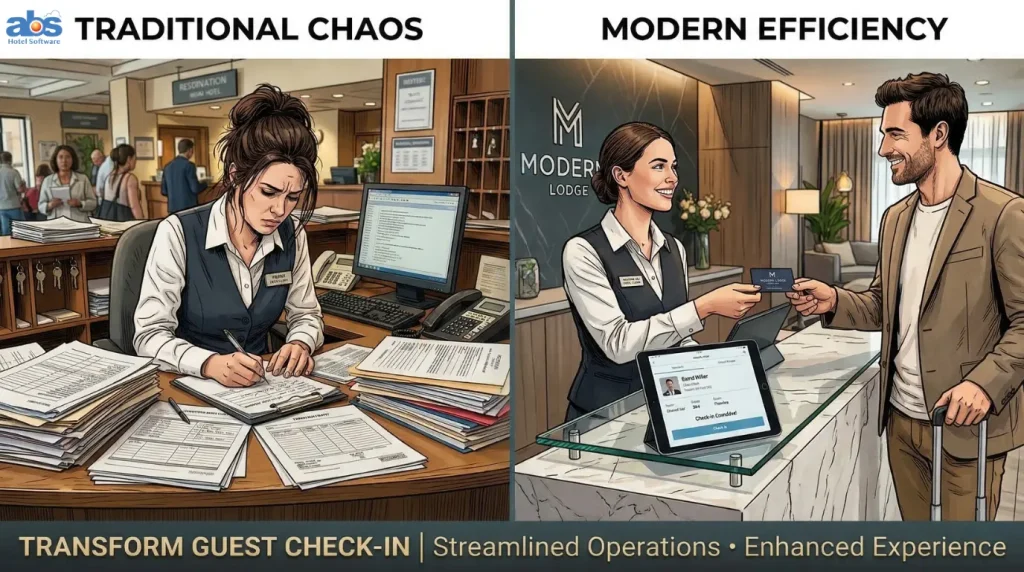
Let’s be honest: nobody travels to stand in line.
Yet, for many hotels, the check-in and check-out experience still involves a clipboard, a physical credit card machine, and a front desk agent manually typing numbers into a system. In 2026, that’s not just slow—it’s a major operational bottleneck.
Payments touch nearly every part of a guest’s stay, from the initial booking to the final checkout. When that experience feels clunky or outdated, it leaves a negative mark on an otherwise perfect trip. The good news? A few strategic shifts can modernize your property. By anticipating the future of hotel payments: 3 upgrades guests actually want, you can turn transactions into a seamless part of the guest journey.
Why Modern Hotel Payment Systems Matter Now
Today’s travelers prioritize simplicity, speed, and security. They are used to one-click checkouts in their everyday lives and expect the same efficiency when they travel. Here are the three critical ways to upgrade your hotel payment technology to meet these modern demands.
Upgrade 1: Diverse Choices in Guest Payment Preferences
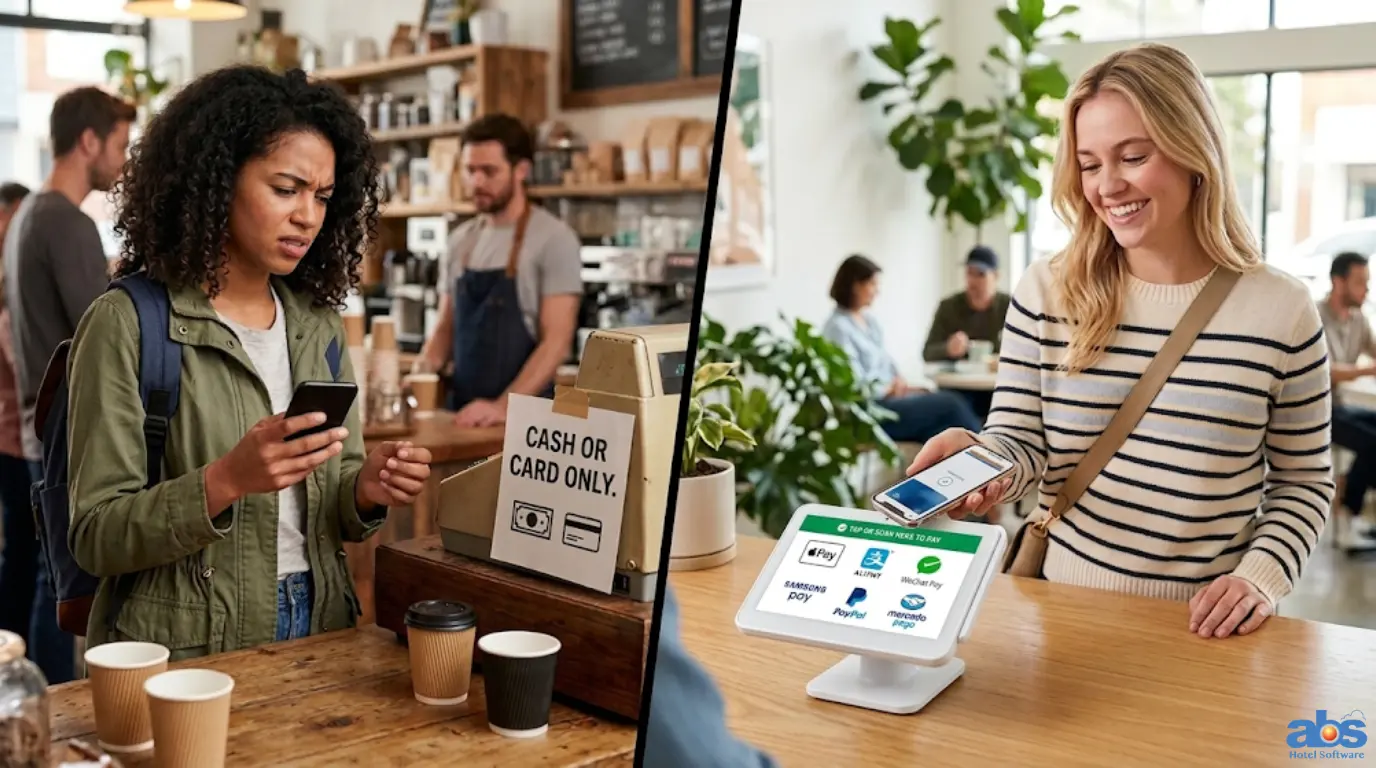
Travelers today come from everywhere, and they expect to pay the way they prefer. If your property attracts global travelers, regional payment platforms are no longer just a “nice to have.”
The Rise of Mobile and Global Wallets
For some guests, preferred payment means a traditional credit card. For others, it’s a mobile wallet like Apple Pay or Google Pay. For international guests, particularly from major markets like China, it may mean relying on Alipay or WeChat Pay.
Offering a wide range of payment options does more than just add convenience; it signals to guests that your property understands them. A familiar payment method at checkout can be the difference between a smooth transaction and an awkward, frustrating one. Recent data continues to show that when international guests can pay using the methods they trust, they are more likely to complete their booking and spend more on ancillary services while they are there.
Upgrade 2: A Frictionless, Omnichannel Hotel Transaction Journey
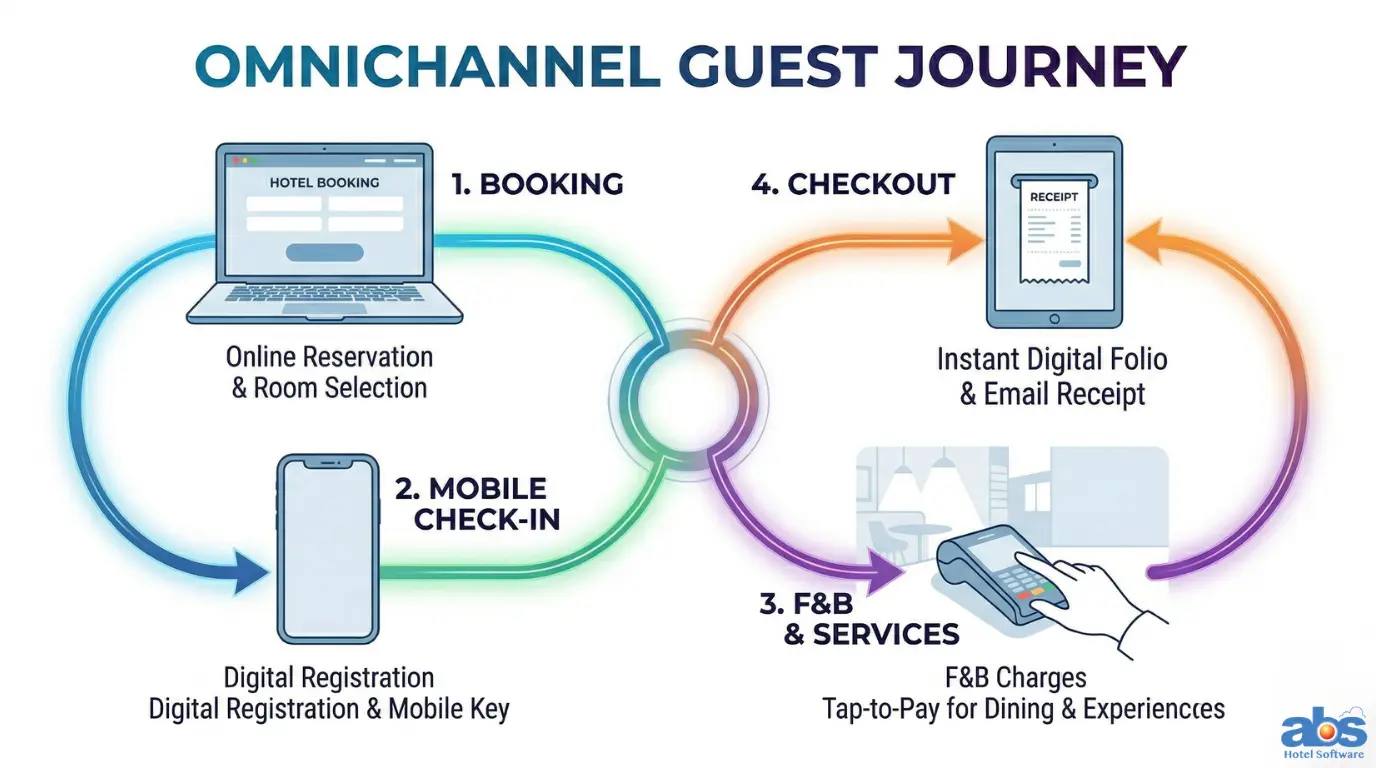
Think about the ideal guest flow. A traveler books online, enters their payment details once, and that information securely follows them through their entire stay. When they arrive, there’s no re-entering numbers or scrambling to find a physical card. Instead, there is just a simple confirmation: “Would you like to use the card on file for your incidentals?”
Connecting Booking to Checkout
That is the power of an omnichannel payment experience. Guests expect their payment method to travel with them seamlessly. The days of front desk staff manually entering credit card information into a Property Management System (PMS) are fading fast. Manual entry invites human error, slows down operations, and creates unnecessary friction.
The technology to fix this is already here.
-
Mobile Check-In: Lets guests handle payment authorizations before they ever step foot on your property.
-
Self-Service Kiosks: Offer a fast, low-contact alternative at the front desk.
-
Digital Receipts: Sent via email or text, these eliminate paper waste and give guests a permanent record of their stay.
When payments work seamlessly in the background, your team spends less time on administrative data entry and more time creating memorable hospitality experiences.
Upgrade 3: Uncompromising Security in Hospitality Transactions
Guests may not say it out loud at the front desk, but they are absolutely thinking about it: Is my payment information safe here?
Building Trust Through Integrated Tech
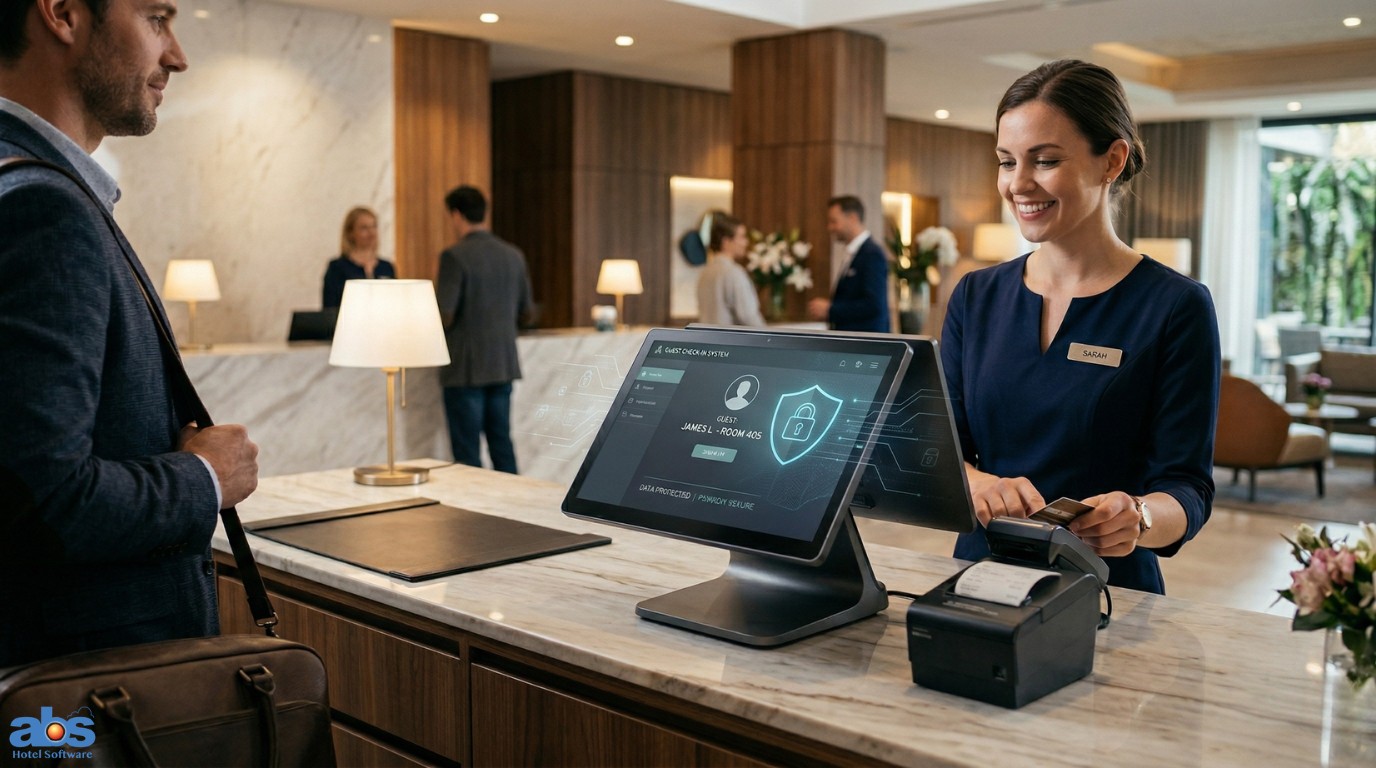
In an age of digital everything, security is a paramount concern. Travelers expect hoteliers to protect their data with the same rigor as major tech companies or banks. That means upgrading hotel payment technology to include partners that follow the highest security standards. This includes Strong Customer Authentication (SCA), 3D Secure protocols, and full compliance with ever-evolving regional and global regulations.
Integrated payments play a key role here. When all payment data lives in one highly secure place, directly connected to your PMS, you can monitor authorizations in real time, catch failed deposits early, and resolve issues before they ever impact the guest. It also means drastically fewer touchpoints where sensitive data is exposed to potential breaches.
Conclusion: Making Hotel Payment Trends Work in the Background
The best payment experience is a non-event; it is one the guest doesn’t even have to think about. It works quietly in the background, connects seamlessly across every stage of their stay, and gives them the flexibility and security they deserve.
By offering choice, streamlining the omnichannel journey, and prioritizing top-tier security, you’re not just keeping up with the future of hospitality transactions, you’re elevating your entire brand. In a highly competitive market, a frictionless experience is exactly the kind of advantage that turns first-time visitors into lifelong, loyal guests.
Frequently Asked Questions (FAQs) About the Future of Hotel Payments
Q: What are the most popular hotel payment methods guests want in 2026?
A: Guests increasingly prefer contactless and digital options. While traditional credit cards are still widely used, mobile wallets (Apple Pay, Google Pay) and regional digital wallets (Alipay, WeChat Pay) are now expected standards for modern properties.
Q: How does an omnichannel payment system benefit a hotel?
A: An omnichannel system integrates payment data across all touchpoints (booking engine, front desk, restaurant POS, spa). This allows a guest to provide their payment details once, which then seamlessly follows them throughout their stay, reducing manual entry errors and speeding up service.
Q: What is the best way to secure guest payment data?
A: Hotels should utilize integrated payment processors that comply with the latest security standards, including Strong Customer Authentication (SCA), 3D Secure, and end-to-end encryption. Connecting these directly to the property management system (PMS) minimizes data exposure.
Q: Can upgrading payment tech really increase hotel bookings?
A: Yes. When international and domestic guests see their preferred, trusted payment methods available at the point of booking, cart abandonment rates drop significantly, leading to higher direct booking conversions.