What is a Hotel Computer Reservation System?
(And Why You Need One)
Category: Hotel Technology & Property Management | Reading Time:10 Minutes | Author : Javier
If you are running a small hotel, boutique inn, or B&B, you’ve probably heard the acronym “CRS” thrown around by industry peers and tech vendors. But what exactly is a hotel computer reservation system, and is it just a luxury reserved for massive global chains with endless IT budgets?
Spoiler alert: It’s not.
A CRS is the digital brain behind any well-run property. Whether you are managing five intimate rooms or 50 bustling suites, understanding how a central reservation system works is the first step to reducing your administrative headaches and boosting your bottom line. Here is the complete breakdown of what it is and why you need it.
Understanding the Basics: What is a Hotel Computer Reservation System?
In the simplest terms, a Computer Reservation System frequently referred to as a Central Reservation System in the hospitality industry is a specialized software tool designed to track, manage and organize your property’s bookings.
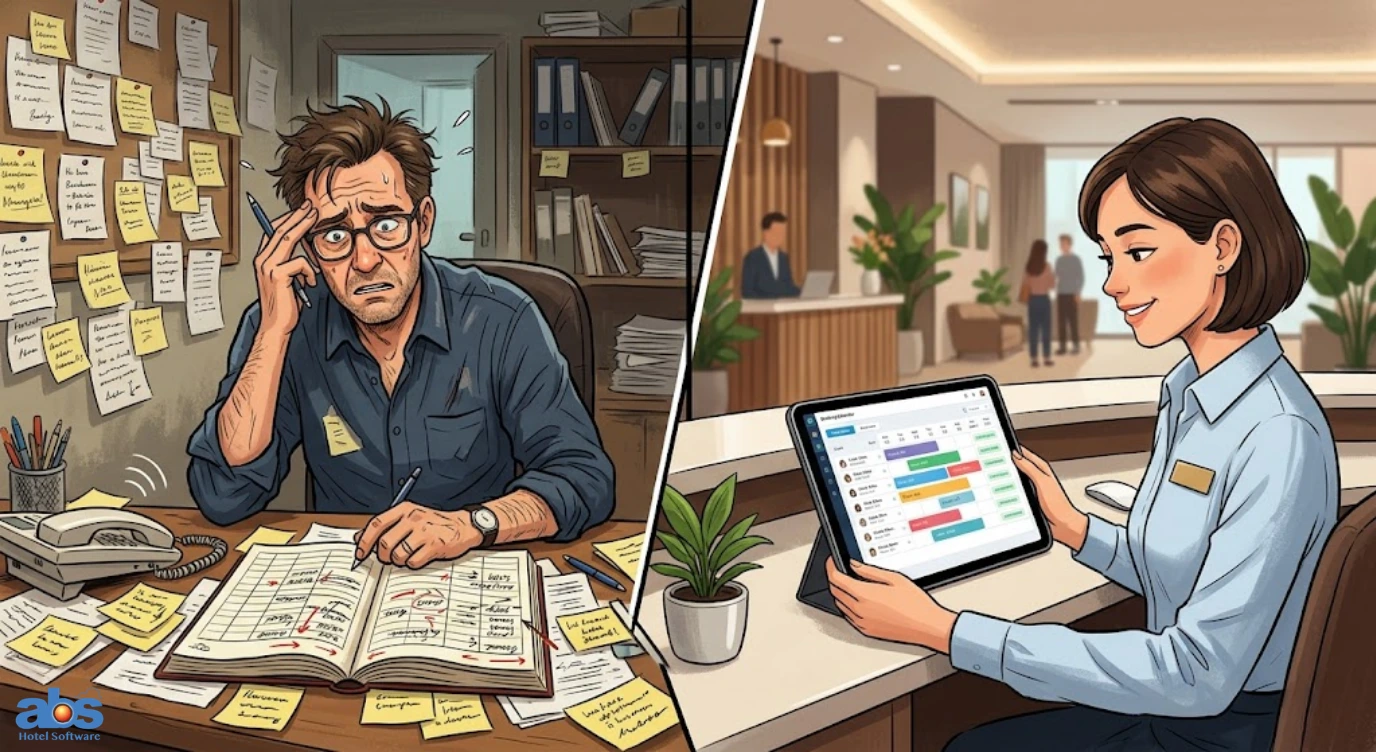
Think of your hotel CRS software as your property’s command center. Instead of frantically juggling extranet alerts from Booking.com, ringing phones, and a messy paper diary, a centralized reservation platform brings every booking into one clean, visual dashboard usually via an intuitive calendar view.
The Core Function: A Single Source of Truth
The primary purpose of a hotel computer reservation system is consolidation. It allows independent hoteliers to seamlessly manage reservations from all sources in one single place. Whether a guest books through an Online Travel Agency (OTA) like Expedia, directly on your website, or simply walks through your front door, the CRS instantly captures and organizes that data.
Hotel CRS vs. GDS: Clearing Up the Confusion
This is where many independent hoteliers get tripped up. The acronyms CRS and GDS sound incredibly similar, but they serve two entirely different audiences in the travel ecosystem.
-
Your Hotel CRS (The Internal Hub): This is your operational system. It holds your live room inventory and your current rates, and it pushes that data out to the world (to OTAs and your own direct booking engine). It also connects with your Property Management System (PMS) to ensure your front desk and housekeeping teams are always on the same page.
-
The GDS (The Global Distribution System): This is the vast global network used predominantly by travel agents and corporate travel bookers. It allows travel professionals to bundle your hotel rooms with airline flights and rental cars.
The Bottom Line: Your central reservation system helps you sell rooms directly to guests and OTAs. The GDS helps you sell rooms to travel agents. Ultimately, you need a powerful hotel CRS to feed accurate, real-time data to both networks.
Why Your Property Needs a Central Reservation System to Survive
There is a very compelling reason virtually every modern hotel uses a computerized booking system today. Operating without one puts you at a massive competitive disadvantage. Here is what the right hotel reservation software unlocks for your business:
1. Eliminate the Dreaded Double Bookings
A strong CRS provides real-time synchronization across every single booking channel. The very second a room is booked on an OTA, your CRS instantly removes that availability from your website and all other connected channels.
2. Automate Daily Administrative Busywork
Stop manually typing guest details into a spreadsheet. A modern hotel computer reservation system automatically logs the booking, updates your availability calendar, and immediately sends out a customized confirmation email to the guest—allowing you to focus on delivering a great in-person experience.
3. Drive Direct Bookings to Beat the OTA Commission Squeeze
A central reservation system seamlessly integrated with a booking engine on your own hotel website is your strongest defense against steep 15-25% OTA commission fees. By making it easy for guests to book directly with you, you keep far more of your hard-earned revenue.
4. Implement Smart, Dynamic Pricing Strategies
Your empty hotel rooms are a perishable asset. A robust hotel CRS software empowers you to adjust your room rates dynamically based on seasonal demand, local events, and competitor pricing. This ensures you are never undervaluing a busy Friday night or leaving money on the table on a quiet Tuesday.
5. Centralize Your Guest Intelligence
With a CRS, every piece of guest information—from specific room preferences and payment statuses to expected arrival times—is stored in one easily accessible profile. This allows your team to deliver the kind of personalized, five-star service that drives repeat visits and glowing online reviews.
The Evolution: From Airline Tech to Small Hotel CRS Software
Reservation technology isn’t a new concept, but its evolution has been staggering. It actually originated way back in 1963 with American Airlines’ SABRE system. By the 1980s and 90s, the rise of the internet transformed these legacy airline tools into absolute necessities for the hospitality sector.
Today, thanks to the power of cloud computing, even the smallest boutique bed and breakfast can access enterprise-level reservation power right from a smartphone.
What Makes a Small Hotel Computer Reservation System Different?
Systems designed for massive global chains (like Amadeus or Pegasus) are incredibly powerful, but they are often far too complex, bloated, and expensive for independent operators. A dedicated small hotel CRS is leaner and focuses on what actually matters to you:
-
Absolute Simplicity: An intuitive interface that doesn’t require a master’s degree in IT to operate.
-
The Core Essentials: A direct booking engine, reliable OTA connections (via a channel manager), and straightforward reporting.
-
Fair Affordability: Transparent pricing models that scale reasonably with the size of your property, rather than corporate-level pricing tiers.
The 6-Point Checklist for Choosing the Best Hotel CRS Software
Deciding on a software provider is a major operational decision. As you evaluate your options, ensure your new central reservation system ticks these six vital boxes:
Core Features to Look For:
-
An Intuitive Interface: If the dashboard looks like a clunky spreadsheet from 1995, it will only slow your staff down. Look for a clean, visual, drag-and-drop calendar.
-
Seamless Channel Integration: It must connect flawlessly with the major OTAs you rely on (Booking.com, Expedia, Airbnb) and plug directly into your own website.
-
Real-Time Syncing: Any lag time in communication equals overbookings. Instant, two-way updates are absolutely non-negotiable.
-
Customizable Rate Plans: You need the agile flexibility to create special packages, last-minute discounts, and seasonal rates on the fly.
-
Actionable Analytics: Your system should clearly tell you where your most profitable bookings are coming from so you can optimize your marketing spend.
-
Reliable Human Support: When something inevitably goes wrong at 8:00 PM on a Friday night, you need access to real human support who can help you fix it immediately.
Conclusion: Power Your Property with the Right CRS
A Hotel Computer Reservation System is far more than just a digital diary. It is the core engine that powers your global distribution, protects your revenue from costly errors, and frees up your valuable time so you can get back to doing what you do best: being an incredible host. For today’s independent hotelier, a powerful CRS is the one tool you simply cannot afford to skip.
Frequently Asked Questions (FAQs) About Hotel Computer Reservation Systems
Q: What is the main difference between a PMS and a CRS?
A: A Property Management System (PMS) handles on-property operations like checking guests in/out, housekeeping, and billing. A Computer Reservation System (CRS) handles the distribution of your rooms, managing inventory and rates across your website and external booking channels. Modern hotel software often combines both into one seamless platform.
Q: Can a very small B&B benefit from a Central Reservation System?
A: Absolutely. Even if you only have 3 to 5 rooms, a CRS eliminates the risk of double bookings across different platforms, saves hours of manual data entry, and provides a professional direct booking experience for your guests.
Q: Does a CRS replace a Channel Manager?
A: Not necessarily; they work together. A CRS manages your central inventory and rates, while a Channel Manager is the specific tool that acts as the bridge, pushing that CRS data out to various OTAs (like Expedia or Booking.com) in real-time. Many modern CRS platforms include a built-in channel manager.