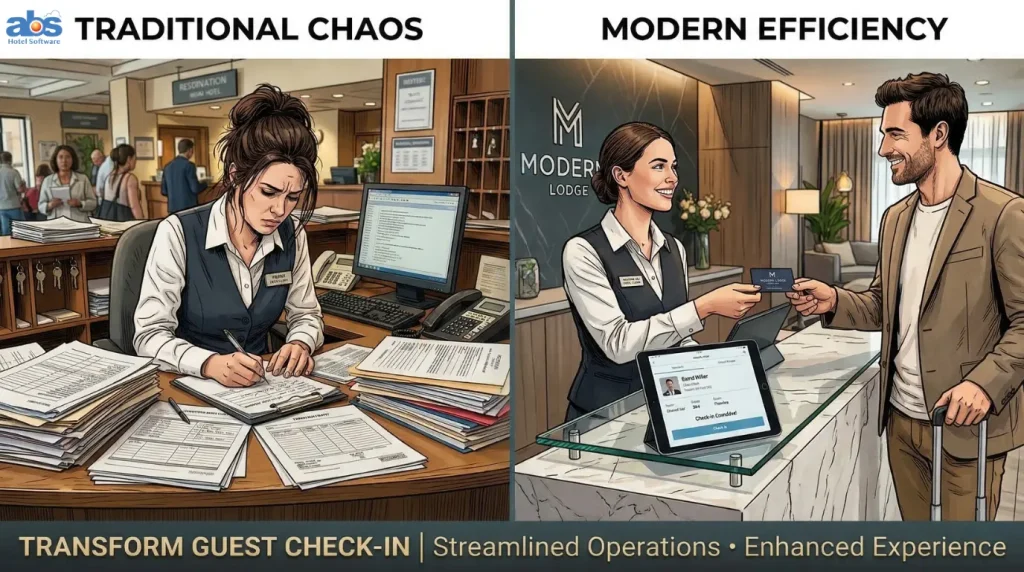
The 2026 Playbook for Hotel Reservation Systems:
Smarter Bookings, Less Admin, Better Guest Loyalty
Category: Hotel Technology & Operations | Reading Time: 8 Minutes | Author: Javier
The travel landscape has shifted dramatically. Today, travelers expect instant gratification, hyper-personalized experiences, and frictionless booking journeys. If your property is still relying on fragmented technology to manage these demands, you aren’t just losing time, you’re actively losing revenue to competitors and Online Travel Agencies (OTAs).
In 2026, your tech stack is your ultimate competitive advantage. At the heart of that stack? A powerful, unified booking engine. Here is your definitive playbook for leveraging hotel reservation systems to drive smarter bookings, eliminate tedious admin work, and build lasting guest loyalty.
What is a Modern Hotel Reservation System in 2026?
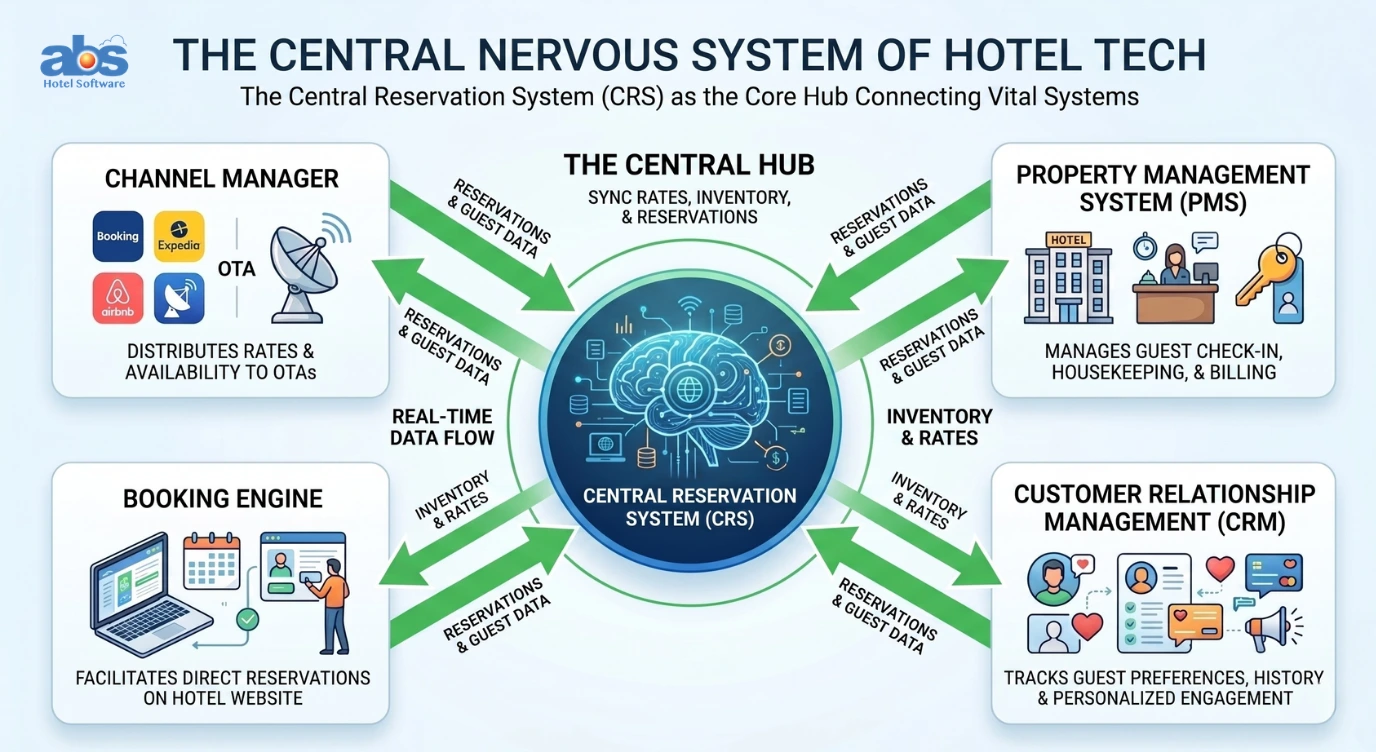
A hotel reservation system is the technological core of any modern accommodation business. Historically viewed as a digital diary, today’s platforms are centralized hubs that manage room inventory, dynamic rates, and reservations across every single sales channel.
While the term Central Reservation System (CRS) is often used interchangeably, modern systems are far more than basic storage databases. They act as the central nervous system of your property. By integrating seamlessly with your Booking Engine, Channel Manager, and Property Management System (PMS), a next-gen reservation system synchronizes data in real-time. This connected ecosystem eliminates manual data entry, eradicates double-bookings, and creates a single source of truth for your rate strategy and guest preferences.
Types of Hotel Reservation Software Transforming the Industry
The terminology surrounding hotel software can be confusing, but the landscape has consolidated significantly by 2026. Here is a breakdown of the reservation tools actively shaping the market today:
1. Manual / Legacy Systems (The Risk Zone)
While physical “pen and paper” is nearly extinct, many independent properties still operate on offline Excel spreadsheets or standalone calendar apps. In a 24/7 global booking economy, these are massive liabilities. They create data blind spots, invite costly double-bookings, and make dynamic pricing impossible.
2. Cloud-Native Hotel Reservation Software
This is the current industry standard. Cloud-based hotel booking systems are accessible from any device with an internet connection. Maintained off-site by the provider, they ensure absolute security compliance (like PCI DSS for payments). Furthermore, their open APIs allow properties to easily plug in new revenue tools, like AI chatbots or upsell software.
3. The Unified PMS-CRS Blend
A major shift in 2026 is the convergence of the CRS and the Property Management System (PMS). Often labeled as All-in-One Hotel Management Software, these platforms bundle reservations, front desk operations, and housekeeping into one interface. For boutique and mid-sized hotels, this ensures that a housekeeping update instantly opens up availability for a same-day booking.
4. Enterprise Central Reservation Systems (Chain-CRS)
Built for scale, enterprise systems handle complex rate plans, corporate negotiated rates, and loyalty point redemptions across thousands of global properties. They heavily leverage AI-driven demand forecasting to suggest optimal pricing 365 days in advance.
5. Vertical-Specific Solutions (Motels & Niche Lodging)
A motel reservation system is no longer just a watered-down hotel platform. Modern solutions are highly tailored to specific workflows, such as managing drive-up availability, integrating with self-check-in kiosks, or processing long-term RV park billing.
Why Upgrading Your Central Reservation System (CRS) is Critical for Smarter Bookings
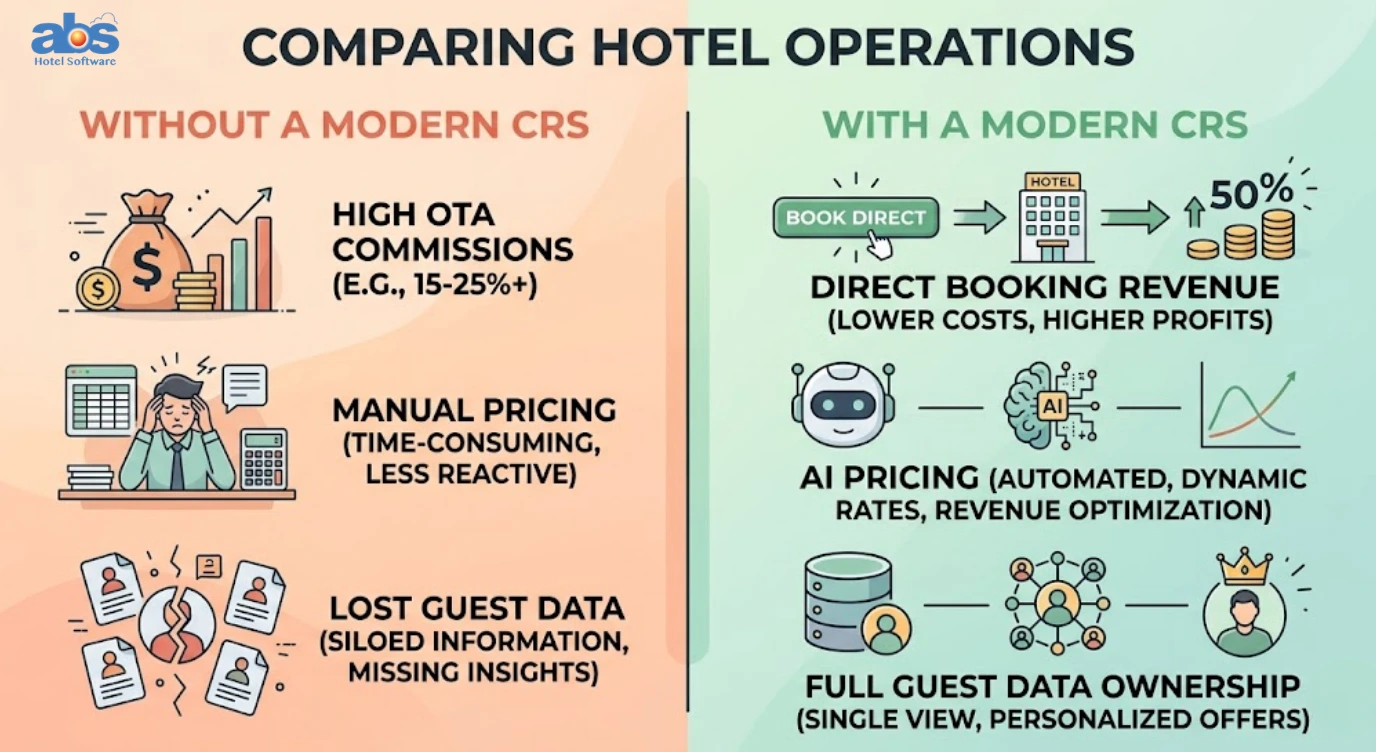
It is no longer just about accepting online bookings; it’s about controlling the booking narrative. Direct bookings are experiencing a major resurgence as travelers seek better cancellation terms and flexibility. However, if a guest visits your site at 10:00 PM and cannot instantly see live availability, they will bounce to an OTA—costing you up to 20% in commission fees.
Beyond immediate convenience, upgrading your CRS provides a competitive shield:
Regaining Data Ownership
With a direct booking system, the property owns the guest’s email and stay history. This allows for highly targeted, direct marketing campaigns to drive repeat stays without paying finder’s fees to third-party platforms.
Boosting Ancillary Revenue
Modern reservation systems effortlessly inject upsell opportunities into the booking flow. Offering early check-in, late check-out, or premium parking during the checkout process can add 10-15% more revenue per booking without requiring extra effort from your staff.
Dynamic Pricing Defense
Algorithms connected to your CRS now actively scan competitor rates and local demand drivers (like concerts or weather changes) to adjust your prices automatically. This ensures you maximize RevPAR (Revenue Per Available Room) and never leave money on the table during high-demand windows.
Next-Gen Features to Boost Guest Loyalty and Automate Admin
Integrating with a Channel Manager is table stakes. To future-proof your business in 2026, your hotel reservation platform needs these advanced capabilities:
AI-Powered Guest Profiles & CRM Integration
Your system should do more than store a name. Next-gen systems aggregate data—past stays, room service orders, and OTA reviews—into unified guest profiles. This enables hyper-personalization, like automated pre-arrival emails offering the exact wine they ordered during their last stay.
Direct Payment Automation & Tokenization
Accepting payments online goes beyond traditional credit cards. Your software must natively handle Google Pay, Apple Pay, and regional digital wallets. Crucially, it must support tokenization—securely storing card details so returning guests can book with “One-Click” convenience, entirely removing your property from PCI compliance liabilities.
Google Hotels & Metasearch Connectivity
A modern CRS must push real-time rates to free booking links on Google Hotel Center. This metasearch connectivity is a massive, low-cost acquisition channel that drives highly qualified traffic straight to your direct booking engine.
The Mobile Command Center
Property managers need to run their business from anywhere. A robust mobile app allows you to block a room for maintenance, adjust a walk-in rate, or check tonight’s VIP arrivals directly from your smartphone.
Sustainability Tracking
With Gen Z and Millennials driving travel trends, sustainability is key. Systems are now incorporating modules that track the carbon footprint of a stay or allow guests to opt-out of daily housekeeping during the booking flow.
The Seamless Data Flow: How a Hotel Booking System Actually Works
To understand the power of a modern setup, here is what happens when a guest clicks “Book Now” on your property’s Instagram page:
-
The Request: The direct Booking Engine pings your Reservation System (CRS).
-
The Check: The CRS checks live inventory—instantly synced with the PMS and housekeeping—confirming the room is clean and available.
-
The Lock: The room is temporarily held, and the CRS signals the Channel Manager.
-
The Distribution: Within milliseconds, the Channel Manager reduces your availability count by one across Expedia, Booking.com, and Google Hotels to prevent double-booking.
-
The Record: The reservation, complete with the guest’s data and payment token, is written into the PMS for the front desk.
-
The Experience: The guest receives an automated confirmation email featuring a digital upsell offer.
This entire six-step loop happens in under three seconds, entirely automatically.
Conclusion
The era of managing hotel inventory through fragmented, manual processes is over. The 2026 playbook for hotel management relies on interconnected, cloud-native reservation systems that work silently in the background. By upgrading your tech stack, you aren’t just reducing administrative headaches; you are actively capturing smarter direct bookings, optimizing your pricing, and delivering the personalized experiences that turn first-time guests into lifelong advocates.
Frequently Asked Questions (FAQ)
Q: What is the difference between a PMS and a CRS?
A: A Central Reservation System (CRS) primarily manages room inventory, rates, and distribution to external booking channels (OTAs, website). A Property Management System (PMS) manages on-property operations like check-in, housekeeping, and billing. In 2026, many modern platforms offer an “All-in-One” solution that blends both functions.
Q: Will a new hotel reservation system prevent double bookings?
A: Yes. By integrating a reservation system with a Channel Manager, your room availability is updated in real-time across all platforms (Booking.com, Expedia, your website). If a room is booked on one site, it is instantly removed from all others.
Q: How does a reservation system increase direct bookings?
A: It connects to a direct Booking Engine on your website, allowing guests to view live availability and pay securely. Modern systems also connect to Google Hotels metasearch, driving free, high-intent traffic directly to your site instead of an OTA.
Q: Are cloud-based reservation systems secure for payments?
A: Highly secure. Cloud-native systems utilize payment tokenization, meaning sensitive credit card data is encrypted and stored by the payment gateway, not on your property’s local servers, ensuring full PCI compliance.