
The Smart Guide to Hotel Distribution in 2026 for Small Accommodation Providers
Category: Hospitality Technology | Reading Time: 12 Minutes | Author: Javier
Hotel distribution is no longer just about being visible online; it’s about being strategic and profitable. For small accommodation providers—such as boutique hotels, B&Bs, and guesthouses—the landscape has shifted dramatically. While the core concept of selling inventory across multiple channels remains, the technology and guest expectations driving those sales have rapidly evolved.
In 2026, an effective hotel distribution strategy means understanding not just where your guests are looking, but how they want to be sold to. Today’s travelers expect highly personalized offers and frictionless, mobile-first experiences. This comprehensive guide covers the modern distribution stack and the new strategies that will help you maximize your revenue and occupancy in the year ahead.
What Are Hotel Distribution Channels in 2026?
Historically, distribution channels were simply the digital and physical touchpoints where guests could discover and book your rooms. Today, the line between “direct” and “indirect” bookings is blurring. While the Global Distribution System (GDS) remains a staple for corporate travel, the rise of Social Commerce and AI-Powered Metasearch has opened highly lucrative avenues for small properties.
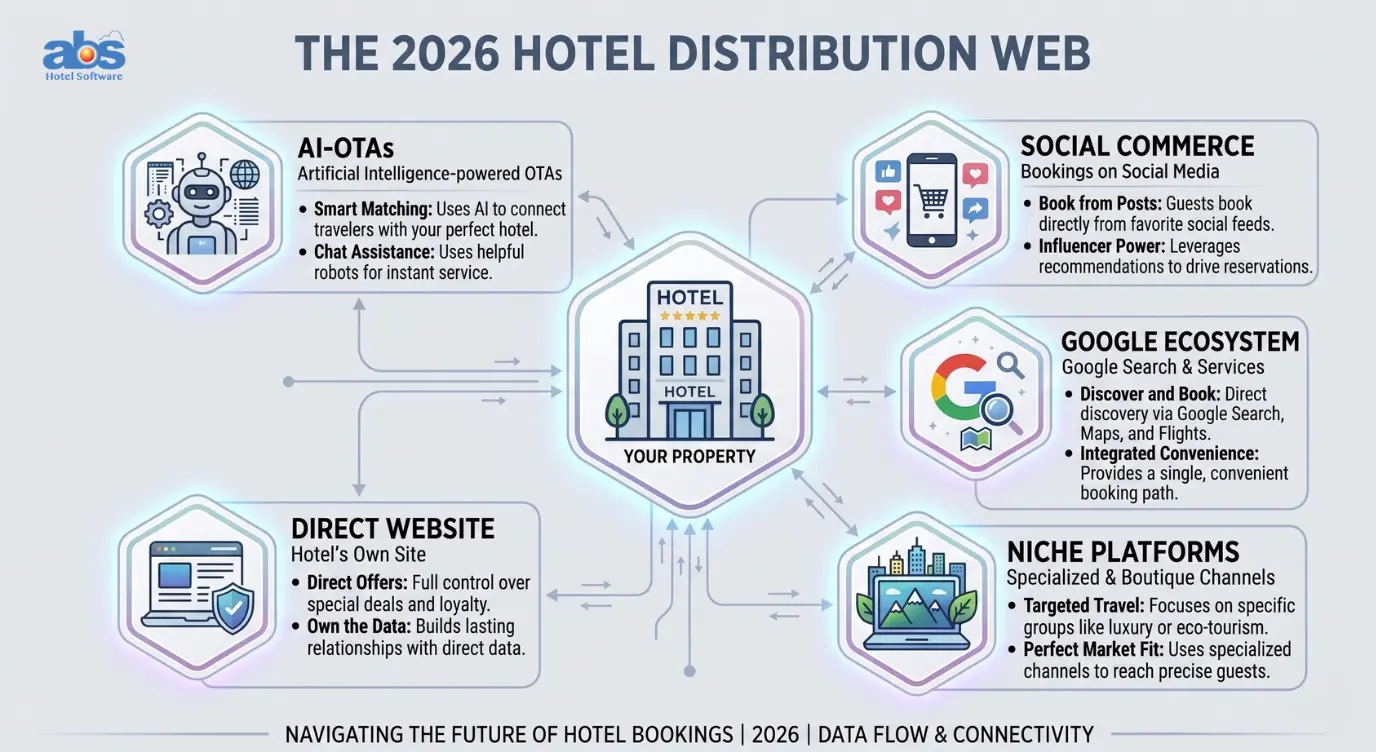
Here are the primary hotel distribution channels shaping the industry in 2026:
The Evolving OTA Landscape
Online Travel Agencies (OTAs) like Booking.com and Expedia remain industry giants, but they have transformed. They now heavily feature AI Trip Planners that curate highly specific suggestions for users. Small properties must optimize their listings for semantic search—focusing on conversational context and unique property attributes rather than old-school keyword stuffing.
Social Commerce Storefronts
Social media is no longer just a top-of-funnel marketing tool. Platforms like Instagram and TikTok now offer seamless, native “Book Now” buttons directly within the app. For design-forward boutique properties, this is no longer a marketing funnel—it is a direct, high-converting hotel distribution channel.
The Google Ecosystem
Google Hotel Ads is now deeply integrated with Google Maps, Google Lens (visual search), and Google Wallet. If a traveler screenshots a photo of your hotel on social media, Google Lens can immediately surface your direct booking rates, bridging the gap between inspiration and transaction.
Niche and Curated Platforms
High-value travelers are increasingly avoiding the clutter of mega-OTAs. Platforms like GoodTrips (focusing on sustainability) or Plum Guide (curating high-quality stays) are gaining massive traction and represent highly targeted distribution channels for properties that fit their specific criteria.
AI-Powered Direct Booking Channels
Your own website is your most critical distribution channel. Modern booking engines utilize hyper-personalization, automatically changing the hero image, language, or promotional offer based on the visitor’s physical location or past browsing history in real-time.
Why a Modern Online Hotel Distribution Strategy is Non-Negotiable
While the foundational benefits of gathering reviews and enabling instant bookings remain true, the reasons you absolutely need a robust online hotel distribution strategy have expanded significantly in 2026.
Capturing the “Intent-to-Travel” Audience
AI algorithms on social media and search engines can identify users actively planning trips before those users even know which town they want to visit. If your property isn’t distributed online with a live, real-time feed of room availability, you are completely invisible to these predictive algorithms.
Managing AI-Generated Feedback Summaries
Platforms like TripAdvisor and Google now use AI to instantly summarize thousands of reviews into a quick “Property Vibe Check” (e.g., “Guests love the quiet garden but note the stairs are steep”). Maintaining a steady flow of recent, positive reviews across your distribution channels is vital to feed this AI and control your property’s narrative.
Enabling Dynamic Pricing and Revenue Management
Without a modern channel manager feeding real-time occupancy data to your website and OTAs, you cannot effectively implement advanced revenue management strategies, such as length-of-stay discounts or automated last-minute flash sales.
Integrating the “Connected Trip”
Travelers in 2026 expect booking their taxi from the train station to be as easy as booking their room. Modern distribution partners offer seamless API integrations for local experiences, dining, and transport, creating lucrative new ancillary revenue streams for your business.
How to Master Hotel Room Distribution Management This Year
The primary goal of hotel room distribution management has shifted. It is no longer “sell all rooms everywhere.” The new mandate is to “sell the right room, to the right guest, at the lowest possible cost of acquisition.”
Navigate New Cost Structures & Attribution
OTA commission fees (typically 15-30%) are still a reality. However, the hidden cost in 2026 is Attribution Confusion. Did the booking originate from TikTok, or did they see your video and then Google you?
-
The Fix: Implement a prominent Direct Booking Incentive on your Google Business Profile (e.g., “Book Direct: Free Welcome Drink & Early Check-In”) to sway undecided guests away from OTA commissions at the final touchpoint.
Implement “Smart Distribution” over Wide Distribution
Connecting to 20 different OTAs you don’t need is a recipe for operational chaos.
-
The Fix: Use your Property Management System (PMS) data to identify the ideal booking window of your target guest. If you run a pet-friendly inn, hyper-target your distribution by ensuring you are mapped correctly on niche sites that verify “Dog-Friendly” listings, rather than just blasting your inventory to generic boards.
Maximize the Billboard Effect 2.0
Guests will always use OTAs for research, but you want them to book direct. In 2026, you must make this leap seamless.
-
The Fix: Ensure your website’s AI chatbot is trained to proactively answer: “Why is it better to book directly here than on an OTA?” You can also use QR code watermarks on your OTA photos that direct scanners to a secret landing page with a “Direct Escape” promo code.
Turn Social Media into a True Distribution Arm
Stop thinking of social media as just “branding.” It is now a full-funnel sales channel.
-
The Fix: Partner with micro-influencers and local creators, providing them with unique, trackable booking links that offer their specific followers a small discount. This turns social content into measurable hotel room distribution management.
Build an Unconventional Partner Ecosystem
The list of unconventional partners is growing beyond standard travel agents.
-
The Fix: Partner with local co-working spaces for “Work From Here” rates, or team up with local doggy daycares to offer a “Worry-Free Evening Out” package for travelers with pets.
| Feature | Wide Distribution | Smart Distribution |
| Philosophy | Being Everywhere: Maximizing reach across all available channels. | Targeted Placements: Selecting specific channels and partners for relevance. |
| Placement Strategy | Broad and undifferentiated; “spray and pray” approach. | Data-driven, specific, and highly relevant to the target audience. |
| Commission/Cost Structure | Typically High Commission and high overall costs due to breadth. | Strategic commission models often focused on value; lower overall cost per effective acquisition. |
| Conversion Rate | Tends to be lower, as audience intent is varied. | Notably High Conversion, as messaging is tailored to high-intent audiences. |
| Efficiency | Less efficient resource allocation; higher potential for wasted spend. | Highly efficient allocation, maximizing return on investment. |
| Customer Quality | Varied, often including many low-intent or less valuable customers. | Specific, often attracting higher-quality, more loyal, and valuable customers. |
| Reach vs. Relevance | Prioritizes maximum reach (high quantity, lower average relevance). | Prioritizes relevance (optimal reach, high quality/alignment). |
| Data Usage | Limited data insights often used for optimization. | Deep data insights drive precise targeting and placement decisions. |
| Control & Insights | Lower control over brand messaging and customer experience; less actionable data. | Greater control and consistency; generates deeper and more useful insights. |
The Ultimate 2026 Hotel Distribution Technology Stack
Managing this complex web of distribution channels without the right software is impossible. To stay competitive, small accommodation providers need to adopt the modern hotel distribution technology stack:
The All-in-One PMS with Embedded RMS
You no longer just need a basic channel manager. You need a Property Management System (PMS) with a built-in Revenue Management System (RMS). This technology analyzes competitor pricing data from OTAs in real-time and automatically suggests optimal rate adjustments for the next 30 days.
AI-Enhanced Booking Engines
Your direct booking engine must work as hard as an OTA. Look for tech that offers automated Abandoned Cart Recovery (via SMS or WhatsApp) and Guest Recognition, which automatically applies loyalty discounts if a returning guest’s email is detected during checkout.
Direct Connectivity to Google Vacation Rentals
Ensure your channel manager pushes your live inventory feed directly to Google’s free organic booking links, which now frequently dominate mobile search results above traditional paid ads.
Conclusion: The 2026 Outlook
Hotel distribution for small providers is more complex, but also more democratized than ever. While the giants of the OTA world still command traffic, the tools to build a profitable, direct-to-guest funnel are now within reach and increasingly automated. The key for 2026 is not just to be everywhere, but to be optimized and connected everywhere you appear. Focus on the data, trust the automation, and keep the guest experience at the center of your tech stack.
Frequently Asked Questions (FAQ)
Q: What is the most cost-effective hotel distribution channel in 2026?
A: Your property’s direct website remains the most cost-effective distribution channel. By utilizing an AI-enhanced booking engine and optimizing your Google Business Profile with direct booking incentives, you can acquire high-intent guests without paying 15-30% OTA commission fees.
Q: How has hotel room distribution management changed with AI?
A: AI has automated much of the revenue management process. Modern distribution technology uses AI to analyze market demand, adjust room rates dynamically in real-time, and personalize the booking experience for users based on their search behavior, resulting in higher conversion rates.
Q: Do small hotels still need OTAs like Booking.com or Expedia?
A: Yes, OTAs are still crucial for visibility and the “Billboard Effect.” However, small hotels should practice “Smart Distribution”—using OTAs to capture new, top-of-funnel guests while implementing aggressive strategies (like direct incentives) to convert those browsers into direct bookings on their own websites.
Q: What is Social Commerce in hotel distribution?
A: Social commerce allows users to book a hotel room directly through social media apps like TikTok and Instagram without leaving the platform. It removes friction from the buying process, turning visual inspiration directly into confirmed revenue.