
The Ultimate 2026 Hospitality Lexicon:
Abbreviations, Tech Terms & Slang for Modern Hotel Management
Category: Hotel Management | Reading Time: 12 minutes | Author: Javier
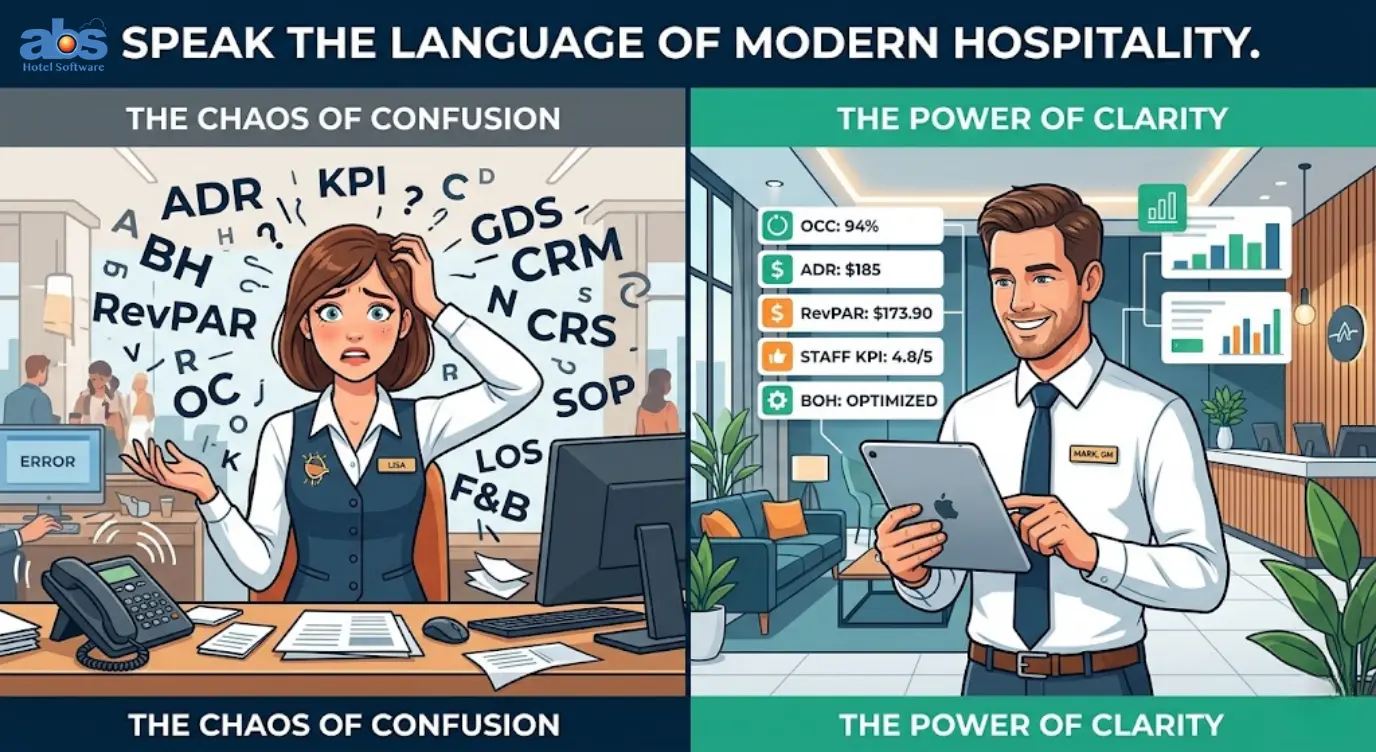
Navigating the world of hospitality can sometimes feel like learning a second language. Between the alphabet soup of hospitality abbreviations like ADR and BEO, and the specific hotel slang used between the front desk and housekeeping, it’s easy to get lost in translation.
Whether you’re onboarding new team members or just need a refresher on the difference between ADR and TrevPAR, we’ve compiled the ultimate cheat sheet. Below is a comprehensive guide covering essential abbreviations, tech terms, and operational jargon every independent hotel operator needs in their back pocket for 2026.
Why Mastering Hotel Abbreviations and Jargon Matters in 2026
Knowing what RevPAR or MLOS means isn’t just about sounding smart—it’s about making profitable decisions. A unified vocabulary reduces friction between departments, ensures your team is reading from the same playbook, and helps you optimize your modern hospitality tech stack.
The Core Hotel Acronym Decoder (A–Z Hospitality Abbreviations)
This is the shorthand of the industry. Mastering these hotel acronyms will save you time on reports and help you speak the language of revenue management seamlessly.
Key Revenue and Operations Metrics
-
ABVPOR (Average Booking Value Per Available Room): A deeper profitability metric factoring in costs, not just room price.
-
ADR (Average Daily Rate): The classic KPI for measuring the average price paid per occupied room.
-
ALOS (Average Length of Stay): Crucial for forecasting housekeeping needs and revenue.
-
CPOR (Cost Per Occupied Room): Helps determine true profitability per guest.
-
EBITDAR (Earnings Before Interest, Taxes, Depreciation, Amortization, and Rent): The hardcore financial metric investors and owners care about.
-
GOPPAR (Gross Operating Profit Per Available Room): Goes beyond revenue to show actual profit per room, accounting for all operating costs.
-
KPI (Key Performance Indicator): Measurable values like ADR, occupancy, and reviews that track hotel success.
-
MPI (Market Penetration Index): Shows how your occupancy compares to your competitive set.
-
RevPAR (Revenue Per Available Room): The gold standard KPI combining occupancy and rate.
-
RevPOR (Revenue Per Occupied Room): Includes all spend from a guest (room, bar tab, spa) while excluding empty rooms.
-
STR Report (Smith Travel Research Report): Industry benchmarking data showing how you perform against local competitors.
-
TrevPAR (Total Revenue Per Available Room): The big picture view, including rooms, F&B, parking, and spa revenue.
-
YTD (Year To Date): Performance from January 1 (or fiscal start) to now.
Booking, Systems, and Front-of-House Acronyms
-
BAR (Best Available Rate): The lowest publicly available rate for a specific night with no restrictions.
-
BEO (Banquet Event Order): The bible for any event; details every setup, meal time, and AV requirement.
-
BOH / FOH (Back of House / Front of House): The invisible engine (kitchen, accounting) versus the guest-facing stage (reception, concierge).
-
BRG (Best Rate Guarantee): A promise that the hotel’s website offers the lowest price compared to third-party channels.
-
CRM (Customer Relationship Management): Software used to manage guest communication and loyalty.
-
CRS (Central Reservation System): The software hub managing inventory across your website, OTAs, and the GDS.
-
CTA / CTD (Closed to Arrival / Closed to Departure): Restrictions used during high-demand periods to control guest flow.
-
DND (Do Not Disturb): The universal signal that privacy is required.
-
ETA (Estimated Time of Arrival): Used for check-in planning and vendor deliveries.
-
F&B (Food and Beverage): Refers to the hotel’s restaurant, bar, and catering operations.
-
MICE (Meetings, Incentives, Conferences, Exhibitions): The lucrative corporate group segment.
-
MLOS (Minimum Length of Stay): A tool for maximizing revenue over a holiday weekend or peak season.
-
NRB (Negotiated Rate Business): Corporate accounts with pre-set, discounted rates.
-
OTA (Online Travel Agency): Partners like Booking.com and Expedia.
-
OTB (On The Books): Confirmed reservations currently in the system—the baseline for your forecast.
-
PAX (Persons): Industry shorthand for “number of people” (e.g., “a 20 pax event”).
-
PMS (Property Management System): The central nervous system of your hotel operations.
-
POS (Point of Sale): The system used for processing payments in the restaurant, bar, or spa.
-
SOP (Standard Operating Procedure): The documented way things must be done to ensure consistency.
Front Desk Lingo & Core Operations Terminology
Beyond acronyms, these are the operational tech terms your staff uses every day to keep the house running smoothly.
-
Channel Manager: Software that prevents double bookings by syncing availability instantly across all OTAs.
-
Comp Set (Competitive Set): The 5-6 local hotels you measure yourself against.
-
Double Booking: The dreaded mistake of reserving the same room for two different guests.
-
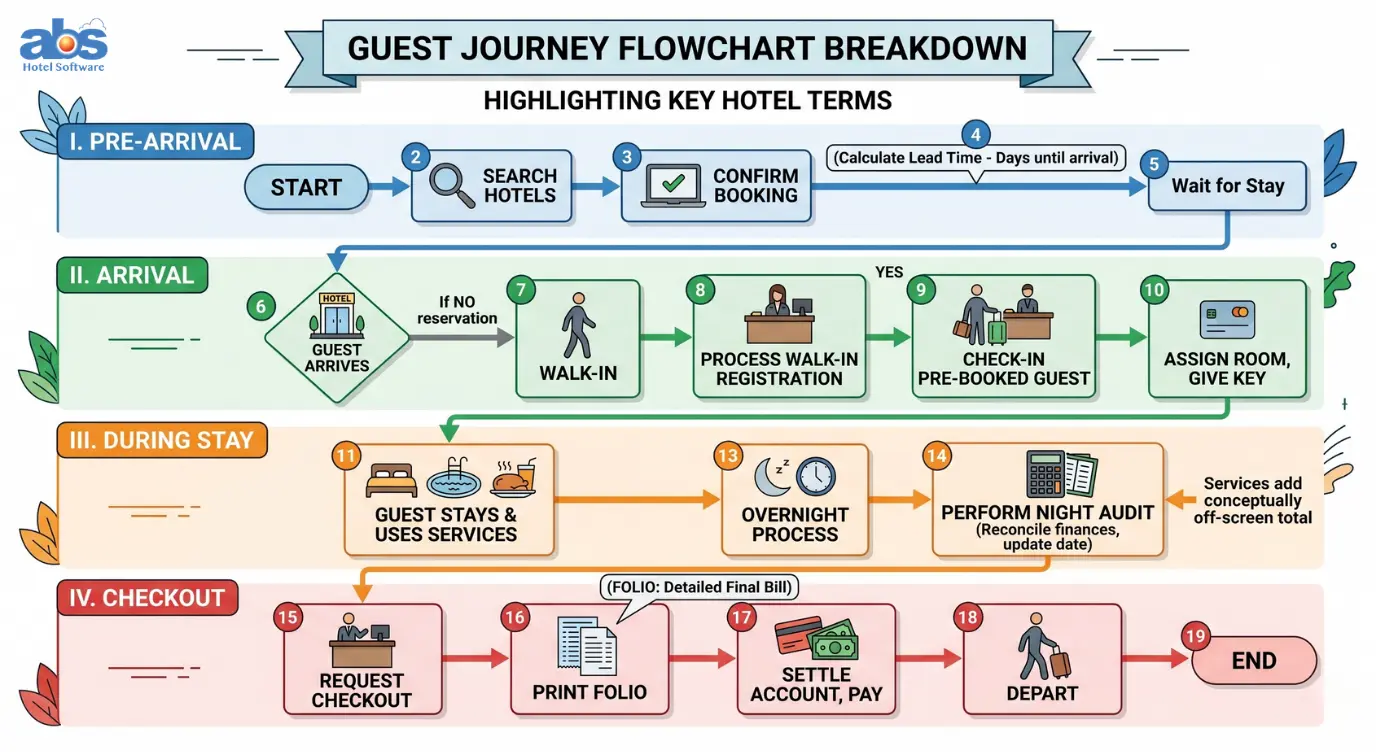
Folio: The detailed guest bill presented at checkout.
-
House Count: The total number of guests currently staying in the hotel.
-
Lead Time: The number of days between a booking being made and the guest’s actual arrival.
-
Net Rate: The wholesale price you give an OTA before they add their markup.
-
Night Audit: The critical overnight process of rolling the business date and reconciling the day’s financial activity.
-
No-Show: A guest who neither cancels nor arrives.
-
Overbooking: A calculated risk strategy to offset cancellations and hit 100% occupancy.
-
Rack Rate: The published, full-price rate of the room before any discounts.
-
Rate Parity: The requirement to keep your public room price consistent across all channels.
-
Room Block: A set number of rooms held for a wedding party or corporate group.
-
Turndown Service: The evening ritual of refreshing the room and closing drapes.
-
Walk-In: A traveler arriving at the front desk without a reservation.
The 2026 Hospitality Tech Stack: AI & Software Terms
The back office is changing rapidly. These modern tech terms are now essential for hospitality professionals managing automation and digital guest experience platforms.
-
AI Revenue Assistant: An AI-driven module within the PMS that autonomously adjusts rate fences based on real-time pickup data.
-
Attribute-Based Selling (ABS): Allows guests to book specific features like “High Floor” or “Bathtub” rather than just a generic room type.
-
Contactless Journey: A stay where check-in, room key, and checkout occur entirely via smartphone.
-
Direct Booking Incentive (DBI): A specific perk offered only on the hotel website to circumvent OTA commissions.
-
Guest Messaging Hub: A unified inbox (SMS, WhatsApp, Messenger) integrated with the PMS.
-
Labor Optimization Model: Software that schedules staff based on forecasted occupancy to control labor costs.
-
Upsell Automation: Automated pre-arrival emails offering paid upgrades without staff intervention.
Housekeeping, Maintenance, and Sustainability Glossary
The unsung heroes of the hotel speak their own language. Plus, with modern eco-friendly initiatives, corporate RFPs now demand a specific sustainability vocabulary.
Housekeeping & Asset Management
-
Attendant’s Closet: The stocking area on each floor for linens and supplies.
-
Caddy: The rolling cart of cleaning supplies and amenities.
-
Linen Asset: Sheets and towels, a major cost center and inventory item.
-
PMP (Preventative Maintenance Program): Scheduled upkeep to avoid the “Room Out of Order” status.
-
Squeegee: Essential tool for streak-free mirrors and shower doors.
Green Hotel Practices & ESG Terms
-
Carbon Offsetting Program: An optional fee allowing guests to fund environmental projects.
-
Circular Economy (Linen Program): Upcycling worn-out bed sheets into cleaning rags or tote bags.
-
ESG Score: Environmental, Social, and Governance rating used by investors.
-
Green Key Certification: An international eco-label for sustainable hotel operations.
-
Greywater Recycling: Reusing water from sinks and showers for toilet flushing.
-
Smart Thermostat / Occupancy Sensor: HVAC systems that reduce energy use when a room is vacant.
-
Zero Waste: An operational philosophy aimed at diverting 90%+ of waste from landfills.
The Financial Deep Dive: Advanced Hotel Management Lexicon
When you’re looking at the P&L statement, these terms separate the operators from the investors.
-
Audit Trail: An unbroken, secure log of every financial transaction.
-
Dynamic Pricing: Using software to automatically raise or lower rates based on real-time demand.
-
Flash Sales: Short, sharp discount campaigns designed to fill need periods quickly.
-
Forecasting Model: Using historical data to predict future occupancy and revenue.
-
Lose-It Rate: A special rate authorized only at the desk to save a booking from walking to a competitor.
-
Yield Management: The art of selling the right room, to the right guest, at the right time, for the right price.
Behind the Scenes: Common Hotel Slang for 2026
Forget the textbook. This is the hotel slang the team actually uses in the back office.
-
“Bumped”: Upgraded to a better room. (“Mr. Jones got bumped to the suite.”)
-
“Comp”: Complimentary. (“We had to comp the breakfast due to the noise issue.”)
-
“Close the Books”: End-of-day financial reconciliation.
-
“Full Tilt”: Operating at maximum occupancy and volume.
-
“Skipper”: A guest who departed without paying the bill.
Conclusion: Mastering the Language of Hospitality Management
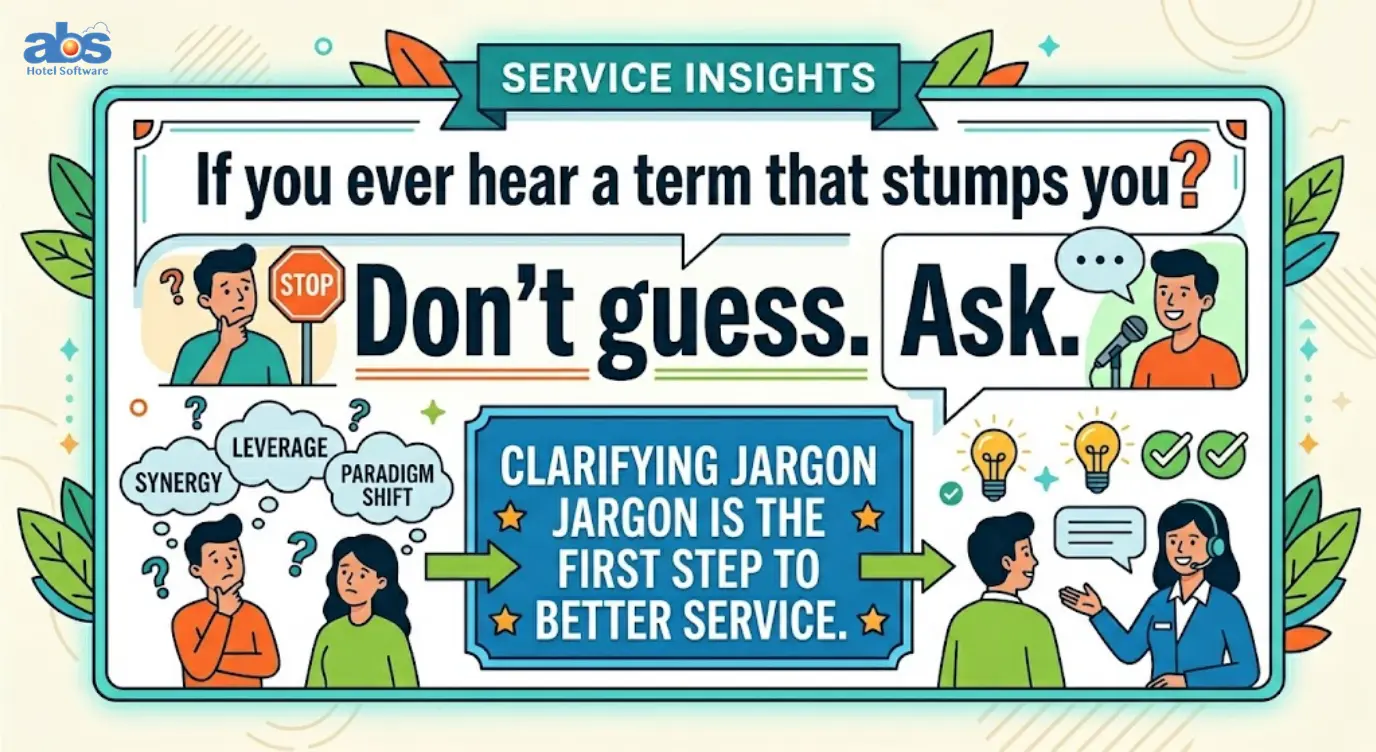
Memorizing all industry abbreviations and tech terms might feel daunting, but mastering this ultimate hospitality lexicon is one of the most effective ways to align your team and drive overall profitability. When the front desk, housekeeping, and management all speak the exact same language, costly errors like double bookings drop, operational efficiency soars, and guest satisfaction naturally improves.
As the industry continues to evolve rapidly through 2026, staying fluent in the latest software, AI, and sustainability jargon ensures your property remains competitive and ready to meet modern traveler demands. Ultimately, understanding these metrics and operational terms isn’t just about showing off industry knowledge—it’s the key to making smarter, data-driven decisions for your business.
Frequently Asked Questions (FAQs) About Hotel Terminology
Q: What is the difference between ADR and RevPAR?
A: ADR (Average Daily Rate) only calculates the average price of the rooms that were actually sold. RevPAR (Revenue Per Available Room) factors in your unsold rooms, giving you a more accurate picture of your overall financial performance and occupancy efficiency.
Q: What does PMS stand for in modern hospitality?
A: PMS stands for Property Management System. It is the central software that hotel managers use to handle reservations, check-ins, check-outs, room assignments, and billing. In 2026, a modern PMS also integrates with AI tools and channel managers.
Q: Why is Rate Parity important for hotels?
A: Rate Parity is the practice of maintaining consistent public rates across all distribution channels (your website, OTAs, etc.). It ensures guests trust your pricing and prevents OTAs from undercutting your direct booking efforts.
Q: What does it mean when a hotel is overbooked?
A: Overbooking is a strategic revenue management tactic where a hotel accepts more reservations than it has physical rooms. Management teams use forecasting models to predict “no-shows” and cancellations, aiming to hit exactly 100% occupancy without having to “walk” (relocate) a guest.