
Perak Local Service Charge: A Complete Guide for Hoteliers
Category: Hotel Compliance & Regulation | Reading Time: 4 Minutes | Author: William Tang
If you run a hotel in Perak, understanding the Perak Local Service Charge (LSC) isn’t just about compliance, it’s about running your business smoothly and avoiding unnecessary headaches. This mandatory fee applies to accommodations across specific municipal areas and affects everything from your pricing structure to how you bill guests.
Whether you manage a boutique hotel or a registered homestay, here is everything you need to know about Perak’s LSC, from what it is to how to implement it correctly in 2025 and beyond.
What Exactly is the Perak Local Service Charge (LSC)?
The Perak Local Service Charge is a government-mandated fee that accommodation providers in the state must collect from their guests. Calculated as a fixed rate per room per night, the revenue generated goes directly toward supporting local government initiatives, community upkeep, and upgrading tourism infrastructure.
How the Perak LSC Affects Your Business Strategy
Getting this right matters because it directly affects your pricing strategy and revenue management. When you understand the Perak LSC thoroughly, you can communicate transparently with guests, avoid billing disputes, and maintain your competitive edge in the market.
Who Needs to Collect the Perak Local Service Charge?
If you operate any type of commercial accommodation in Perak, you are likely required to collect this fee from guests, provided your property is located within designated local council areas.
Accommodations Subject to the Perak LSC
-
Hotels and Resorts
-
Motels and Inns
-
Budget Hotels
-
Registered Homestays
The Cost of Non-Compliance
Compliance with the Perak Local Service Charge isn’t optional. You must calculate the charge accurately, display it clearly on guest invoices, and remit payments to the relevant authorities on time. Failure to do so can lead to significant penalties, including heavy fines and potential legal action against your business.
2025 Rates for the Perak Local Service Charge
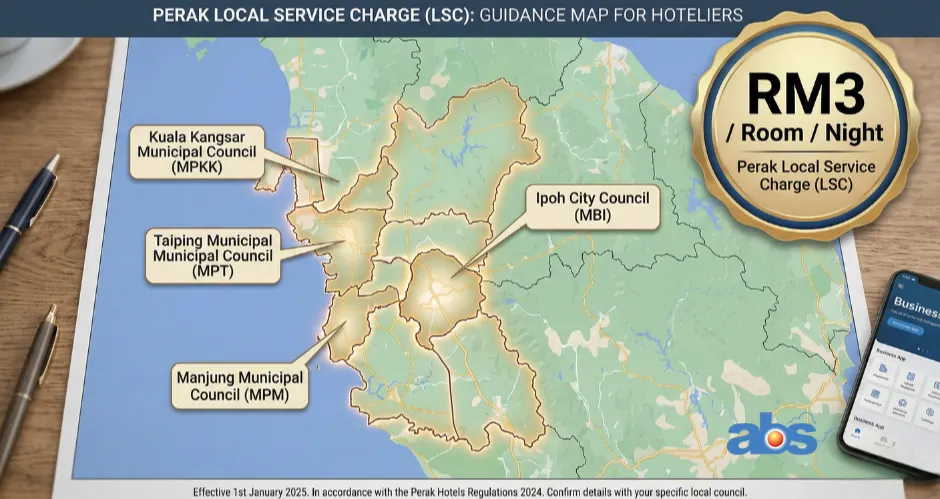
Starting 1st January 2025, the Local Service Charge is firmly set at RM3 per room per night for all hotel categories. This was implemented in accordance with the Perak Hotels Regulations 2024.
Major Municipal Councils Enforcing the Perak LSC
The RM3 charge currently applies across major councils in the state, including:
-
Ipoh City Council (MBI)
-
Manjung Municipal Council (MPM)
-
Taiping Municipal Council (MPT)
-
Kuala Kangsar Municipal Council (MPKK)
How to Implement the Perak Local Service Charge at Your Hotel
Staying compliant doesn’t have to be complicated. Here is a step-by-step breakdown of how to integrate the Perak LSC into your daily operations:
1. Register with Your Local Council
Before you can begin collecting the Perak LSC, you must officially register with the local council where your property is located. This process typically involves submitting your active business license alongside other standard operational details.
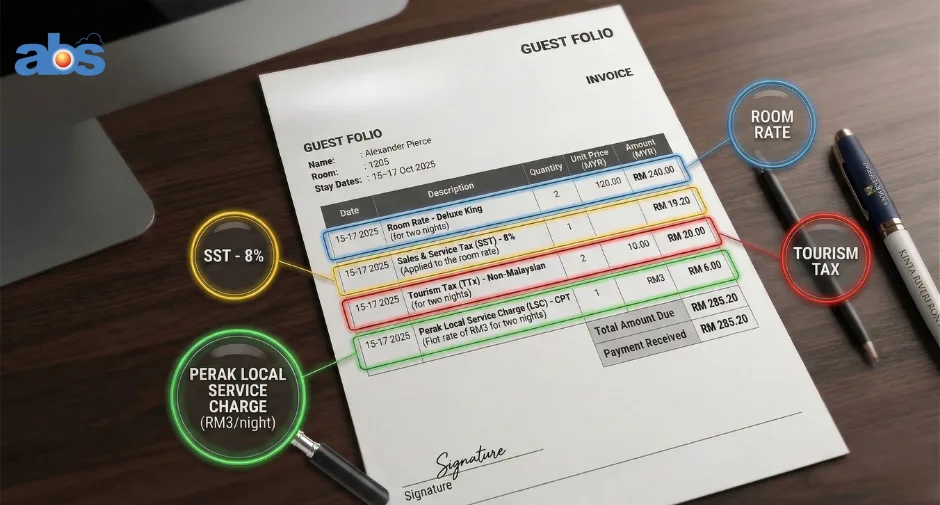
2. Display the Perak LSC Separately on Invoices
Transparency is key. The Perak LSC must appear as a distinct line item on all guest invoices and receipts. Do not bundle it with your base room rates or other statutory charges like the Tourism Tax (TTx) or Sales and Service Tax (SST). Keeping it separate prevents guest confusion and proves your compliance during an audit.
3. Collect and Remit Payments Monthly
You are legally responsible for collecting the LSC from your guests and sending the total amount to your local council within the required timeframe—usually on a monthly or quarterly basis. Because late payments trigger penalties, it is highly recommended to set up an automated or reliable manual system in your accounting department.
4. Stay Updated on Municipal Regulations
Local councils occasionally revise LSC rates or introduce temporary exemptions. Keeping in regular contact with your municipal council ensures you are always in the loop and fully compliant with any sudden changes.
Frequently Asked Questions About the Perak Local Service Charge
1. Does the Perak LSC apply to all types of accommodations?
It applies to licensed hotels, motels, resorts, and registered homestays. Informal accommodations (like unregistered Airbnb listings) may not be required to charge the LSC unless strictly regulated by their specific local councils. Always check with your local authority to confirm your status.
2. Do long-term guests need to pay the Perak LSC?
Some municipal councils offer exemptions for extended stays (for example, guests staying over 30 consecutive days). You must verify these specific rules directly with your local municipal office, as policies can vary by district.
3. Can our hotel absorb the Perak LSC instead of charging guests?
Technically, yes—you can choose to absorb the cost into your operational expenses. However, most hotels choose to list it separately. Doing so maintains transparency with the guest and prevents the hotel from eating the cost of what is ultimately a state regulatory fee.
Final Thoughts
The Perak Local Service Charge is a straightforward but essential part of operating a successful hospitality business in the state. By understanding the RM3 rate, following the proper invoicing steps, and keeping up with reporting requirements, you can easily avoid fines. This allows you to keep your focus exactly where it belongs: on delivering exceptional hospitality to your guests.
For the latest regulatory updates, always check directly with your local municipal council. Stay informed, stay compliant, and let your guests enjoy their stay without a hitch.
About the Author: William Tang is a Hotel Technology Consultant at BMS Solution, specializing in the Southeast Asian hospitality market. He helps streamline operations and maximize revenue for over 1,500 hotels across Malaysia, Singapore, Indonesia, and the Philippines.