3 Dynamic Pricing Strategies to Automate for Maximum
Hotel Revenue (2026 Update)
Category: Hotel Revenue Management & Technology | Reading Time: 5 Minutes | Author: William Tang
Key Takeaways:
-
Speed is the new standard: With 7-day booking windows, static pricing restricts revenue; dynamic pricing captures it by reacting instantly to micro-trends.
-
Automation drives profitability: Utilizing automated dynamic pricing tools can increase a hotel’s Average Daily Rate (ADR) and Revenue Per Available Room (RevPAR) by an average of 12% to 18%.
-
The top 3 strategies to automate: Rate adjustments based on real-time occupancy, automated Minimum Length of Stay (MinLOS) restrictions, and algorithmic competitor positioning.
-
AI is the competitive edge: Systems using causal AI forecast demand up to 90 days out, allowing properties to maintain OTA parity and maximize Gross Operating Profit Per Available Room (GOPPAR) without manual spreadsheet work.
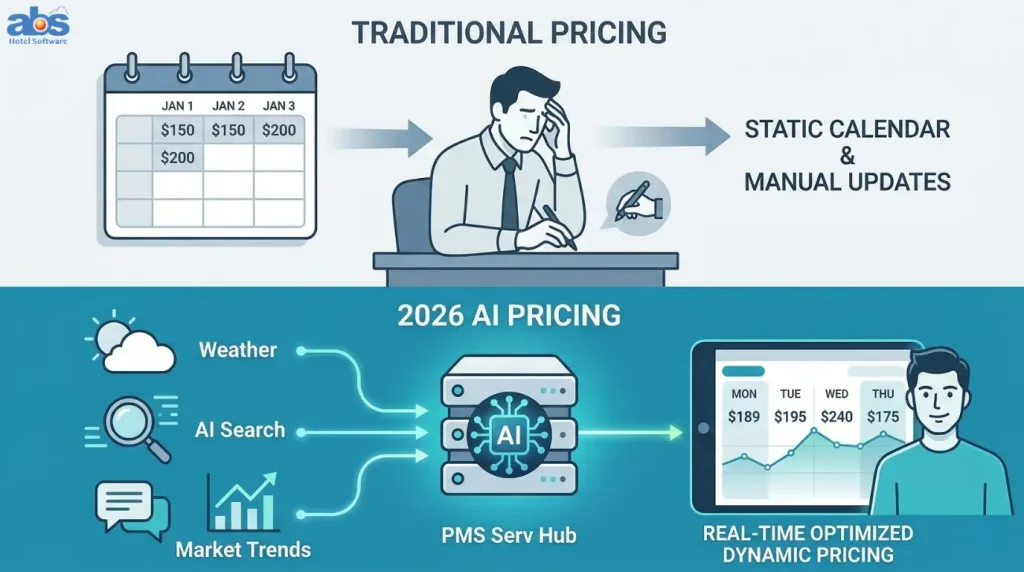
The hospitality market in 2026 is defined by one primary metric: speed. With average booking windows shrinking to just 7–10 days and the continued rise of blended “bleisure” travel, sticking to static, seasonal pricing is no longer viable.
Today, maximizing hotel revenue requires reacting instantly to micro-trends. Modern revenue management tools allow properties to automate these adjustments, freeing staff from cumbersome spreadsheets so they can focus on the guest experience while ensuring your property captures the absolute highest possible ADR and RevPAR.
If you want to stay ahead of the curve, here is your guide to the top dynamic pricing strategies to automate for maximum hotel revenue this year.
What is Hotel Dynamic Pricing?
Unlike static pricing—which relies on fixed rates regardless of demand—dynamic pricing adjusts room rates and stay restrictions in real-time based on local demand, market conditions, and competitor activity.
It is the core philosophy of modern hotel revenue management: selling the right room, to the right guest, at the right time.
| Feature | Static Pricing | Dynamic Pricing |
| Rate Adjustments | Infrequent (Seasonal/Annual) | Real-time (Daily/Hourly) |
| Data Reliance | Historical performance | Real-time market data & AI forecasting |
| Revenue Potential | Capped during high demand | Maximized across all demand levels |
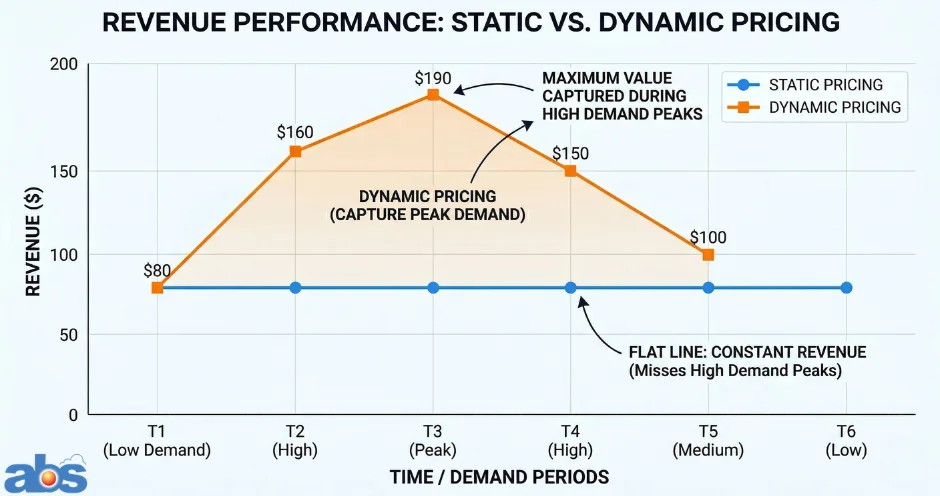
- Comparison chart of static vs dynamic hotel pricing strategies showing revenue growth
Why Automating Dynamic Pricing Matters in 2026
Consumers encounter dynamic pricing everywhere. From airline fares to ride-sharing apps, modern travelers actively expect price fluctuations. According to recent industry travel trend reports, automation and AI are the defining factors for profitable hospitality operations this decade.
If your competitors are using AI-driven hotel pricing automation to adjust their rates multiple times a week and you aren’t, you face two massive risks: pricing yourself completely out of the market during slow periods, or leaving critical revenue on the table during demand spikes. Furthermore, automation ensures strict OTA parity across all your booking channels, protecting your brand reputation and bottom-line GOPPAR.
3 Dynamic Pricing Strategies to Automate for Maximum Hotel Revenue
To illustrate how automated revenue management works in practice, imagine a major concert is announced in your city for a typically quiet Saturday night, three months away. Here are three strategies you can deploy.
1. Adjusting Hotel Rates Based on Occupancy Levels
As market demand spikes, raising your rates is the logical first step. However, a measured, automated approach yields the highest total revenue.
-
Test the waters: If your property is sitting at 20% occupancy, automate a rate increase of 20% rather than 40%. This prevents you from scaring off early-bird bookers.
-
Scale up: Program your system to automatically trigger higher rate tiers as occupancy climbs past the 50% mark.
-
Fill the gaps: If the event is less than a week away and you are only 60% booked, your automated system should seamlessly lower rates to capture last-minute travelers. A slightly discounted sale always beats an empty room.
2. Utilizing Stay Restrictions to Maximize Room Fill
Don’t just focus on filling the single busy night. The best dynamic pricing strategies for hotels maximize the nights immediately before and after the main event.
-
Implement MinLOS (Minimum Length of Stay): Require a two or three-night stay encompassing the concert weekend. This prioritizes highly profitable weekend travelers over single-night guests who leave your Friday and Sunday nights empty.
-
Close to arrivals: Block new check-ins on the peak Saturday night. This forces guests to book the slower shoulder nights (Friday or Sunday) if they want to stay through the weekend.
-
Automate flexibility: As the event date approaches, your software should automatically lift these restrictions to sell off any remaining, last-minute inventory.
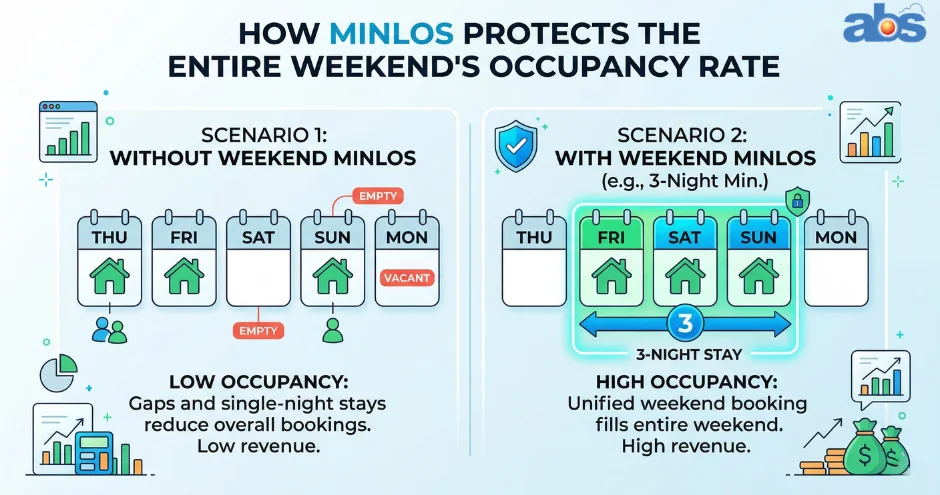
- Calendar showing hotel MinLOS stay restrictions to maximize weekend revenue
3. Competitor-Based Pricing and Market Positioning
Travel shoppers always compare prices across multiple tabs. To maximize hotel revenue, you must do the same.
-
Monitor your compset: Keep a close eye on the top five properties most likely to attract your target guests. Sudden rate changes from competitors are your first signal of shifting market demand.
-
Position strategically: If your goal is to boost occupancy during a slump, automate your pricing to stay exactly 10% below your highest-priced competitor. If market demand is surging, align your rates with the market average to avoid leaving money on the table.
Case in Point: Automating with ABS Property Management System
Manually spying on competitors, tracking local events, and adjusting rates across multiple OTAs is incredibly time-consuming and prone to human error.
To implement these strategies effectively, properties are turning to unified platforms. The ABS Property Management System automates your entire revenue strategy using a proprietary causal AI engine. It actively combines real-time competitor data, local event insights, and advanced demand forecasts (looking up to 90 days out) to adjust your rates and restrictions automatically. For operators who prefer a hands-on approach, the system also provides targeted, AI-driven daily recommendations.
Maximize Your Revenue Opportunities Today
You don’t need to be a data scientist or a revenue management expert to succeed in 2026. By applying these three dynamic pricing strategies and leveraging smart automation, you can ensure your property remains highly competitive, saves countless staff hours, and significantly boosts overall profitability.
Ready to stop leaving money on the table? [Click Here to Request Demo or Contact Our Software Consultant] to see how ABS Property Management System can transform your hotel’s revenue strategy.
Frequently Asked Questions (FAQs) About Hotel Dynamic Pricing
Q:What is the main benefit of dynamic pricing for hotels?
A:The main benefit of hotel dynamic pricing is the ability to maximize Revenue Per Available Room (RevPAR) across all market conditions. By automatically adjusting rates based on real-time demand, hotels can charge premium prices during busy periods and offer competitive discounts during slow periods to ensure consistent, highly profitable occupancy.
Q:How does AI improve hotel pricing automation?
A:AI improves hotel pricing automation by analyzing massive datasets—including competitor rates, local events, and historical booking patterns—to predict future demand with extreme accuracy. Systems like the causal AI used in the Property Management System can automatically set the optimal price up to 90 days in advance without manual human calculation.
Q:What does MinLOS mean in hotel revenue management?
A:MinLOS stands for Minimum Length of Stay, which is an automated inventory restriction strategy used to protect multi-night revenue. It requires guests to book a minimum number of nights (e.g., 2 or 3 nights) during a high-demand period to prevent single-night bookings from blocking out longer, more profitable stays.