16 Hotel Rate Types for 2026:
Maximizing Revenue & Profit in the Age of AI
Category: Hotel Revenue Management & Technology | Reading Time: 10 minutes | Author: Javier
The hospitality market isn’t just unpredictable anymore; it’s hyper-personalized and operating at machine speed. In 2026, a local weather forecast, a viral social media trend, or a sudden flight delay can trigger an immediate demand spike. Meanwhile, guests are no longer opening ten browser tabs, they’re asking AI agents to find the perfect stay in seconds.
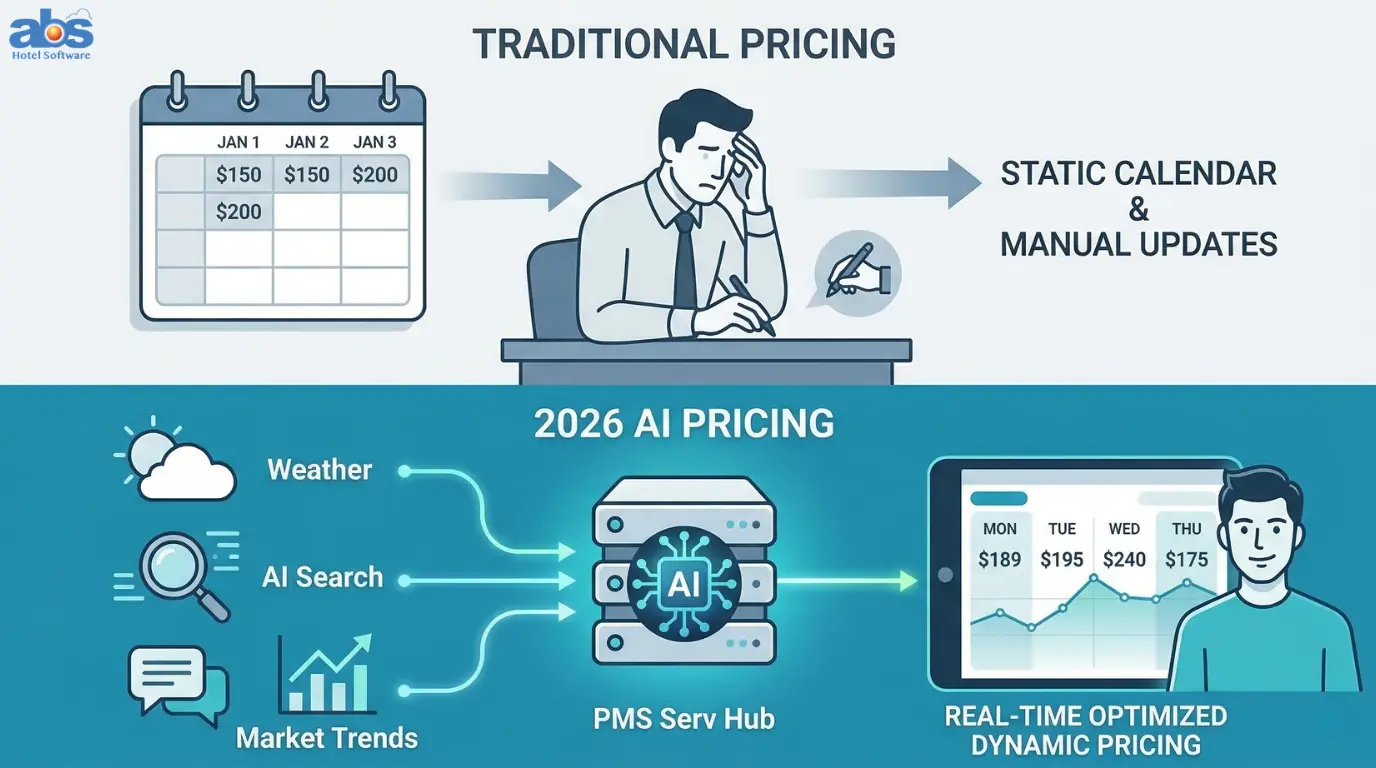
The days of manual, daily rate updates are fading. To maximize both revenue and profit in this new landscape, properties must shift toward collaborative AI strategies that react to market shifts in real-time. RevPAR alone is no longer the finish line; the focus has shifted to profit per guest and revenue per square meter.
In this guide, we’ll break down how to build flexible hotel rate plans, integrate them with a total revenue strategy, and leverage technology that acts as your AI co-pilot.
What Are Hotel Room Rates in the 2026 AI Era?
Traditionally, a room rate is the dynamically priced cost for a specific room category on a given night. But in 2026, it is the starting point for a holistic “Total Revenue” strategy. Hotel rate types are determined by a complex mix of operational costs, competitor positioning, and real-time predictive signals like search intent and local event trends.
Rates now fluctuate fluidly between a profitable base (ensuring a healthy margin) and a premium driven by attribute-based selling, charging extra for specific features like a balcony, a quiet location, or a dedicated ergonomic workspace.
Why a Diverse Hotel Rate Strategy is Non-Negotiable
With global RevPAR growth stabilizing and acquisition costs soaring, protecting profit margins is the ultimate game. Implementing a variety of hotel pricing strategies helps you:
Manage Peak Demand
Pricing power is increasingly concentrated around specific events and holidays. You need flexible rates to capitalize on short, intense demand windows without leaving money on the table.
Drive Profitable Direct Bookings
As OTA commissions eat into profits, using targeted rate plans to funnel high-intent guests to your direct channel is critical for protecting your Net ADR (Average Daily Rate after costs).
Monetize Every Guest
Rate plans are the foundation for moving from RevPAR to RevPAG (Revenue Per Available Guest), ensuring you capture crucial ancillary revenue from rooms, F&B, and add-on services.
The 16 Essential Hotel Rate Plans for 2026
A modern rate plan is a strategic package combining room price with specific terms, inclusions, and restrictions. Here are the 16 hotel rate types every property needs to optimize profitability today.
1. Base Rate Plans (The Foundation for AI)
These are the anchors for your dynamic pricing strategy, constantly managed by AI co-pilots.
-
Best Available Rate (BAR): Still the cornerstone, but hyper-dynamic. In 2026, BAR is continuously optimized by algorithms that learn from revenue managers and adjust in real-time.
-
Standard Rate (RACK): Your published, undiscounted rate. It serves as a crucial benchmark for all discounts. Luxury properties use a strong Rack rate to signal value and exclusivity.
2. Evergreen Rate Plans
These essential rates are now frequently bundled with high-value, low-cost ancillaries.
-
Breakfast Rate (CP/EP): A classic tool in the “Total Revenue” playbook. Bundling a high-margin item like breakfast instantly increases RevPAG.
-
Advanced Purchase Rate (Early Bird): Vital for securing cash flow. The discount is carefully calculated by revenue systems so it doesn’t undercut potential higher-rated last-minute demand.
-
Flexible Rate: Flexibility commands a premium. Offering peace of mind remains a consistent profit driver for travelers navigating uncertain plans.
-
Non-Refundable Rate: The flip side of flexibility. This discounted option guarantees revenue and is highly effective for budget-conscious leisure travelers during slower periods.
3. Promotional Rate Plans
These are targeted campaigns based on guest intelligence and local data.
-
Special Offers & Packages: The peak of attribute-based selling. Think “The Remote Worker’s Retreat” (high-speed Wi-Fi, quiet room) instead of just generic packages.
-
Government or Student Rate: A reliable staple. Use your property management system to track if the booking volume justifies the discount.
-
Membership Rate: Expanding beyond traditional AAA/AARP to include partnerships with co-working spaces or digital nomad programs.
-
Loyalty Rate: Direct, discounted rates for loyalty members are crucial for retention and bypassing OTA fees.
-
Event Rate: Micro-campaigns for concerts, festivals, and conventions, identified weeks in advance via predictive analytics.
-
Complimentary Rate: Used for VIPs and influencers, weighed strictly against marketing reach and future ROI.
4. Dynamic Rate Plans
Where modern revenue management reacts to real-time market signals.
-
Length of Stay (LOS) Rate: AI dynamically enforces minimum stays during high-demand events or offers extended-stay discounts during soft periods.
-
Last-Minute Rate: AI analyzes same-day demand signals (flight delays, sudden weather shifts) to offer optimal last-minute discounts, capturing otherwise lost revenue.
-
Corporate Rate: Managed with a strict focus on Net ADR, funneling profitable, less-price-sensitive corporate travel through direct or GDS channels.
-
Group Rate: Automated tools calculate the displacement cost and profitability of group business before approving a rate, ensuring they actually benefit the bottom line.
6 Best Practices for Modern Rate Management
-
Let Your BAR be Dynamic: Ensure BAR is optimized by technology that considers search intent and competitor moves in real-time.
-
Sell Value, Not Price: Focus package marketing on the experience, not the itemized cost breakdown.
-
Simplify the Guest Choice: Avoid decision paralysis. Display 3-5 well-differentiated rate plans at checkout.
-
Prioritize Profitable Occupancy: Filling the hotel at a slightly lower rate can be better if it drives heavy ancillary revenue from F&B and other services.
-
Monitor Competitors with Context: Don’t blindly match rates. Understand why they dropped prices before reacting.
-
Optimize for the “Agentic Internet”: Structure your rates with clear data so AI search agents (like ChatGPT or Gemini) can easily find and recommend them.
Top 5 Pricing Strategies for Hospitality in 2026
-
Open Pricing: Setting rates for different channels, segments, and dates independently, rather than locking them to a fixed BAR modifier.
-
Value-Based Pricing: Commanding a premium rate by offering a differentiated, highly sought-after experience (e.g., market-leading sustainability or elite remote-work setups).
-
Discount Pricing: Stimulating occupancy during low demand, offset by aggressive, high-margin upselling.
-
Price Per Segment: Tailoring pricing structures to different traveler types (families vs. corporate).
-
Penetration Pricing: Quickly gaining market share and reviews for newly opened or rebranded properties.
Measuring Success: Beyond Traditional RevPAR
Creating hotel rate types is only step one. You must measure their effectiveness using modern metrics. Review this data weekly through your hotel management software:
-
RevPAG (Revenue Per Available Guest): Are your rate plans successfully driving ancillary spend?
-
Net ADR: After removing acquisition costs (OTA commissions), which plans deliver the most profitable revenue?
-
GOPPAR (Gross Operating Profit Per Available Room): The ultimate measure. Are your strategies contributing to a healthier bottom line?
Conclusion
The hospitality landscape of 2026 isn’t just about filling rooms; it’s about precision, agility, and the transition from revenue to true profitability. As AI continues to shorten the distance between a guest’s intent and their booking, your rate strategy must be more than just a list of prices—it must be a living, breathing response to the world around it.
By diversifying your hotel rate types and embracing technology that acts as a collaborative co-pilot, you move beyond the limitations of manual updates. You transition from a “set it and forget it” mentality to a Total Revenue strategy that captures value at every touchpoint, from the moment an AI agent discovers your property to the second a guest checks out after a highly personalized stay.
The winner in 2026 isn’t necessarily the hotel with the lowest price or the most rooms, it’s the one with the smartest data and the most flexible approach to the market.
Frequently Asked Questions (FAQ)
Q: What is the difference between BAR and Rack Rate?
A: The Best Available Rate (BAR) is a dynamic, fluctuating price available to the general public that changes based on daily demand. The Rack Rate is the maximum, published, undiscounted price for a room, often serving as a ceiling and baseline for calculating other discounts.
Q: How does AI impact hotel pricing strategies in 2026?
A: AI impacts hotel pricing by acting as a collaborative co-pilot. It analyzes massive datasets—including weather, competitor rates, flight disruptions, and local events—in real-time to adjust dynamic rate plans automatically, maximizing Net ADR and profit.
Q: What is RevPAG and why is it important?
A: RevPAG stands for Revenue Per Available Guest. It is increasingly important because it measures the total revenue a specific guest generates (including dining, spa, and upgrades), rather than just the revenue generated by the physical room itself.