Affordable Hotel Refresh:
How to Upgrade Without Breaking the Bank
Category: Hospitality Management | Reading Time: 12 Minutes | Author: Javier
Keeping your small hotel or guest house fresh and appealing doesn’t require a massive fortune. Smart, targeted updates can breathe new life into tired spaces, impress your guests, and ultimately allow you to raise your daily rates. Best of all, a budget-friendly hotel upgrade means you can improve your property without shutting your doors for months.
This guide will show you exactly how to execute an affordable hotel refresh. We will cover the real difference between renovation and remodelling, how to spot the red flags that demand attention, realistic cost breakdowns, and how to maximize the return on every dollar spent.
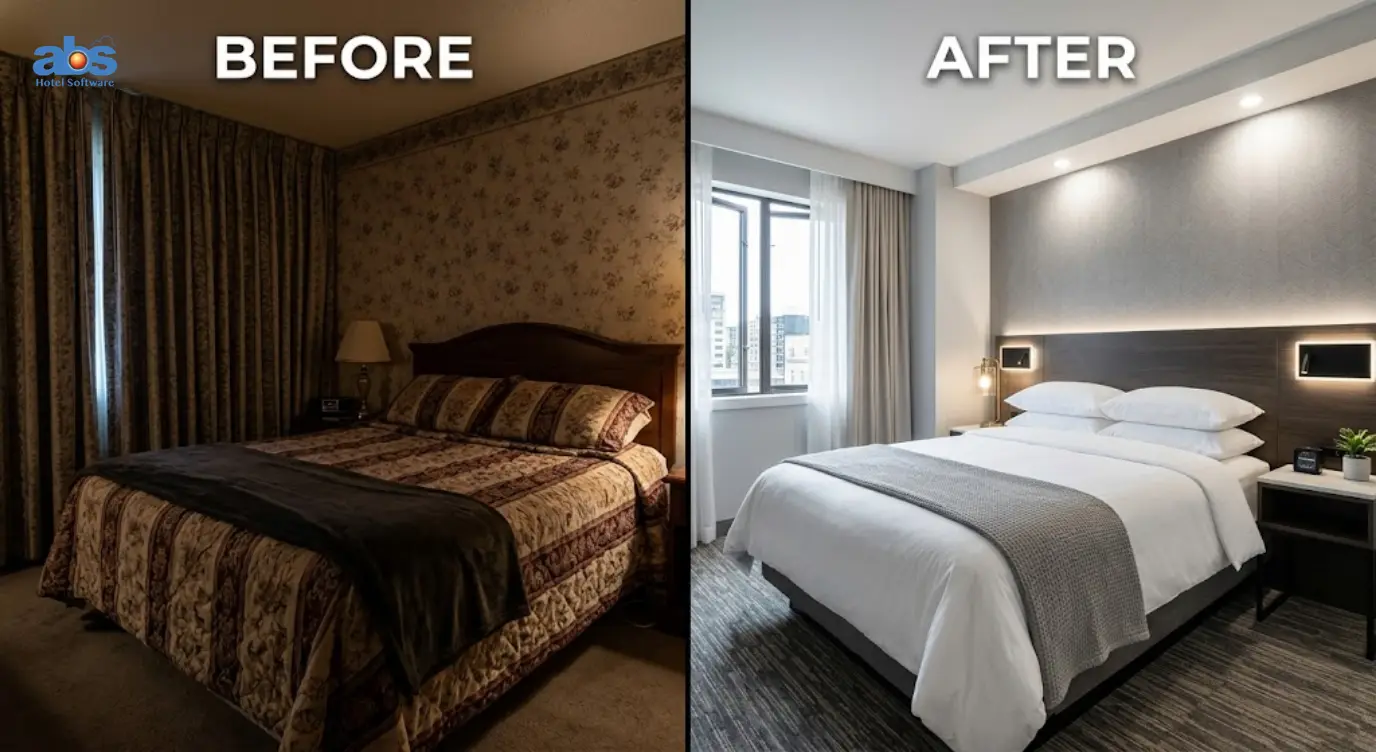
Hotel Renovation vs. Remodelling: Maximizing Your Budget Hotel Upgrade
The terms “renovation” and “remodelling” are often used interchangeably, but they impact your bottom line in vastly different ways. Understanding this distinction is the first step in planning cost-effective hotel upgrades.
The Scope of Hotel Renovation
Renovation works entirely within your existing layout. Think repainting walls, replacing tired carpets, upgrading bathroom fixtures, or swapping out dated furniture. It is primarily about repair and cosmetic renewal. Because you aren’t moving walls, it is far less disruptive and much more budget-friendly.
The Scope of Hotel Remodelling
Remodelling involves altering the physical structure of the building. This includes knocking down walls to combine rooms, adding an entirely new ensuite bathroom, or converting a storage area into a guest lounge. These projects are significantly larger, require local building permits, and take much longer to complete.
Realistic Cost Expectations for Property Upgrades
-
Cosmetic Renovation: Minor updates cost a few thousand dollars per room. A mid-scale overhaul generally runs between $12,000 and $50,000 per room, with luxury finishes pushing that number higher.
-
Structural Remodelling: Converting an existing space (like a garage) into a guest suite ranges from $6,000 to over $21,000. Building a brand-new 600-square-foot guest house often starts around $60,000.
-
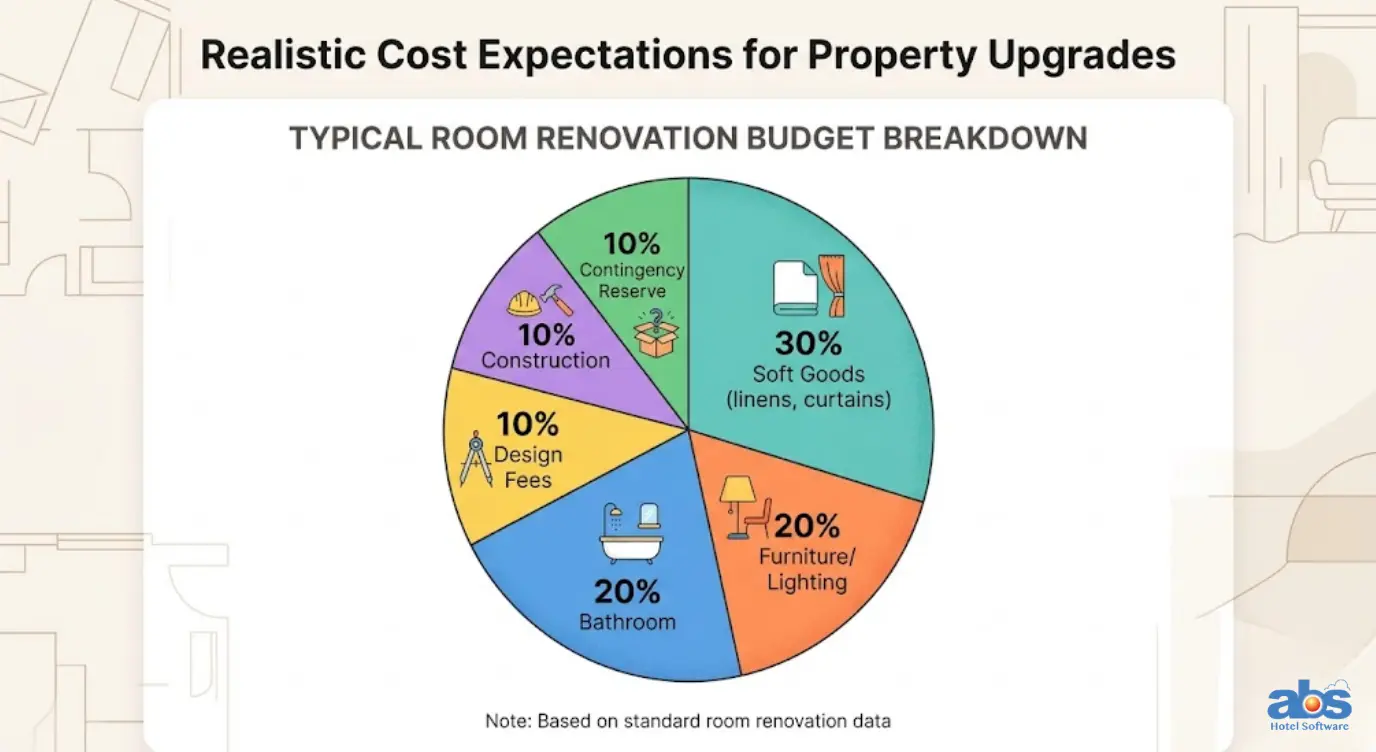
Budget Allocation: A standard room renovation budget splits like this: 30% for soft goods (linens, curtains), 20% for furniture/lighting, 20% for the bathroom, 10% for design fees, 10% for construction, and a crucial 10% contingency reserve for unexpected surprises.
10 Signs It’s Time for an Affordable Hotel Refresh
Even the tightest operational budgets must prioritize certain red flags. If left unaddressed, these issues will cost you heavily in vacant rooms and damaging online reviews. If you spot these signs, it is time for a small hotel makeover.
Visual and Structural Damage
-
Flaking Paint and Cracked Tiles: Small cosmetic damage spreads quickly and makes rooms look neglected.
-
Mould and Mildew: Found in bathrooms or around windows, this is both unsightly and a genuine health risk to guests.
-
Worn Flooring: Stained or threadbare carpets need to be replaced with fresh carpet, timber-look flooring, or easy-clean tiles.
-
Trip Hazards: Creaky or loose floorboards are unsafe and sound cheap.
Operational and Comfort Issues
-
Rusty Fixtures: Squeaky doors and rusty windows scream neglect the moment a guest arrives.
-
Dodgy Plumbing: Weak water pressure, sluggish toilets, or a long wait for hot water are major drivers of negative reviews.
-
Damaged Furniture: Scratched, chipped, or permanently stained furniture ruins the aesthetic of your space.
-
Gloomy Lighting: Poorly lit rooms or dead bulbs create a depressing atmosphere.
-
Poor Climate Control: Guests shouldn’t shiver in winter or swelter in summer. A split-system air conditioner is a high-impact fix.
-
The “Time Warp” Effect: If your decor is stuck in another decade, a cosmetic refresh is urgently needed to meet modern traveler expectations.
How to Execute a Small Hotel Makeover Without Closing Your Doors
A full property shutdown is rarely your only option. With strategic scheduling, you can continue welcoming guests and generating revenue throughout your affordable hotel refresh.
Build a Prioritized Plan
Walk through every area of your property and rank projects by urgency and guest impact. Tackle the most visible or problematic areas first.
Renovate in Targeted Phases
Close one room, floor, or zone at a time. This limits your lost revenue and allows you to test new design choices with real guest feedback before rolling them out property-wide.
Time Disruptive Work Carefully
Schedule noisy work, like drilling and hammering, strictly for the middle of the day. The ideal window is between morning checkout and afternoon check-in when rooms are mostly empty.
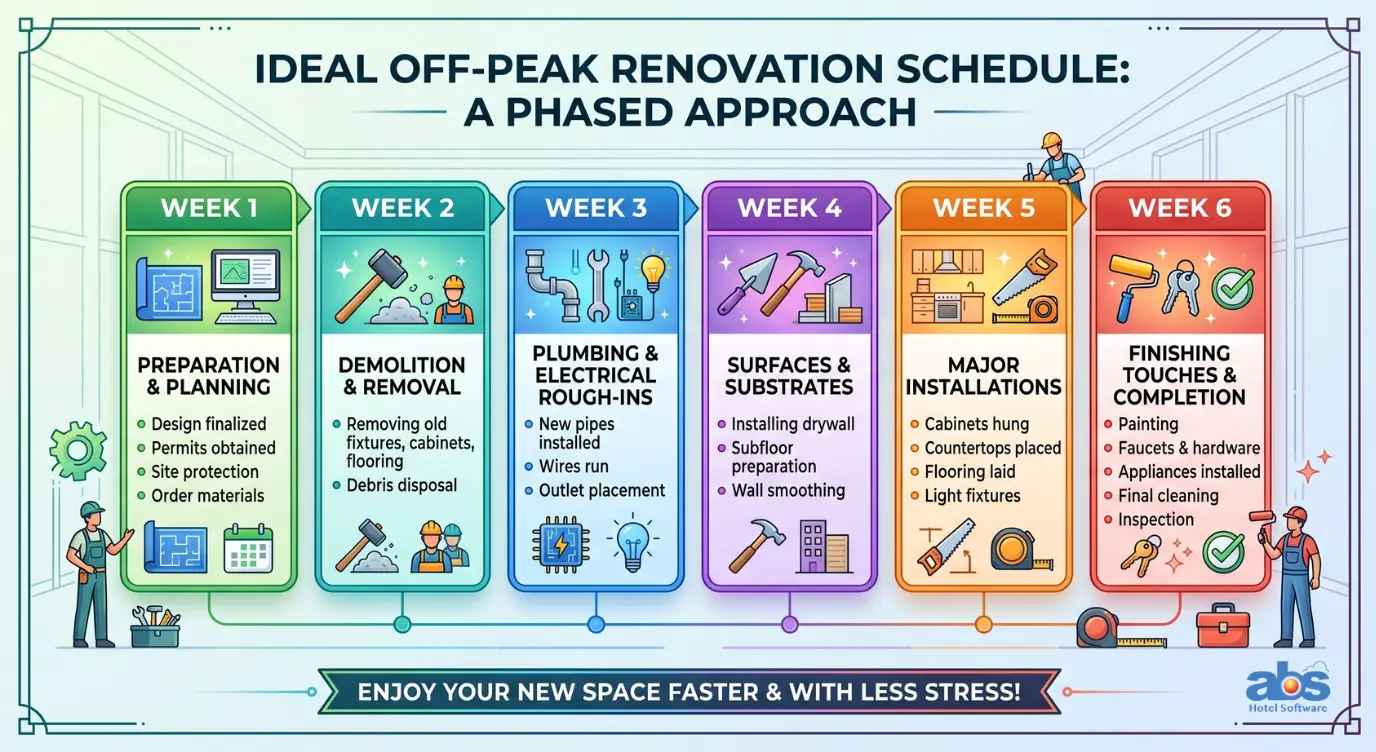
Utilize Your Off-Peak Season
Plan the bulk of your disruptive work during your naturally low occupancy months. This ensures your newly refreshed spaces are ready to debut right before your busy season hits.
Communicate With Your Guests
Send a simple heads-up about improvements to incoming guests. Pairing this notice with a complimentary upgrade or late checkout turns a potential hassle into a thoughtful hospitality gesture.
Your Room-by-Room Checklist for Cost-Effective Hotel Upgrades
Use this audit checklist before you begin buying materials. A structured approach keeps your spending targeted and prevents scope creep.
The Bedroom Experience
-
Layout & Space: Does the room flow well? Sometimes, simply rearranging existing furniture dramatically improves comfort.
-
Walls & Paint: Patch cracks and apply a clean, modern color. A fresh coat of paint offers the highest return on investment.
-
Bedding & Linens: The bed is the star of the room. Invest heavily in quality mattresses and crisp, comfortable linens.
-
Lighting: Layer ambient, task, and accent lighting using warm, energy-saving LED bulbs.
The Bathroom and Utilities
-
Bathroom Functionality: Check flush strength, water pressure, drainage, and silicone sealants. A high-quality showerhead is a non-negotiable guest expectation.
-
Technology & Appliances: Test the TV, mini-fridge, AC, and Wi-Fi. Tiny, affordable additions like USB charging bedside lamps or a smart TV streaming stick make a highly memorable difference.
Property-Wide Considerations
-
Accessibility: Simple additions like grab bars, wider doorways, or a shower seat make your property welcoming and compliant for guests with mobility challenges.
-
Maintenance Rhythm: Once your refresh is complete, establish a recurring deep-clean and check-up calendar to protect your new investments.
5 Budget-Smart Hotel Renovation Tips for Maximum ROI
Strategic cosmetic changes often yield the biggest impact per dollar. Here is how to stretch your budget during a low-cost hotel upgrade.
1. Hire Hospitality-Experienced Contractors
Tradespeople who understand hotel operations work faster, recommend highly durable materials, and help you avoid common “residential” design mistakes.
2. Start With One Signature Upgrade
Instead of spreading your budget too thin, completely transform one high-impact space. Create a themed suite or refresh the breakfast lounge to give your property a strong new marketing hook.
3. Focus on Cosmetic Over Structural
The most dramatic transformations often require zero demolition. Swap out dated cabinet hardware, update mirrors, change lampshades, or add a bold painted feature wall. The entire room’s ambiance will lift for a fraction of the cost of a remodel.
4. Build in Energy Efficiency
Install LED lighting, water-saving showerheads, and smart thermostats. These upgrades cut your long-term operating costs and appeal directly to eco-conscious travelers.
5. Leverage Hotel Management Technology
Use your property management system (PMS) as a shield during renovations. Block out-of-service rooms instantly across all your booking channels to prevent double bookings and awkward guest surprises.
Frequently Asked Questions (FAQs)
Q: How much does it cost to renovate a small hotel room?
A: A minor cosmetic refresh can cost between $2,000 and $5,000 per room. For a mid-scale overhaul (including new furniture, paint, and bathroom updates), expect to spend between $12,000 and $50,000 per room depending on the quality of finishes.
Q: What is the cheapest way to upgrade a hotel room?
A: The most cost-effective hotel upgrades include applying a fresh coat of paint, replacing dated bedding with high-quality white linens, swapping old light fixtures for modern LEDs, and deep-cleaning or replacing worn carpets.
Q: How do I renovate my hotel without losing money?
A: To protect your revenue, phase your renovations. Close only one room or zone at a time, schedule noisy construction between check-out and check-in times, and plan your largest projects during your historical off-peak season.
Q: What is the difference between hotel renovation and hotel remodelling?
A: Renovation involves updating the existing space cosmetically (painting, replacing furniture, new flooring). Remodelling involves changing the physical structure of the building, such as moving walls, adding plumbing for new bathrooms, or building property extensions.