Beyond the Booking: Advanced Hotel Distribution Strategies That Actually Drive Revenue
Category: Hotel Revenue Management & Technology | Reading Time: 10 Minutes | Author: Javier
When planning a trip, modern travelers don’t just look at one website; they browse dozens of properties across multiple platforms before landing on their final pick. While every hotelier wants guests to choose their property and ideally book directly through their website , the digital landscape is far more nuanced.
The most successful hotels don’t just compete for direct bookings. Instead, they leverage advanced hotel distribution strategies to maximize every channel, generating more revenue at a significantly lower cost of acquisition. Let’s dive into what an effective, multi-platform hotel revenue strategy actually looks like and how you can build an ecosystem that works for your property.
What Makes an Advanced Hotel Distribution Strategy Different?
At its core, a hotel distribution strategy is the framework you use to select and manage the channels where you sell your rooms. A basic, entry-level approach might involve throwing your property on a few major Online Travel Agencies (OTAs) like Booking.com or Expedia and waiting for the reservations to roll in.
However, advanced hotel distribution strategies are highly sophisticated. By analytically balancing revenue booked, occupancy rates, acquisition costs, and specific guest segments, proactive hoteliers can build a distribution matrix that delivers real, measurable profitability rather than just heads in beds.

Key Metrics: Measuring Your Hotel Distribution Strategy’s Success
Many properties make a critical mistake: they track occupancy, declare victory, and stop there. To ensure your hotel distribution channels are actually driving revenue, you must look at a blend of performance metrics simultaneously:
Track These Essential KPIs
-
Occupancy rate: Which channels are consistently filling your rooms?
-
RevPAR (Revenue Per Available Room): Which booking sites deliver the highest revenue yields?
-
Booking volume: Where is the sheer mass of your reservations coming from?
-
Cost of acquisition (CAC): Which channels give you the highest return on investment once commissions are subtracted?
-
Guest satisfaction: Are certain platforms attracting guests who leave better reviews and spend more on-property?
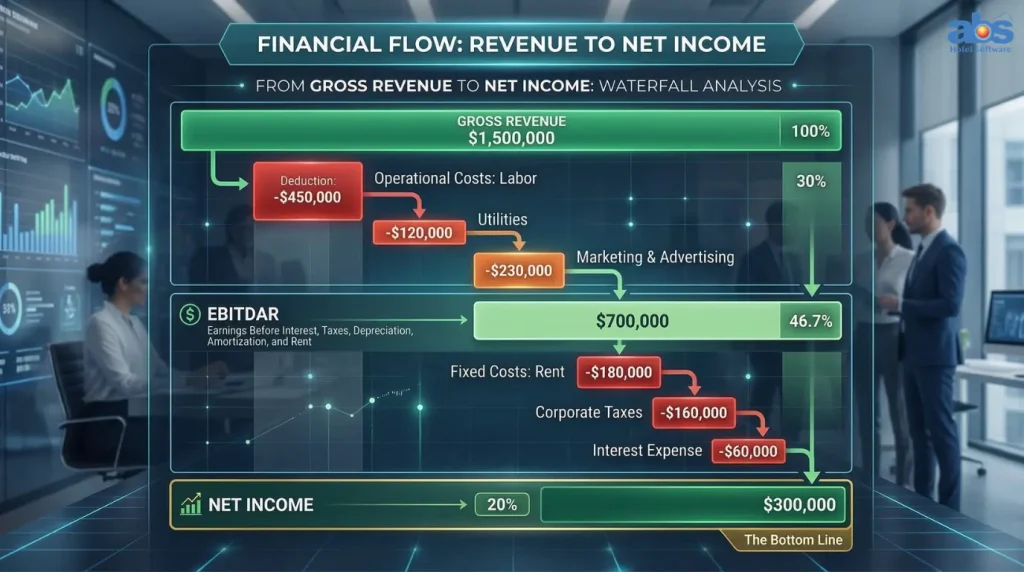
Dig into the data. That OTA driving massive occupancy might actually be hurting your bottom line once you factor in 15-25% commissions. Meanwhile, a niche channel might yield slightly fewer bookings but attract high-spending guests. The ultimate goal of your hotel revenue distribution isn’t just volume , it’s profitability.
Direct Channel Distribution Strategies for Hotels to Boost ROI
Direct bookings are the gold standard of hotel distribution. They help you bypass hefty commissions and allow you to own the guest relationship from day one. But “direct” doesn’t mean “free.” Here is how to maximize your direct channels:
1. Retargeting Advertisements
When visitors leave your site without booking, retargeting ads keep your property top-of-mind. Modern AI-driven tools allow you to set strict budgets while automatically generating content to win back travelers who have already shown high purchase intent.
2. Offline Networking & Partnerships
Real-world connections still drive massive revenue. Local community groups, corporate partnerships, and hospitality associations help you secure group business in ways digital marketing cannot replicate.
3. Website Personalization
Generic websites have average conversion rates. Personalized websites convert brilliantly. Utilize tools like Google Analytics 4 to serve distinct landing pages or promotional banners based on a visitor’s location, referral source, or search history.
4. Dedicated Groups & Events Pages
Group business is highly lucrative. A dedicated landing page outlining your unique selling proposition (USP), group sales process, and integrated inquiry forms (linked directly to your PMS) shows event planners you mean business.
5. AI Chatbots for Instant Conversion
AI-powered chatbots can engage global visitors in multiple languages, answer FAQs, and even process bookings directly within the chat window, acting as a 24/7 virtual reservation agent.
6. Integrated Payment Systems (and BNPL)
Modern guests abandon bookings if the payment process is clunky. An integrated system connecting payments straight to your PMS is non-negotiable. Furthermore, Buy Now, Pay Later (BNPL) options are booming; platforms like Affirm report a +48% increase in average booking value when travelers have flexible payment terms.
7. Optimizing the Voice Channel
Phone bookings are far from dead. Recent hospitality benchmark reports show that the voice channel often generates the highest average booking value. Optimize this by training staff, using proven call scripts, and leveraging rich guest profiles.
8. Leveraging Data Analytics
Your tech stack is a goldmine. Use your booking engines and PMS to uncover which channels bring in the lowest cancellation rates and highest-paying demographics.

Indirect Channel Hotel Distribution Strategies for Maximum Reach
Indirect channels are a necessary and powerful part of a holistic hotel revenue strategy. The secret is knowing how to pull the levers.
9. Strategic OTA Management
Want to lower your commission burdens? Use OTAs strategically. Rely on them heavily during low-demand shoulder seasons, but restrict their inventory during peak seasons when direct bookings are flowing naturally.
10. Metasearch Advertising
Platforms like Google Hotel Ads, Trivago, and Kayak let you compete head-to-head with OTAs. Don’t try to outbid massive travel conglomerates; instead, find the sweet spot where your ADR covers the ad spend while protecting your profit margin.
11. Tapping into Niche OTAs
Look beyond the massive aggregators. Platforms like Stayforlong (extended stays), BringFido (pet-friendly), or Tripaneer (wellness retreats) capture highly targeted, high-intent audiences willing to pay a premium. Plus, this drives the “billboard effect” where guests find you on a niche site but book directly on yours.
12. Active Reputation Management
The guest journey often begins on Google or Tripadvisor. Reputation management software is a crucial part of your distribution strategy, as ignoring negative reviews on third-party sites will directly kill your booking conversions.
13. Partnering with Destination Marketing Organizations (DMOs)
Local and regional DMOs (like your local tourism board) often maintain high-traffic directories. These listings are frequently free and can be incredible sources for localized, high-intent traffic.
The Technology Backbone of Effective Hotel Revenue Strategies
The more channels you operate on, the more complex your distribution becomes. A robust, integrated hotel technology stack is the only way to manage this efficiently:
-
Property Management System (PMS): Your single source of truth where all reservation data lives.
-
Booking Engine: Powers your direct strategy, seamlessly passing data to your PMS.
-
Channel Manager: The vital link that updates rates and availability in real-time across all your OTAs and indirect channels to prevent overbookings.
-
Central Reservation System (CRS): The supervisor that confirms/denies requests and pushes availability globally.
-
Customer Relationship Management (CRM): Aggregates guest preferences to help you craft personalized email and retargeting campaigns.
-
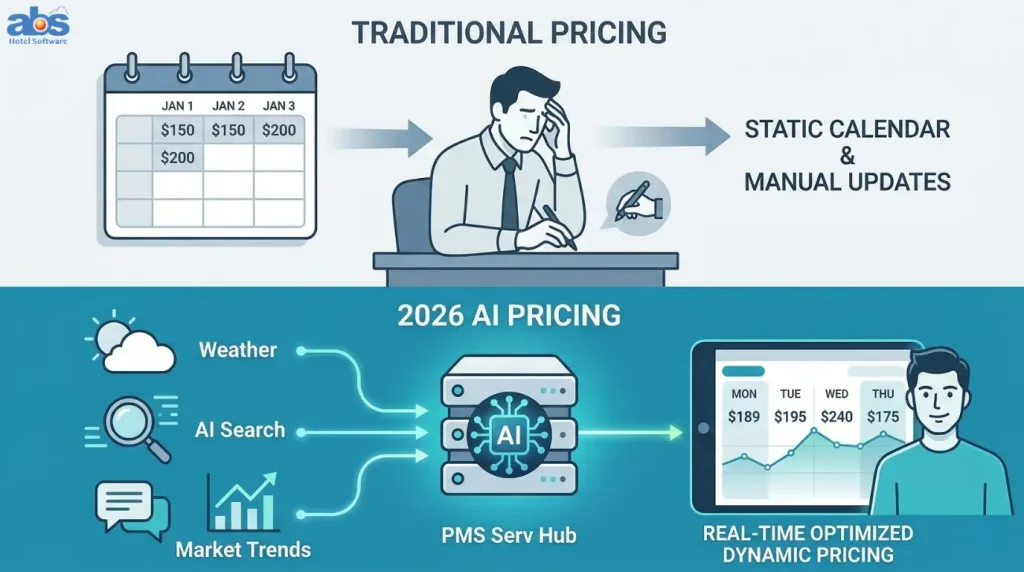
Revenue Management System (RMS): Dynamically optimizes your rates based on market demand and competitor pricing.

Conclusion: Finding Your Perfect Distribution Mix
There is no one-size-fits-all formula for hotel distribution. It requires constant tracking, testing, and iteration. While it is tempting to lean heavily on the platforms that deliver quick, low-effort wins, the hotels that dominate their markets long-term are the ones diving into their data. By identifying exactly which channels yield the best guests and the highest profitability, you can craft an advanced distribution strategy that truly drives revenue.
Frequently Asked Questions (FAQs) About Hotel Distribution Strategies
Q: What is the “billboard effect” in hotel distribution?
A: The billboard effect occurs when a traveler discovers your property on a third-party channel (like an OTA or metasearch engine) but then navigates to your official hotel website to complete the direct booking. Being listed on indirect channels acts as a digital “billboard” for your brand.
Q: How many OTAs should a hotel connect to?
A: There is no magic number, but quality beats quantity. A healthy mix usually includes 2-4 major OTAs (for global reach) and 2-3 niche OTAs (targeted to your specific property type, like corporate or pet-friendly). The exact mix depends on your target demographic and geographic location.
Q: What is the difference between a Channel Manager and a CRS?
A: A Channel Manager primarily updates rates and inventory across various online distribution channels (OTAs, metasearch) to prevent overbookings. A Central Reservation System (CRS) is broader; it manages the hotel’s central inventory, handles voice reservations, connects to the GDS (Global Distribution System), and often encompasses the booking engine.
Q: Why is RevPAR a better metric than Occupancy?
A: Occupancy only tells you how full your hotel is, but it ignores profitability. RevPAR (Revenue Per Available Room) accounts for both occupancy and your Average Daily Rate (ADR). A hotel could be 100% full but losing money due to high OTA commissions and low rates; RevPAR helps identify true revenue performance.