Beyond Aesthetics Why PMS User Experience Is Your
Hotel’s Hidden Profit Center
Category: Hotel Technology & Operations | Reading Time: 10 Minutes | Author: William Tang
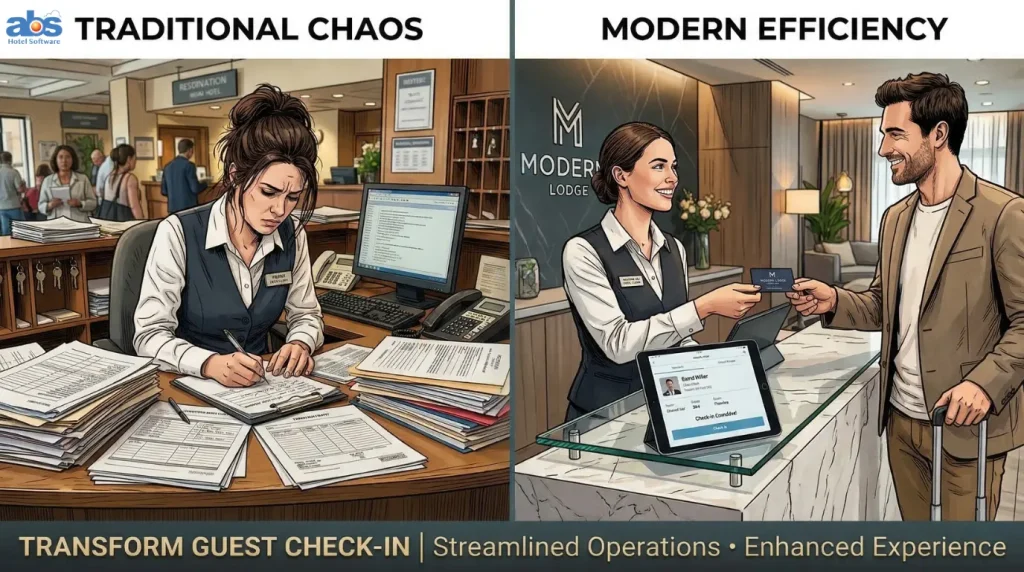
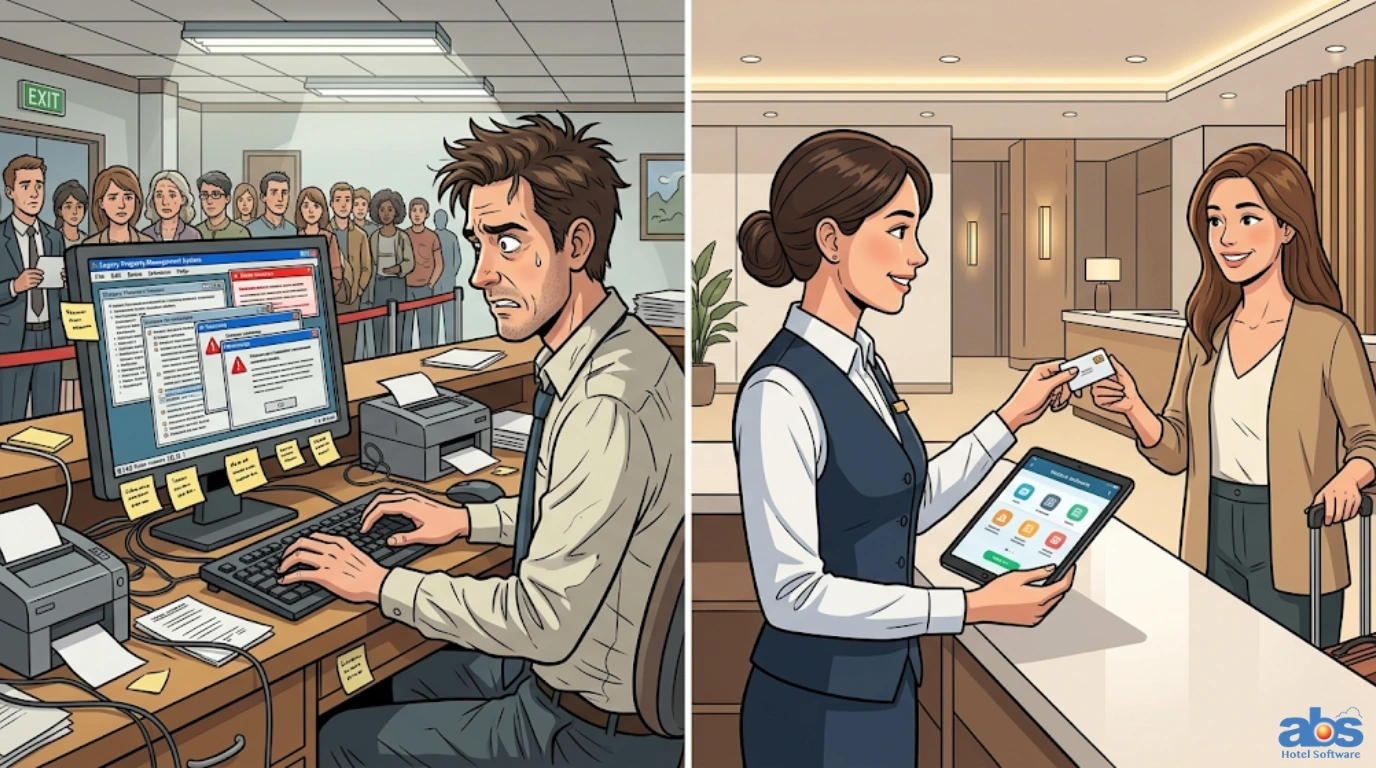
The scene plays out in hotel lobbies every single day: A queue forms at the front desk as exhausted guests arrive from long flights. Behind the counter, a front desk agent frantically clicks through endless, cluttered screens, unable to find the right function. A supervisor abandons their own tasks to intervene. Guests check their watches. The frustration in the room is palpable.
Now, imagine the exact opposite scenario. Check-in takes seconds. The system intuitively anticipates what the agent needs next. Screens are clean and logical. New hires pick up the workflow in a matter of days, not months. The front desk actually has the time and mental bandwidth to greet guests by name and ask about their journey.
The difference between these two scenarios isn’t the caliber of your staff , it’s PMS user experience (UX).
We recently surveyed 500 hotel employees across five countries to understand exactly how property management system design impacts daily operations. The findings are undeniable: hotel PMS UX is not a cosmetic concern. It is a strategic, operational imperative that directly impacts labor costs, employee retention, and overall guest satisfaction.
What Defines Exceptional Hotel PMS User Experience?
When evaluating hotel management systems, it’s easy to get caught up in feature lists. However, true PMS user experience encompasses three critical dimensions:
The Three Pillars of Property Management System Design
-
Ease of Use: How quickly and intuitively can staff complete routine tasks? Can a new hire navigate the software without constant hand-holding?
-
Functionality: Does the system deliver what it promises without friction? Are the workflows logical, or are they convoluted workarounds?
-
Emotional Response: Do your employees feel confident and empowered when using the software, or do they feel frustrated and incompetent?
The Hidden Financial Costs of Poor PMS Interface Design
The Endless Training Trap
Here is a staggering finding from our research: 85% of hotel employees receive two weeks or less of PMS training. Yet, managers report that front desk staff actually need between four months to three years to use these complex systems confidently.
This means employees are actively serving guests long before they are proficient with their primary tool. Furthermore, 73% of hotel employees are trained in-person by a colleague. When your PMS interface is unintuitive, your most experienced staff become de facto trainers, pulling them away from guest service .
The Daily Productivity Drain
Poor PMS design manifests in countless, microscopic inefficiencies that compound into major operational losses:
-
Excessive clicking for simple tasks like check-ins or reservation adjustments.
-
Manual data entry that modern systems should automate.
-
Constant toggling between fragmented software that doesn’t communicate.
-
Time wasted troubleshooting instead of serving.
The High Price of Employee Turnover
In an industry already battling severe labor shortages, this statistic should make every hotel executive pause: 38% of employees who resigned cited their experience with the PMS as a factor in their decision. Every departing employee represents lost institutional knowledge, high recruitment costs, and wasted training investments.
Common UX Failures Plaguing Legacy Property Management Systems
Why are so many hotels stuck in this cycle? It usually comes down to three common failures in legacy system design:
-
Steep Learning Curves: Legacy systems built for desktop monitors cram screens with visual noise, making the barrier to entry extremely high for new hires.
-
Limited Automation: Simple processes require navigating multiple screens and re-typing information, turning staff into manual data-entry clerks.
-
Poor Integration: Data silos force staff to act as “human APIs,” manually transferring data between the channel manager, payment gateway, and housekeeping tools (Consider adding an external link here to a reputable hospitality industry report on data integration).
How Intuitive Hotel Software Transforms Daily Operations
Upgrading to a system that prioritizes PMS user experience creates tangible business advantages:
-
Faster Hiring: When your software is intuitive, you don’t need to demand prior PMS experience. You can hire for hospitality attitude and train for technical skills.
-
Quicker Onboarding: New hires become productive in days. They spend less time memorizing software quirks and more time mastering your service standards.
-
Better Retention: Removing daily software frustrations signals to your staff that you value their time and mental well-being.
-
Elevated Guest Service: Every minute saved on system navigation is a minute reclaimed for meaningful guest interaction.
High-Impact Areas Where PMS UX Drives Efficiency
A superior hotel software interface optimizes every corner of your property.
Streamlined Check-In and Check-Out
These moments frame the entire guest experience. Intuitive workflows minimize clicks for room assignments, ID verification, and payments. Removing friction here instantly boosts guest satisfaction scores.
Agile Reservation Management
Staff must be able to modify bookings instantly. Drag-and-drop functionality and seamless channel manager integrations transform complex inventory updates into a simple task.
Real-Time Housekeeping Coordination
A modern PMS interface updates room status automatically. Mobile-friendly modules allow housekeeping to communicate in real-time, prioritize turn-downs, and access checklists without running back to a terminal.
Centralized Guest Profiles & Group Management
A well-designed PMS centralizes preferences and stay history, empowering the front desk to anticipate needs. Similarly, dedicated modules for room blocks and master accounts prevent errors that usually multiply across group reservations.
Actionable Reporting and Analytics
Hotel leadership needs clear insights, not massive data dumps. Customizable dashboards and visually intuitive reports allow managers to spot trends and fix issues proactively.
Conclusion: Upgrading Your PMS User Experience for the Bottom Line
Historically, hotel software has been judged by the sheer length of its feature list. But a feature is entirely useless if your staff cannot utilize it efficiently.
Our data confirms it: bad PMS design is an operational drag that slows down service, drives away good employees, and damages the guest experience. In an era where every efficiency matters, prioritizing PMS user experience is how you build a resilient team and outperform competitors still struggling with legacy tech. Your staff deserves better, your guests deserve better, and your bottom line demands it.
Frequently Asked Questions (FAQs) About Hotel PMS UX
Q : What is PMS User Experience (UX)?
A: PMS User Experience (UX) refers to how hotel staff interact with a Property Management System. It encompasses how easy the system is to learn, how efficiently it allows staff to perform tasks (like check-ins and reporting), and how seamlessly it integrates with other hotel technologies.
Q: How does poor PMS design affect hotel revenue?
A :Poor PMS design leads to hidden costs such as increased training times, higher employee turnover (due to frustration), and daily productivity drains. Additionally, when staff spend more time looking at a screen than interacting with guests, it negatively impacts guest satisfaction and repeat bookings.
Q: Why is an intuitive hotel software interface important for new hires?
A: An intuitive interface drastically reduces onboarding time. Instead of spending months learning complex legacy systems, new hires can master intuitive software in a few days, allowing them to focus on delivering excellent hospitality rather than struggling with technology.
Q : Can upgrading my property management system really reduce employee turnover?
A : Yes. Studies show that up to 38% of departing hotel employees cite frustrating software as a contributing factor to their resignation. Providing modern, easy-to-use tools empowers staff, reduces daily stress, and improves overall job satisfaction.