
Beyond the OTAs: A Hotelier’s Guide to Bed Banks and
Wholesale Distribution
Category: Hotel Distribution Strategy | Reading Time: 6 Minutes | Author: Javier Tang
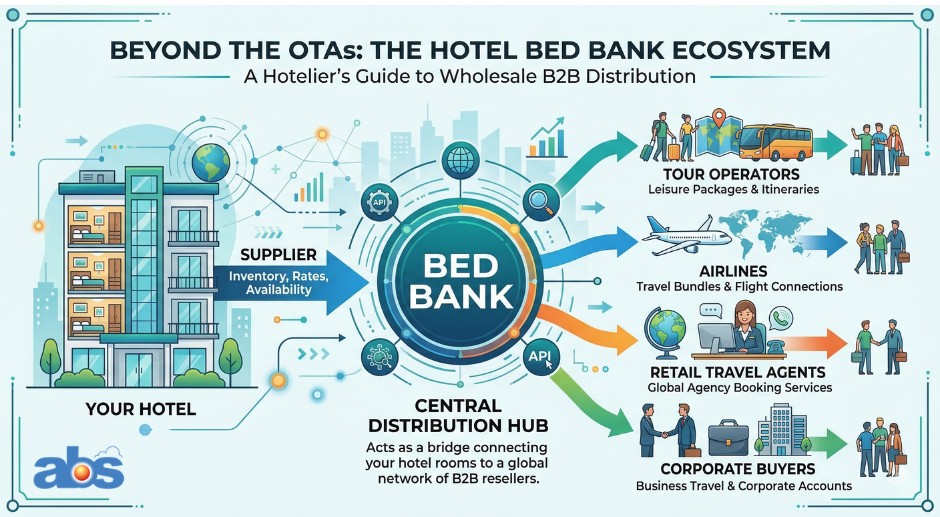
Most hoteliers can recite their list of Online Travel Agency (OTA) partners by heart. You know exactly how much inventory is moving through the major consumer-facing platforms. However, there is an entire tier of distribution working behind the scenes to move room inventory across the globe—one that rarely gets the spotlight.
This channel is the bed bank.
Often misunderstood, these wholesale distribution partners can place your property in front of global travelers you might never reach through direct or traditional OTA channels alone. In this guide, we’ll demystify hotel bed banks, explore how B2B wholesale distribution functions, weigh the pros and cons, and help you select the right partner to boost visibility without the operational headaches.
What is a Hotel Bed Bank?
A bed bank is a business-to-business (B2B) company that contracts hotel rooms and other travel services from suppliers, then markets them to third-party resellers.
Unlike business-to-consumer (B2C) travel sellers like standard OTAs, bed banks operate purely as wholesalers. They sell your inventory to other businesses, not directly to the end traveler. These buyers typically include:
-
Traditional retail travel agents
-
Niche online travel agencies (OTAs)
-
Tour operators
-
Airlines
-
Loyalty program providers
Traditionally, wholesale travel distribution was the domain of massive global hotel chains. Today, advances in connectivity have opened these platforms to independent boutique hotels, inns, and vacation rentals.
How Does Wholesale Distribution Work?
While each platform operates slightly differently, the fundamental mechanics of bed banks and wholesale distribution follow a standard B2B model.
The Contracting and Net Rate Phase
Bed banks seek partnerships with travel suppliers in key destinations. If your property is a fit, you sign a direct contract allowing them to promote your rooms. In return, the hotel provides a net rate (a discounted rate off your standard public pricing). Historically, hotels were also asked to commit to fixed room blocks, though modern platforms are more flexible.
The Markup and Resale Phase
The bed bank applies a markup to your net rate and offers it to its massive network of resellers. The reseller (like a tour operator) then adds its own commission or bundles the room with flights and activities before selling it to the final traveler. This creates a chain of intermediaries, each taking a slice of the final price.
The Role of Connectivity
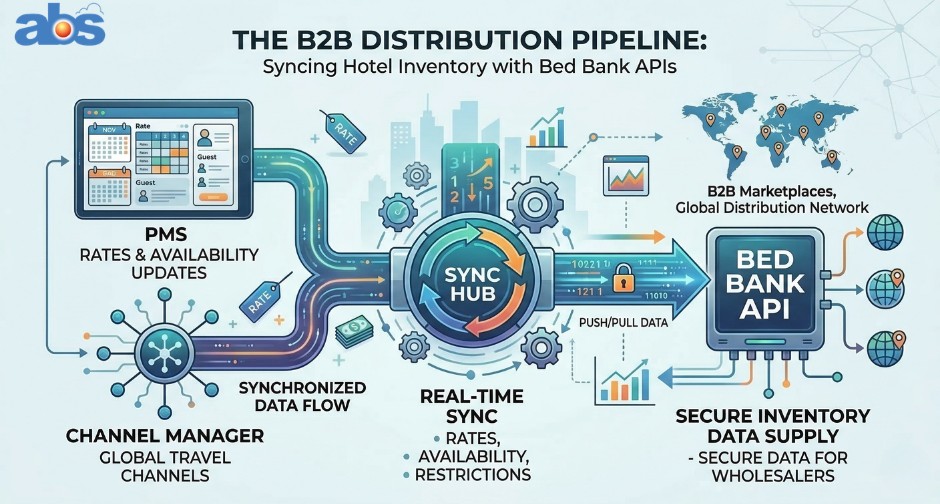
The days of wholesale distribution relying on thick, printed brochures are over. Today, it’s entirely digital. Hotel partners connect directly to these B2B marketplaces via their Property Management System (PMS) or Channel Manager using an API. This ensures rates and availability update in real-time, eliminating manual data entry and preventing overbookings.
The Strategic Benefits of Partnering with Hotel Bed Banks
When managed correctly, a bed bank acts as a powerful bridge, connecting your hotel rooms to a vast global network.
Amplified Global Reach
Bed banks provide immediate exposure to international travelers through a consolidated network of tour operators and agencies. Instead of managing 50 individual contracts with small, regional travel agencies, you manage one connection with a bed bank.
Access to High-Value Traveler Segments
Wholesale distribution helps you capture specific audiences that are hard to reach directly:
-
Guests who exclusively use traditional travel agents.
-
Travelers buying packaged itineraries (bundled airfare, transfers, and excursions).
-
International leisure travelers relying on regional tour operators.
Financial Predictability
Selling through a B2B network can lower individual marketing acquisition costs. Furthermore, wholesale bookings often boast longer lead times, extended lengths of stay, and lower cancellation rates. This creates a stable baseline of occupancy, allowing you to yield higher rates for last-minute direct bookings.
Navigating the Pitfalls of B2B Hotel Distribution
While the upside is significant, wholesale distribution requires careful management to avoid common revenue traps.
The Threat to Rate Parity
The biggest pain point for hoteliers is brand visibility and rate leakage. Because bed banks distribute to thousands of resellers, an unscrupulous third party might “unbundle” your room and advertise the discounted net rate publicly on metasearch engines like Google or Trivago. This undercuts your direct website and violates parity agreements with standard OTAs.
Complex Dynamic Pricing
Some traditional bed banks still demand static, heavily discounted net rates, which can restrict your ability to implement fully dynamic pricing strategies during peak demand periods.
Inventory Lockups
If a wholesaler requires guaranteed allotments (reserving a set number of rooms in advance), you risk locking up inventory that could be sold to more lucrative segments. While unsold rooms are usually released back to you before the arrival date, the window is sometimes too short to resell them at optimal prices.
How to Choose the Right Wholesale Distribution Partner
If you are ready to expand beyond the OTAs, vetting your B2B partners is critical. Follow these guidelines:
-
Demand Strict Rate Fencing Policies: Ensure the bed bank actively monitors its resellers and penalizes any partner who publicly advertises your private net rates.
-
Evaluate Technical Connectivity: Do they offer a seamless, two-way API integration with your existing Channel Manager or PMS? Automation is essential to avoid manual errors.
-
Assess Their Network: Ask about their specific sales volume in your target demographics and geographical regions.
-
Negotiate Flexibility: Push back on rigid room allotments and demand dynamic rate capabilities rather than fixed, year-round static discounts.
Leading Bed Bank Providers for Hoteliers
To kickstart your research, here are some of the most prominent players in the 2026 global travel market:
-
HBX Group (formerly Hotelbeds): The undisputed giant in the B2B travel space. Following key acquisitions over the last decade, HBX boasts an unparalleled portfolio of properties and distributes to tens of thousands of global travel buyers.
-
WebBeds: A massive global player known for its agile technology, connecting a vast network of travel buyers with inventory across over 140 source markets.
-
Stuba: Formed from the merger of RoomsXML and getabed, Stuba is highly regarded for its curated approach and strong focus on travel agent usability and predictive analytics.
-
HyperGuest: An innovative B2B marketplace that disrupts the traditional bed bank model by allowing hotels and travel providers to connect directly with zero markups, giving hoteliers total control over their rates and terms.
-
Travco: A family-owned powerhouse based in London, specializing in European and global hotel accommodations specifically for the travel trade.
Conclusion: Maximizing Your Distribution Strategy
A well-rounded hotel distribution strategy relies on diversity. While OTAs and direct bookings should remain central to your revenue management, tapping into bed banks and wholesale distribution channels can unlock international markets and secure a reliable base of long-lead bookings.
The key to success lies in choosing partners with strict rate parity enforcement and utilizing modern software to keep your inventory perfectly synchronized.
Ready to Optimize Your Distribution Mix?
Managing multiple OTAs, direct bookings, and bed banks doesn’t have to be overwhelming. Click Here to Request a Demo and Contact our software consultants today to discuss a tailored strategy for your property.
Frequently Asked Questions (FAQs) About Bed Banks
What is the difference between an OTA and a bed bank? An OTA (Online Travel Agency) like Booking.com or Expedia is a B2C platform that sells rooms directly to the public. A bed bank is a B2B platform that buys inventory from hotels and sells it to other businesses (like tour operators or even other OTAs) who then sell to the public.
How do bed banks affect hotel rate parity? If a bed bank’s reseller unbundles a package and publicly advertises your private, discounted net rate on a metasearch engine, it can undercut your direct pricing. This is known as “rate leakage.” It is crucial to work with bed banks that enforce strict rate distribution rules to protect your parity.
Can small boutique hotels use bed banks? Yes. While historically used by massive resorts, modern API connectivity allows small and boutique hotels to easily distribute their inventory through bed banks without manual administrative overload.
What is a net rate in hotel distribution? A net rate is a confidential, heavily discounted room rate provided by a hotel to a B2B partner (like a wholesaler). The partner then adds a markup to this base price before selling it to the end consumer.
About the Author: Javier Tang is a Hotel Technology Consultant at BMS Solution, specializing in the Southeast Asian hospitality market. He helps streamline operations and maximize revenue for over 1,500 hotels across Malaysia, Singapore, Indonesia, and the Philippines.