
Why Every Hotel Needs Mobile Ordering
(And How It Actually Pays For Itself)
Category: Hospitality Technology | Reading Time: 8 Minutes | Author: Javier
Let’s be honest: the days of the laminated, slightly sticky room service menu and the crackly phone call to the front desk are numbered.
For a long time, hotel mobile ordering was viewed as a luxury amenity reserved for massive global chains. Today, that narrative has flipped. It’s a foundational digital service that lets guests browse, order, and pay for everything from a late-night burger to a poolside massage right from their own smartphone.
For independent and boutique properties, implementing this technology isn’t merely a tech upgrade to keep up appearances. It’s a direct pipeline to higher F&B revenue, streamlined operations, and significantly happier guests. Here is exactly how an in-room digital dining experience works, and why you are likely leaving money on the table without it.
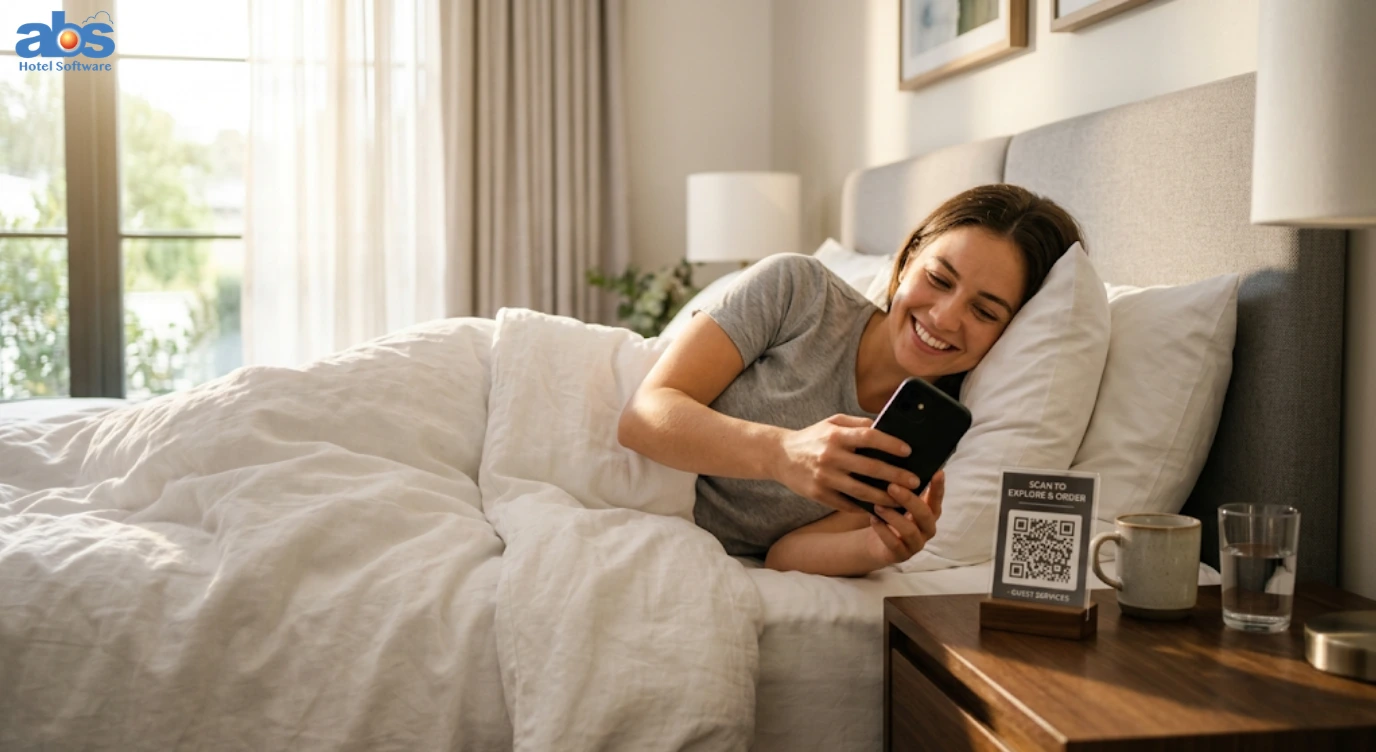
The Shift in Guest Expectations: Why Travelers Demand a “Tap-to-Order” Experience
Think about the last time you ordered anything outside of a hotel. You likely used Uber, DoorDash, or perhaps scanned a QR code at a local brewery. The modern guest is universally conditioned for instant, digital convenience.
In the context of your property, the minor friction of picking up the room phone, being placed on hold, or walking down to the lobby bar can be the difference between a completed sale and a “maybe later.” That hurdle is often just high enough to stop a guest from ordering a second glass of wine or booking a last-minute spa treatment.
A contactless hotel mobile ordering system removes that friction entirely, transforming impulse cravings into instant revenue.
How Mobile Room Service Pays For Itself via Increased Revenue
Many hoteliers hesitate to adopt new software due to the upfront cost. However, the true value of a digital guest experience lies in its direct return on investment (ROI). Here is how it drives revenue.
1. Smarter, Automated Upselling (On Autopilot)
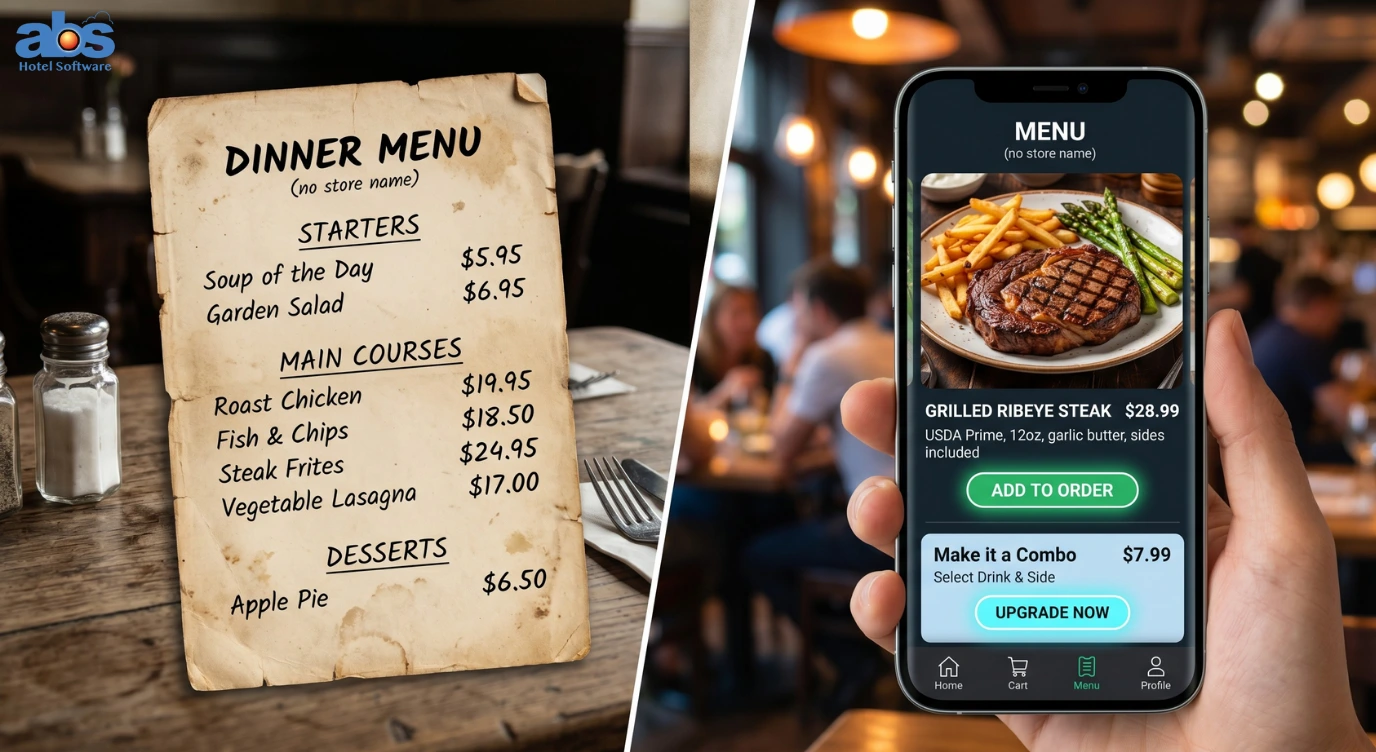
This is where the system truly earns its keep. A digital menu doesn’t forget to ask, “Would you like fries with that?” The best platforms intelligently suggest drink pairings, side dishes, desserts, or premium upgrades during the checkout flow. You organically increase the value of the average check without your staff having to lift a finger or feel pushy.
2. Real-Time Menu Control to Boost Sales
Ran out of the salmon special at 8:15 PM? No problem. With a digital system, you can remove it from the menu in ten seconds. No more apologizing to guests after they’ve already waited on hold. Furthermore, you can push flash sales via notifications to move perishable inventory that’s about to go to waste, turning potential loss into pure profit.
How Hotel Mobile Ordering Pays For Itself via Operational Efficiency
For a boutique property, this technology isn’t about replacing your staff. It’s about empowering them to handle higher volumes with less stress.
3. Zeroing Out Costly Order Errors
We’ve all been there: “I asked for no onions.” When a guest types their dietary preferences or modifications themselves, the responsibility shifts. Direct-to-kitchen ordering eliminates the frustrating game of telephone between the guest, the front desk, and the chef. You save money on comped meals and remakes, all while saving face with your guests.
4. Frictionless Payments and Faster Service
No hunting for a card machine. No awkward signing of paper slips. Mobile payments are secure, instant, and allow guests to settle up from the comfort of their bed or cabana. By accepting Apple Pay, Google Pay, or a seamless “Charge to Room” option, you signal a high-end, modern operation—regardless of your property’s total room count.
How Hotel Mobile Ordering Actually Works: Simpler Than You Think
If you are dreading the thought of clunky, expensive hardware, you can relax. Most systems today are web-based (no app download required for the guest) and integrate seamlessly into your current operations. Here’s the typical journey from guest craving to guest eating:
-
Setup & Scan: You set up a digital menu, which guests access via a simple, branded QR code placed in the room, on a keycard, or poolside.
-
Order & Customize: The guest browses the menu, adds custom notes (e.g., “Extra crispy bacon”), and selects a delivery location (with the room number often pre-loaded).
-
Seamless Payment: They pay instantly via credit card, mobile wallet, or choose “Charge to Room.”
-
Instant Kitchen Ticket: There is no middleman. The order fires directly to your kitchen display system (KDS) or bar printer.
-
Track & Deliver: The guest receives an instant confirmation and order status tracking. Your staff simply prepares the item and delivers it right to the door.
The Bottom Line
Implementing a hotel mobile ordering system is about giving your guests the digital autonomy they are used to everywhere else in their lives. It’s about organically increasing your order frequency and check sizes while making your staff’s daily workflow easier, not harder. For any hotelier looking to elevate service standards and maximize F&B revenue, this is one digital upgrade that genuinely pays for itself.
Frequently Asked Questions (FAQ) About Hotel Mobile Ordering
Q: Do I need expensive hardware to install hotel mobile ordering?
A: No. Most modern in-room dining software is cloud-based. Guests use their own smartphones to scan a QR code and browse the web-based menu. On your end, you generally only need a tablet to manage incoming orders or a direct integration to your existing kitchen printers.
Q: Can mobile ordering integrate with my existing Property Management System (PMS)?
A: Yes, top-tier hotel mobile ordering solutions offer seamless integrations with major PMS providers. This is crucial as it allows for direct, automated “Charge to Room” capabilities, ensuring billing is completely frictionless.
Q: Is mobile ordering only suitable for large luxury hotels?
A: Not at all. In fact, independent and boutique hotels often see the fastest ROI. It allows smaller teams to handle higher order volumes efficiently during peak hours without needing to increase headcount or sacrifice service quality.
Q: How does mobile ordering improve guest safety and the overall experience?
A: It provides a completely contactless hotel service option. It minimizes necessary physical interactions and eliminates the need to handle frequently touched physical menus and cash, which remains a strong preference for many modern travelers.