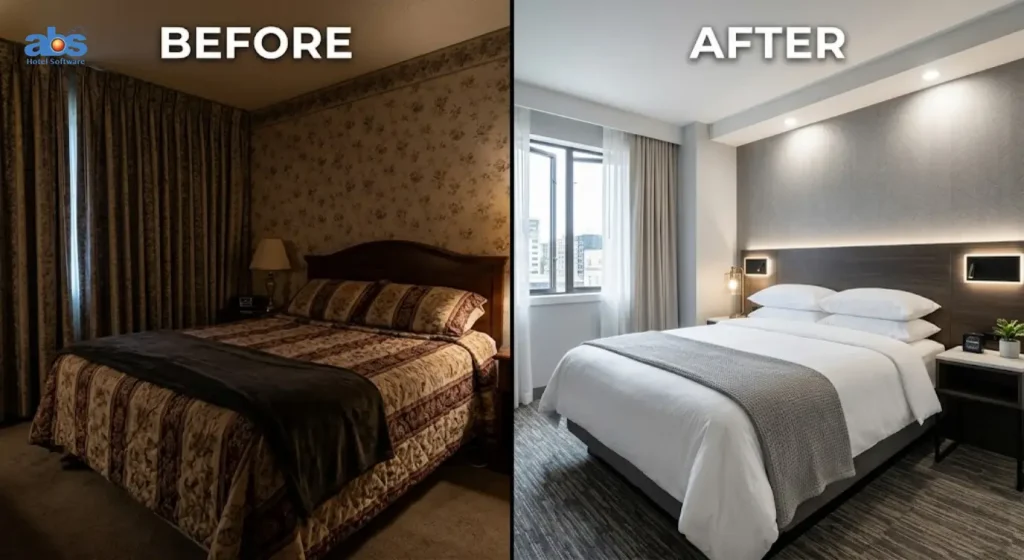
The Lean Hotel Team Playbook:
How to Staff, Manage & Thrive in 2026
Category: Hospitality Management | Reading Time: 10 Minutes | Author: Javier
Small hotels, B&Bs, and guesthouses have always relied on versatility. A compact team thrives when there are no rigid departments, just people who know their core duties and willingly jump in wherever needed. This creates a deeply personal, seamless guest experience that corporate chains simply can’t replicate.
But the ground has shifted beneath the hospitality industry. Finding and keeping great staff is now the defining challenge of the decade. The old labor model is obsolete.
If you want to know how to staff, manage, and thrive in 2026, you need a new approach. This guide is your Lean Hotel Team Playbook that covering reimagined core roles, precision hiring and tech-driven management that actually works.
Why “Panic Hiring” is Over for Hotel Staffing in 2026
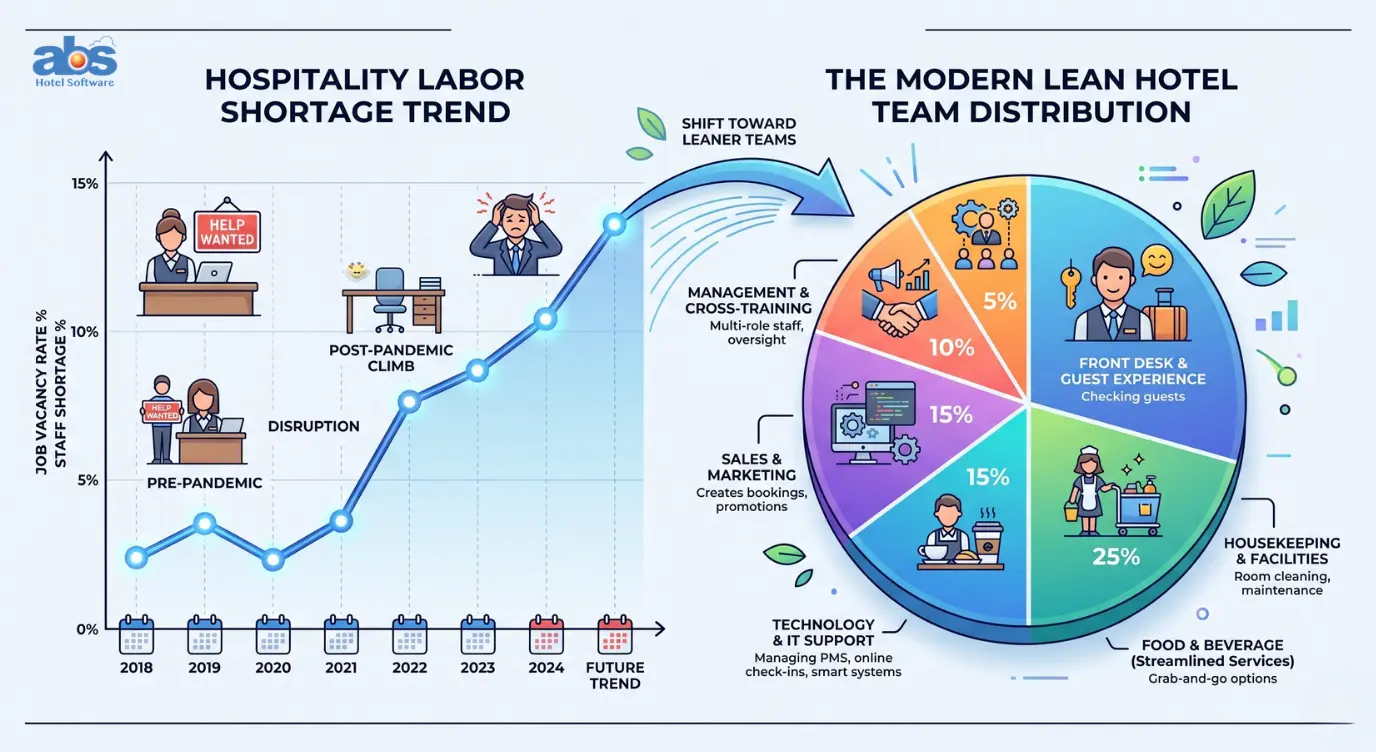
The hospitality industry is facing a permanent labor shortfall, not just a post-pandemic blip. With an estimated 18% fewer workers available this year, traditional hiring strategies are failing.
Physically demanding roles like housekeeping, maintenance, and back-of-house operations suffer the highest turnover. For a lean hotel team, this hits incredibly hard. One person might be juggling guest messages, check-ins, and concierge tasks simultaneously. Many properties have even been forced to limit services or close rooms due to a lack of hands.
Panic hiring that grabbing anyone with a pulse that no longer works. The modern lean hotel playbook relies on smart, precise hiring. The softening labor market means you can attract top-tier talent, provided your offer, culture, and technology are properly aligned.
Core Hotel Roles Reimagined for the Lean Playbook
Every guest interaction shapes your property’s reputation. The warm welcome, the spotless bathroom, the locally sourced breakfast—each depends on a specific job done well. Here is how to manage a lean hotel team by evolving these core roles.
Front-of-House & Guest Services: The Tech-Assisted Heartbeat
The person greeting your guests handles check-ins, bookings, complaints, and local recommendations. In 2026, they also manage WhatsApp, social media, and email.
-
Digital Check-In: Platforms that allow guests to upload IDs and pay prior to arrival mean staff can focus on hospitality, not paperwork.
-
AI Messaging: Automating 80% of routine questions (WiFi passwords, breakfast hours) acts as a massive force multiplier for a lean team.
Housekeeping & Room Turnovers: Precision and Speed
Housekeeping remains one of the hardest hospitality roles to fill. High turnover speeds add immense pressure.
-
PMS Integration: By integrating clear, digital checklists into a cloud-based Property Management System (PMS), the front desk sees room statuses in real-time. This eliminates time-wasting phone calls and keeps cleaning routines strictly on track.
Kitchen & Breakfast Service: Value-Driven Storytelling
With travelers becoming more price-sensitive, every meal must feel valuable. A thoughtfully prepared breakfast with farm-to-table, locally sourced ingredients gives your boutique property a storytelling advantage that mega-hotels cannot match.
Property Maintenance: Smart Upkeep
Deferred repairs catch up quickly. While owners handle minor fixes, AI-enhanced knowledge libraries are helping non-technical staff troubleshoot routine issues faster, saving the expensive specialist contractors for major plumbing or electrical work.
Security & Guest Safety: Invisible Protection
A 10-room property doesn’t need security guards; it needs smart systems.
-
Keyless Entry: Linked directly to your PMS, digital codes activate at check-in and expire at check-out.
-
Automated Surveillance: Outdoor cameras and motion lighting provide robust, staff-free security.
Marketing & Direct Bookings: Depth Over Breadth
Marketing rarely has its own department in a lean hotel team. To thrive in 2026, focus on high-impact channels: an optimized direct booking engine, a review-rich Google Business Profile, and authentic behind-the-scenes content on Instagram. Pair this with a channel manager to sync rates and prevent double bookings automatically.
The Typical Lean Hotel Team Structure (6–20 Rooms)
Forget the corporate pyramid. How to manage a hotel team in 2026 involves a flat, multi-hat structure supported heavily by cross-training.
-
Owner / General Manager: Hands-on oversight, bridging operations and guest relations.
-
Front Desk / Guest Services: Handles bookings and check-ins, frequently assisting with marketing or breakfast.
-
Housekeeping: Dedicated to room turnovers, public spaces, and restocking.
-
Food & Beverage: Runs breakfast service and transitions to front-desk support afterward.
-
Maintenance & Specialists: Part-time, on-call, or outsourced entirely.
Precision Hiring: How to Staff Your Hotel for Success
Staffing isn’t about filling a vacancy; it’s about finding someone who elevates your operation. Here is a 4-step precision hiring process for your lean team:
1. Pinpoint the Real Skill Gap
Don’t just hire a copy of yourself. Are you drowning in social media or bookkeeping? Write a job description that honestly reflects the daily cross-departmental reality.
2. Post in Hospitality-Rich Spaces
Skip general job boards. Utilize LinkedIn, innkeeping forums, culinary schools, and your own social network to find career-minded professionals.
3. Screen for Hospitality Thinking
Design application questions that reveal instincts, such as: “Tell us about a time you turned around an upset guest.” Lean into skills-based hiring over formal credentials.
4. Interview for Character
Look for natural warmth, detail obsession, confident independence, and creative problem-solving. A practical test—like a role-played guest complaint—is highly revealing. And never skip reference checks.
Training, Managing & Empowering Your Small Team
When your survival depends on a few people, high turnover is devastating. Retention is the new recruitment.
Build Skills Through Cross-Training
Decentralize your management. If a front desk clerk wants to learn revenue management, sponsor their training. If they love photography, hand them the marketing reins. Structured career paths keep top talent engaged.
Standardize Everything
Document every task in a living operations manual from folding a fitted sheet to phone scripts. Standardization removes guesswork and speeds up onboarding.
Equip Them With Time-Saving Technology
Adopt a cloud-based PMS that automates reservations, messaging, and task lists. AI and automation act as extra team members, not replacements, freeing your human staff to provide thoughtful, personalized guest experiences.
Daily Motivation That Sticks
Listen to your frontline staff and let them make small budget decisions. Offer micro-rewards in the moment—a coffee during a rush, an early finish on a Sunday. Proactively address well-being and flexible scheduling to fight burnout.
The Sustainability Opportunity for Lean Hotels
Sustainability is no longer a nice-to-have; it’s a vital strategy. Surveys show 70% of travelers prefer accommodations with visible environmental efforts. Small hotels have a distinct agility advantage here.
By switching to digital directories, sourcing food locally, installing low-flow fixtures, and eliminating single-use plastics, you save money and boost guest loyalty. You can implement these changes instantly, without the corporate red tape.
Frequently Asked Questions (FAQ)
Q: What is a lean hotel team?
A: A lean hotel team is a compact, highly versatile staff structure typically used by boutique hotels, B&Bs, and guesthouses (6-20 rooms). Instead of rigid departments, team members are cross-trained to handle multiple roles, relying heavily on automation and hotel management software to maintain high service standards.
Q: How is the hotel labor shortage affecting staffing in 2026?
A: The industry is facing a permanent labor shortfall, with roughly 18% fewer workers available. This has forced hoteliers to move away from “panic hiring” and instead focus on precision hiring, better employee retention, and adopting AI-driven technology to bridge the gap.
Q: What technology is essential for managing a small hotel staff?
A: To successfully manage a lean team, properties need a cloud-based Property Management System (PMS), a channel manager to prevent double bookings, digital/contactless check-in software, and AI-powered guest messaging to handle routine inquiries automatically.
Q: How can small hotels reduce staff turnover?
A: High turnover can be fought by offering flexible, transparent scheduling, empowering staff with decision-making authority, offering immediate micro-rewards, and establishing clear cross-training and career progression pathways.
Q: Why is cross-training important in boutique hotel management?
A: Cross-training ensures that operations don’t halt if one staff member is absent. It allows a front-desk worker to seamlessly assist with breakfast service or housekeeping, ensuring a smooth guest experience while making the employee’s job more varied and engaging.