
The Ultimate Guide to Hotel Eco-Certifications: How to
Verify Your Sustainable Hospitality
Category: Sustainable Hospitality | Reading Time: 7 Minutes | Author: Javier Tang
The TL;DR: Hotel eco-certifications prove your sustainability efforts are real. They give hotels credibility with conscious travelers and help turn green practices into a competitive advantage.
Sustainability is no longer just a trend or a nice-to-have; it’s a deciding factor for today’s travelers. Guests want concrete proof that a property is walking the walk, not just marketing it.
That’s where sustainable hotel certifications come in. They validate your efforts, build trust with eco-conscious travelers, and strengthen your market presence. The right certification can even pay for itself by attracting guests who actively seek out green accommodations.
But with so many options out there, how do you choose? In this guide, we will break down the top global and regional green hotel credentials, helping you find the right fit for your brand and budget.
What Defines a Green Hotel in Today’s Market?
A green hotel—also known as a sustainable hotel or eco-hotel—prioritizes sustainability across its entire operation. Within that definition, there is a broad spectrum of approaches depending on the property’s age, location, and resources.
The Ground-Up Approach (New Builds)
On one end of the spectrum, there are hotels built from the ground up with sustainability in mind. These properties consider environmental impact during the design phase. They utilize energy-efficient construction, responsible material sourcing, solar power, and advanced water recycling systems. Given the massive effort and expense involved, these properties usually pursue top-tier green hotel certifications that recognize architectural sustainability.
The Operational Shift (Existing Properties)
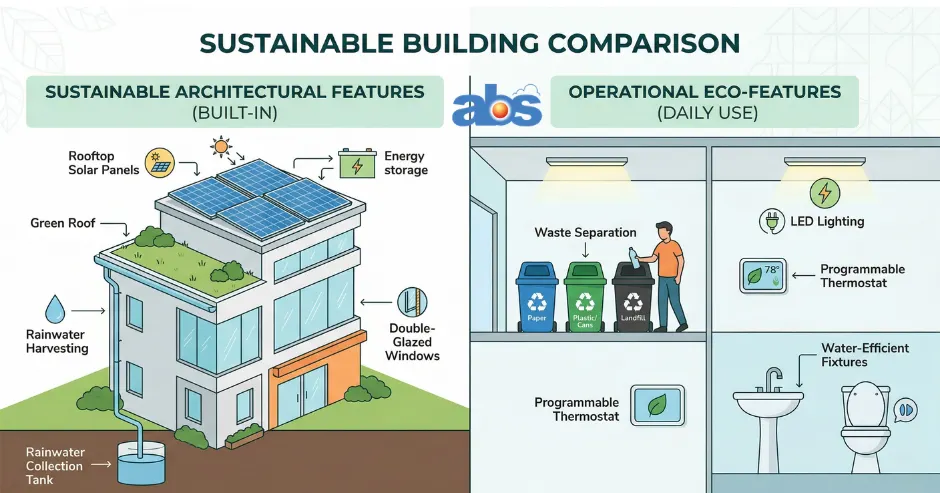
On the other end are existing hotels that update their daily practices to become more environmentally friendly. While they may not have been constructed using sustainable building practices, their operations focus heavily on eco-friendly initiatives. This includes retrofitting with rainwater capture systems, low-flow toilets, LED lighting, and implementing guest programs to reduce towel and linen laundering.
How Do I Earn Sustainable Hotel Credentials?
There are many ways to establish your property’s green credentials. However, the worst approach is to pay superficial lip service to sustainability. This risks accusations of “greenwashing”—the practice of promoting inflated green credentials without taking any meaningful action.
Key Focus Areas for Eco-Friendly Operations
To prepare for hotel eco-certifications, you will generally need to improve and assess the following areas:
-
Resource Management: Improving sustainability in water usage, energy efficiency, and waste management.
-
Community Impact: Maximizing the social and economic benefits for your local community.
-
Environmental Protection: Reducing negative environmental footprints and conserving local habitats.
-
Supply Chain Audits: Assessing the sustainability and ethical practices of your vendors.
The most efficient route to making your hotel green is to first decide which certification(s) you want to pursue. Because each credential has its own specific requirements, choosing your target early ensures you don’t waste resources on initiatives that won’t help you qualify.
Top Global Hotel Eco-Certifications to Consider
For properties looking for international recognition, these global sustainable hospitality certifications carry significant weight.
LEED (Leadership in Energy and Environmental Design)
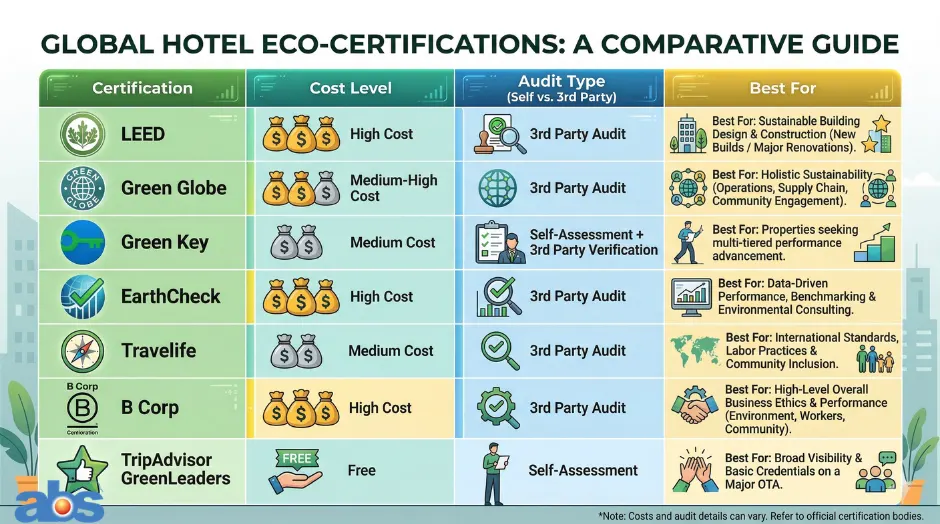
LEED is the premier mark of achievement in green building. While it applies primarily to new construction or significant renovations, earning this credential signals a massive commitment. It operates on a points system with four levels: Certified, Silver, Gold, and Platinum.
Green Globe
Green Globe measures the environmental, social, and economic sustainability of both your business and supply chain partners. With 44 core criteria and over 380 compliance indicators, this is one of the most holistic and thorough assessments available. Third-party audits ensure a fair evaluation.
TripAdvisor GreenLeaders
This is an excellent starting point for many properties. TripAdvisor GreenLeaders recognizes hotels and B&Bs with environmentally friendly practices. It is free and survey-based, offering Bronze, Silver, Gold, and Platinum badges. Even a Bronze badge prominently displayed on your profile can boost visibility among millions of TripAdvisor users.
Green Key Global
With a strong focus on the Americas, Green Key Global is particularly well-suited for hotels that host corporate meetings, as more businesses track carbon footprints for their events. It awards 1 to 5 keys based on energy conservation, waste management, and community outreach.
EarthCheck
Operating since 1987, EarthCheck provides software, consulting, and certification services. It covers everything from greenhouse gas emissions to cultural management. Its name carries major marketing weight; journalists frequently use EarthCheck to identify truly sustainable hotels.
Other Notable Global Standards
-
GTA Global (Green Tourism Active): Offers on-site verification and is highly accessible to smaller properties and independents.
-
Audubon Green Lodging Program: Focuses heavily on water quality and resource conservation. Annual fees start at just $250.
-
Green Seal: A science-based nonprofit offering Bronze, Silver, and Gold tiers with rigorous annual compliance monitoring.
-
Travelife: Approved by the Global Sustainable Tourism Council (GSTC), evaluating labor rights, community integration, and environmental practices via independent on-site audits.
Regional Eco-Friendly Hotel Certifications
If your target audience is localized, or you want to align with specific governmental standards, regional green lodging programs are highly effective.
Europe’s Leading Green Standards
-
Green Tourism (UK): Certifies over 2,000 members in the UK, Ireland, and Canada across 150 criteria.
-
Ecotourism Ireland: Complies with strict GSTC standards, offering levels from Bronze to Gold.
-
Ecolabel / Eco Flower (EU): Identifies sustainable products; utilizing these aligned products helps hotels meet broader certification standards.
The Americas’ Sustainability Programs
-
Energy Star (US): Rates businesses (1–100) for energy efficiency. Their free Portfolio Manager tool is excellent for benchmarking.
-
Hoteles + Verdes (Argentina): A GSTC-compliant standard offering tiered certifications.
-
Sistema de Distinción en Turismo Sustentable (Chile): A government system evaluating 57 economic, social, and cultural criteria.
Africa & APAC Sustainable Distinctions
-
Fair Trade Tourism (Southern Africa): Focuses heavily on fair wages, equitable benefits, and human rights alongside environmental respect.
-
Eco Certification (Australia): Perfect for nature-based accommodations, offering tiers like Advanced Ecotourism.
-
Asian Eco-tourism Standard for Accommodations (AESA): GSTC recognized, tailored specifically for eco-lodges and resorts in the APAC region.
Choosing the Right Green Hotel Certification for Your Property
Not every certification suits every property, but there is a green solution for any hotel willing to put in the time and effort. Done right, hotel eco-certifications show the world you care and position you as a leader in responsible travel.
Best for Large Independent Chains
Look toward comprehensive, widely recognized programs: TripAdvisor GreenLeaders, Green Key, Green Globe, ENERGY STAR, Green Seal, Audubon, LEED (for renovations), and Green Tourism.
Best for Bed and Breakfasts
Focus on accessible, high-visibility options: TripAdvisor GreenLeaders, Green Key, ENERGY STAR, Audubon, and Green Tourism.
Best for Independents and Hostels
Target budget-friendly but impactful credentials: TripAdvisor GreenLeaders, ENERGY STAR, Audubon, and Green Tourism.
Take the Next Step Toward Sustainable Operations
Earning a top-tier certification—especially one involving third-party auditing—requires meticulous tracking of your energy usage, waste management, and daily operations. You can’t manage what you don’t measure.
Our hospitality software makes tracking operational efficiency, digitalizing paper-heavy processes, and managing guest communications effortless, giving you the data you need to ace your next green audit.
Ready to streamline your operations and back up your green claims? Click Here to Request a Demo and Contact our software consultants today!
Frequently Asked Questions (FAQ)
1. Are hotel eco-certifications worth the financial investment? Yes. While some top-tier certifications require audit fees, they often pay for themselves. Certified green hotels generally see increased bookings from eco-conscious travelers, higher corporate group sales (due to corporate ESG mandates), and massive long-term savings from reduced energy and water consumption.
2. What is the easiest green hotel certification for a small property to start with? TripAdvisor GreenLeaders and the Energy Star Portfolio Manager are excellent starting points. They are free, survey-based, and help you establish a baseline of your current sustainability efforts without requiring upfront capital.
3. How do sustainable hotel certifications prevent “greenwashing”? The most reputable hotel eco-certifications (like EarthCheck, Green Globe, and LEED) require independent, third-party audits. This means an external assessor physically verifies that the hotel’s claims regarding energy reduction, fair labor, and waste management are factually accurate, completely eliminating greenwashing.
4. Does a hotel have to be newly built to get an eco-certification? Not at all. While certifications like LEED are famous for new builds, the vast majority of green lodging programs focus on operational sustainability. Existing hotels can earn high-tier certifications by retrofitting fixtures, changing supply chains, and updating daily management practices.
About the Author: Javier Tang is a Hotel Technology Consultant at BMS Solution, specializing in the Southeast Asian hospitality market. He helps streamline operations and maximize revenue for over 1,500 hotels across Malaysia, Singapore, Indonesia, and the Philippines.