The Invisible Transaction:
20+ Hotel Payment Methods Defining 2026
Category: Hotel Technology & Operations | Reading Time: 10 minutes | Author: Javier
Just a few years ago, the hospitality industry was buzzing about the shift away from cash. In 2026, that conversation feels almost nostalgic. We have moved far beyond simply “going cashless.” Today, the global hotel industry is defined by the invisible transaction—a payment experience so seamless that guests barely register it is happening.
While cash remains a steady backup, the real story of 2026 is the explosion of payment choices, the normalization of biometrics, and the deep integration of alternative financing in travel. Here is a look at how the hotel payments landscape has evolved, the top payment methods dominating the market, and why upgrading to an AI-driven, unified property management system is now a necessity for survival.
The State of Hospitality Payments in 2026: Frictionless and Fragmented
The prediction of payments becoming “invisible” is no longer a futuristic vision; it is the baseline expectation for your guests. With global cashless transaction volumes soaring, the driving force is the rapid expansion of embedded finance.
However, we are also navigating a hyper-fragmented payment world. A guest arriving from Singapore expects a completely different set of digital tools than a guest from São Paulo. The most successful hotels are not just the ones that accept the most methods—they are the ones utilizing AI to predict and present the exact right payment method at the moment of booking.
Why Frictionless Choice Matters for Guest Bookings
The “abandoned cart” problem of e-commerce has morphed into an “abandoned booking” epidemic for hotels. Data shows that a vast majority of modern travelers will abandon a hotel website if their preferred digital wallet or local payment method isn’t immediately visible at checkout.
Guests now expect their credentials to be recognized instantly via passkeys or stored data, turning a clunky manual entry process into a three-second frictionless checkout. If they have to type out a 16-digit card number, you are losing direct bookings to Online Travel Agencies (OTAs).
Exploring the 20+ Popular Hotel Payment Methods in 2026
To stay competitive, hoteliers must understand the current landscape of hotel payment solutions, ranging from established giants to emerging regional tech.
The Established Giants: Traditional & BNPL Cards
Credit and debit cards remain foundational, but how guests interact with them has modernized dramatically.
-
Visa, Mastercard, Amex: Still dominant, but largely tokenized and hidden behind digital wallets.
-
Buy Now, Pay Later (BNPL): Platforms like Affirm, Klarna, and Afterpay are heavily used for booking luxury stays and long vacations, allowing travelers to split costs seamlessly.
-
CBDC (Central Bank Digital Currencies): With several nations launching state-backed digital tokens, major hotel hubs are increasingly equipped to accept these secure digital currencies.
The Biometric Wallet: Facial and Palm Recognition
The smartphone is no longer the required middleman for on-property transactions.
-
Facial Recognition Payments: Integrated with national databases or secure platforms, guests can authorize payments at the spa or poolside by simply looking at a camera.
-
Palm and Fingerprint Scanning: Offering a truly touchless experience, palm scanners linked to guest profiles are becoming the standard in luxury resorts.
The Super-App Takeover
Digital wallets have transformed into all-encompassing Super-Apps managing identity, loyalty programs, and finance.
-
Apple Pay & Google Pay: Ubiquitous global gateways for fast, secure transactions.
-
WeChat Pay & Alipay: Absolutely critical for capturing the lucrative outbound Chinese travel market.
-
GrabPay & GoPay: Dominant forces in the Southeast Asian market. For hotels in Malaysia, Singapore, and Indonesia, integrating these is no longer optional for regional travelers.
Regional Powerhouses and Embedded Finance
Localization is the key to global revenue optimization.
-
Pix (Brazil): The instant payment structure of Pix is the preferred method for Brazilian travelers globally.
-
UPI (India): India’s Unified Payments Interface requires hotels catering to Indian tourists to support UPI QR codes both online and at the front desk.
-
Embedded Payments (EPM): Travelers increasingly use credits earned within massive ecosystems (like rideshare apps) to fund their hotel stays.
Crypto & Stablecoins in Hospitality
After years of volatility, digital currencies have carved out a loyal niche in the travel sector.
-
Bitcoin & Ethereum: Accepted primarily by independent luxury properties catering to high-net-worth tech travelers.
-
Stablecoins (USDC, USDT): Highly popular for long-stay corporate housing and digital nomads due to their price stability across borders.
The 2026 Guest Journey: Integrating Invisible Hotel Payments
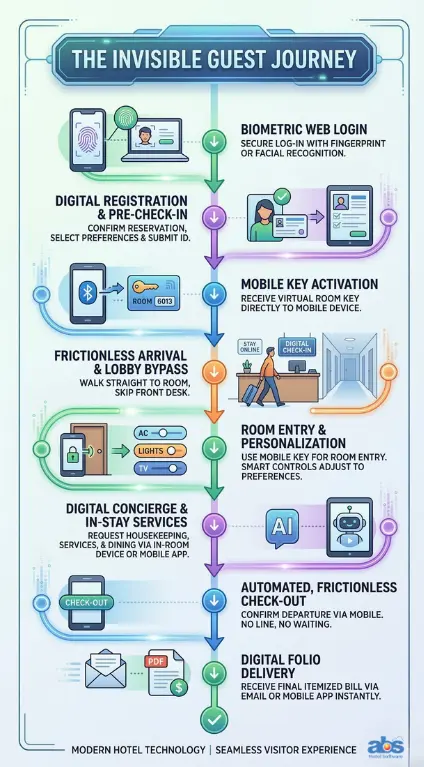
The modern guest journey is powered by a series of invisible, automated triggers designed to enhance the stay while securing revenue.
Pre-Arrival and Booking Triggers
-
On the Website/App: Biometric login populates the guest profile instantly. Geo-location AI detects a guest browsing from Germany and automatically highlights Giropay alongside traditional options.
-
Via Messaging: AI chatbots handle late checkout requests or room upgrades via WhatsApp, generating a secure “Pay by Link” without front desk intervention.
On-Property Frictionless Check-In
-
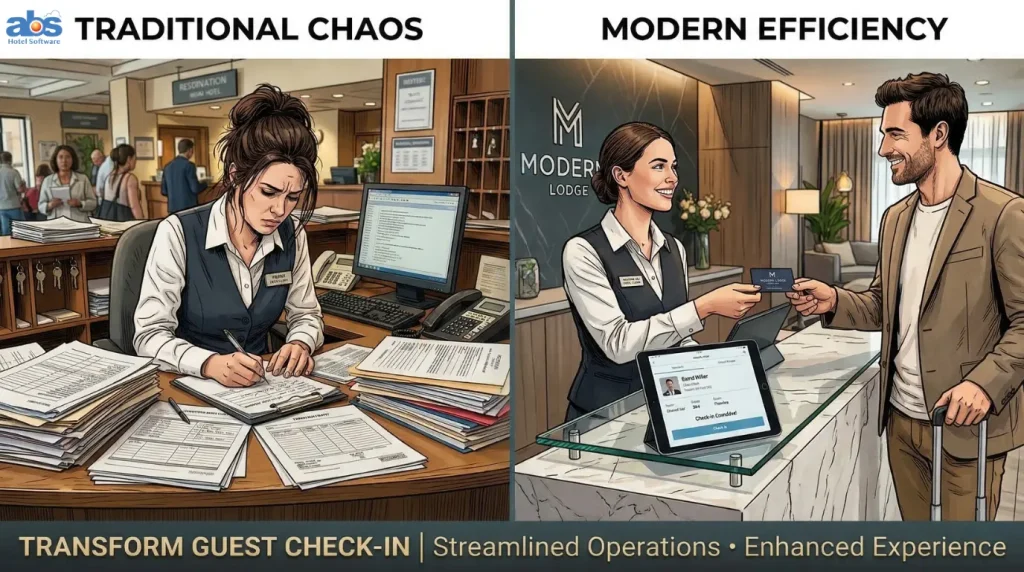
The Frictionless Hotel Lobby: The traditional front desk bottleneck is gone. Guests arrive, a quick facial scan verifies their identity, activates their digital room key, and places a secure hold on their preferred payment method—all before they step into the elevator.
5 Strategic Benefits of Upgrading Your Hotel Payment Stack
Implementing a modern payment gateway integrated directly with your hotel management software yields massive operational dividends.
-
Zero-Friction Bookings: Auto-populated details and stored preferences eliminate booking drop-off, securing the reservation in milliseconds.
-
Global Revenue Optimization: Accepting region-specific methods (like GrabPay, UPI, or Pix) captures digital-native travelers from high-growth economies.
-
Dynamic Fraud Prevention: AI-driven risk engines analyze transactions in real-time, blocking anomalies without disrupting the legitimate guest experience.
-
Hyper-Personalized Upselling: Integrated data allows you to offer targeted pre-arrival upgrades (e.g., adding a spa package with a specific promo code) using one-click authorizations.
-
Sustainability & Speed: Automated reconciliation, digital folios, and the removal of paper trails save hours of accounting work.
Choosing the Right Payment Partner for Your Property Management System
Your payment gateway is a strategic revenue partner. When evaluating solutions, ensure they offer:
-
AI-Driven Routing: Automatically routing transactions to local acquiring banks to minimize cross-border fees.
-
Biometric Integration: The capability to process identity tokens seamlessly.
-
Unified Commerce: Treating a pre-arrival deposit, a restaurant tab, and a room charge as one continuous, unified financial profile.
In 2026, the best payment method is the one the guest never has to think about. By embracing a future-proof, integrated hotel management system, you build a frictionless relationship that begins online and ends with absolute guest satisfaction.
Frequently Asked Questions (FAQ)
Q: What is an invisible payment in the hotel industry?
A: Invisible payments refer to automated, seamless transaction processes where guests do not need to physically present a card or cash. This includes biometric authorizations, one-click digital wallets, and background tokenization integrated directly into the hotel’s property management system.
Q: Why are alternative payment methods important for hotels in 2026?
A: Alternative methods like Super-Apps (GrabPay, WeChat Pay), BNPL, and regional options (Pix, UPI) are crucial because traveler demographics have shifted. Offering localized, preferred payment methods directly reduces booking abandonment and increases direct revenue.
Q: How do biometric hotel payments work?
A: Guests securely opt-in by linking their payment details to a biometric identifier (like a facial scan or palm print) prior to or upon arrival. Throughout their stay, cameras or scanners at the restaurant, spa, or lobby recognize the guest and automatically route the charge to their unified folio.
Q: Is it secure to use AI and biometrics for hotel transactions?
A: Yes. Modern systems use advanced tokenization, meaning actual credit card numbers or raw biometric images are never stored directly on the hotel’s local servers. AI also provides dynamic, real-time fraud prevention to flag suspicious activity instantly.