The Hotel Kiosk Conundrum: Why Haven’t They Taken Over by 2026?
Category: Hotel Kiosk | Reading Time: 10 minutes | Author: William
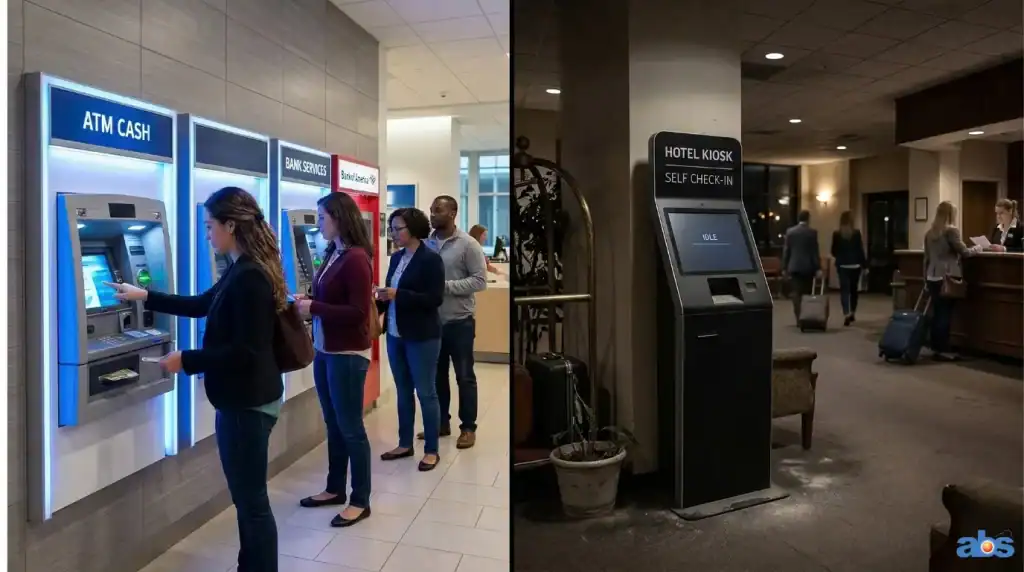
Self-service machines were invented to streamline counter service and eliminate repetitive tasks. We see them everywhere—from ATMs at local banks to ticketing machines at transit stations. But as we navigate through 2026, a lingering question remains for the hospitality sector: why hasn’t the self-service hotel kiosk become a standard, universally popular fixture in every lobby?
Executive Summary: Key Takeaways for Hoteliers
-
High Capital Barrier: According to ABS PMS industry observations, standalone hardware often exceeds USD 6,000 upfront, making ROI a challenge for independent properties without an integrated ecosystem.
-
Integration Complexity: Internal data suggests over 90% of kiosk failures stem from poor synchronization between the hardware, Property Management Systems (PMS), and door locks.
-
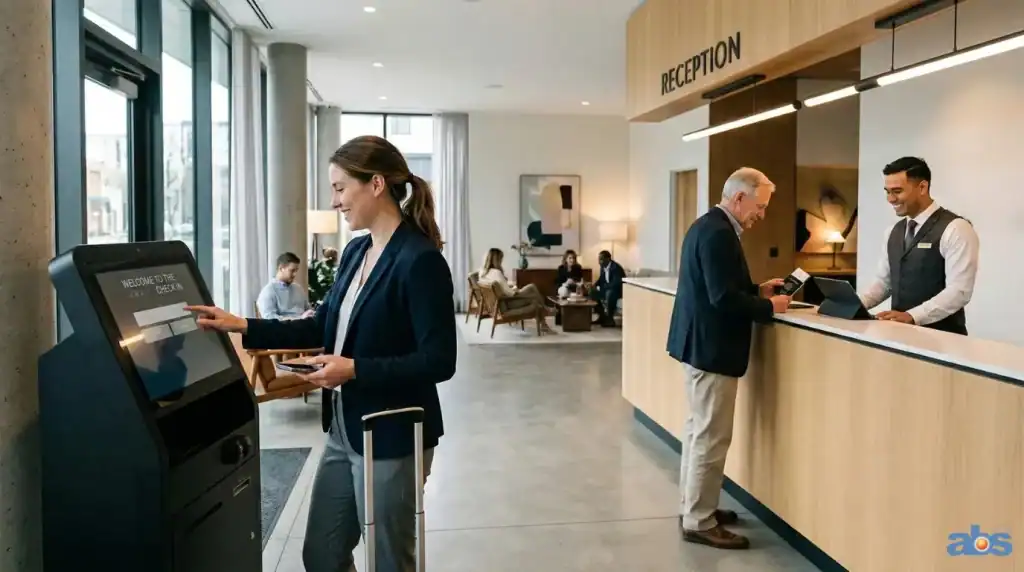
The 50% Success Metric: A successful deployment is defined by over 50% of guests opting for self-service, liberating staff for high-value guest relations.
-
Ecosystem Advantage: Utilizing a unified vendor for PMS and kiosk software (like the ABS Hotel Management System) eliminates data silos and prevents “finger-pointing” during technical issues.
Are Self-Service Hotel Kiosks Necessary in 2026?
The primary drivers for adopting automation—soaring labor costs and persistent staffing shortages—are more acute than ever. The hospitality industry, particularly in growing markets like Malaysia, Singapore, Indonesia, and the Philippines, continues to feel this pinch. On paper, the need is undeniable.
Furthermore, a hotel check-in kiosk mitigates risk by handling financial transactions securely, removing potential human error and theft. Since hotel front desks still spend a vast majority of their time processing payments and checking IDs, the logic for automation holds strong.
The Core Reasons for Slow Hotel Kiosk Adoption
While the desire for efficiency exists, the practical engineering and economic realities present unique hurdles.
1. The Economics of Investment
For a bank, the math is simple: one ATM replaces multiple tellers. A hotel, however, serves far fewer check-in transactions per location than a bank does withdrawals. This makes the initial capital outlay a significant barrier. Specialist providers, such as those offering the ABS Hotel Management System, have stepped in to create integrated solutions that are far more accessible than building a custom system from scratch.
2. The Engineering Complexity
A hotel kiosk must perform a “symphony” of real-time tasks that an ATM never faces:
-
OTA Synchronization: Verifying bookings from Booking.com or Agoda.
-
Room Readiness: Communicating with the PMS and dedicated housekeeping apps to ensure a room is clean and ready for allocation.
-
Key Encoding: Integrating with electronic lock systems to issue room cards.
-
Identity Verification: Scanning and validating passports or IDs.
Comparison: ATM vs. Hotel Kiosk Complexity
| Feature | Bank ATM | Hotel Kiosk |
| Primary Task | Cash dispensing | Multi-step check-in/out |
| Data Sources | Single bank database | OTAs, PMS, Lock Systems, ID scanners |
| Physical Output | Cash/Receipt | Encoded RFID Key Cards |
| User Complexity | Low (Seconds) | High (Minutes) |
$Proposed Graphic: An infographic flowchart showing the “Symphony of a Kiosk,” visually mapping the connections between the Kiosk, OTAs, PMS, Housekeeping App, and Door Locks.$$

The Main Reason: Poor Implementation of Automated Check-In
The primary metric of failure is a usage rate below 10%. If 90% of guests ignore the machine to line up at the desk, the investment is a failure.
Signs of a Failed Kiosk Project:
-
Staff Sabotage: The front-desk team actively discourages use because the machine is unreliable or slow.
-
The “Manual” Kiosk: Systems that require staff to manually enter data into the PMS before the guest can use the kiosk defeat the purpose of automation.
-
Key Encoding Failures: The most common pitfall; the machine issues a card that doesn’t actually open the door.
The Smart Approach to Hotel Automation in 2026
The most reliable path to success is to choose a provider with a fully integrated ecosystem. Opt for a vendor that offers its own robust PMS, channel manager, and kiosk software, ensuring all components are designed to work together natively.
When automation is handled correctly, the front desk is liberated. Employees are no longer chained to a terminal; they are free to act as genuine hosts—greeting guests, giving tours, or assisting by the pool.
Frequently Asked Questions (FAQ)
Q: Do guests actually want to use hotel check-in kiosks in 2026?
A: Yes, modern guests—especially business travelers—prioritize speed. However, they will only use a kiosk if the interface is intuitive and the machine functions flawlessly without staff intervention.
Q: Can a hotel kiosk completely replace my front desk staff?
A: No, the goal is not to eliminate staff, but to elevate their role. By automating mundane transactional tasks, your team can focus on personalized guest relations and sales.
Q: What is the most important technical feature to look for?
A: Deep, real-time integration with your Property Management System (PMS) and door lock hardware. Without this, the kiosk will create more manual work for your staff rather than reducing it.
Ready to Streamline Your Hotel Operations?
Don’t let operational complexity or data silos hold your property back. Experience how seamless automation should work with a system trusted by over 1,500 hotels.
Click Here to Request Demo or Contact Our Software Consultant today to see how the integrated ABS Hotel Management System can modernize your lobby for 2026.