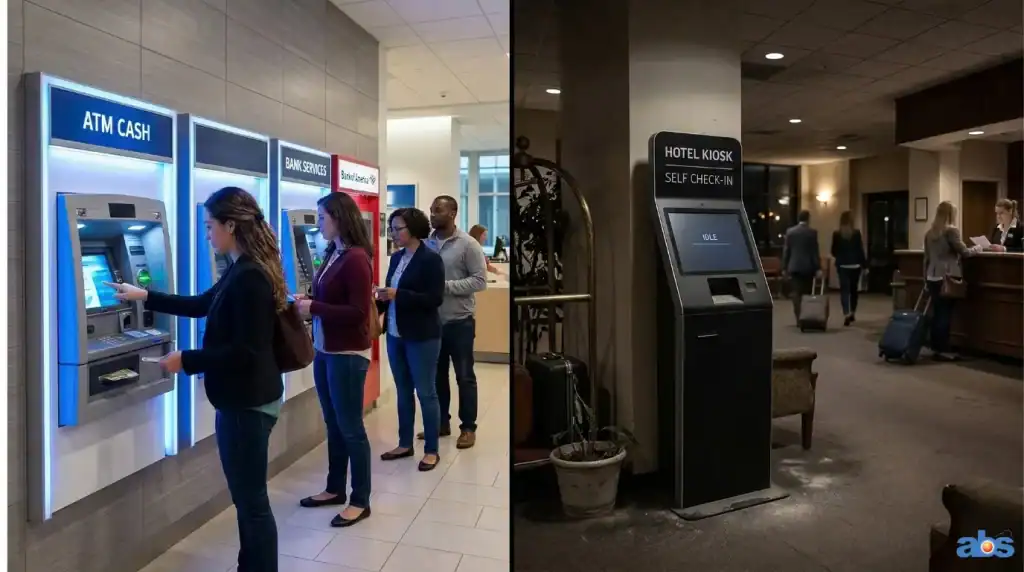
The Self-Service Revolution:
Weighing the Pros and Cons of Hotel Kiosks
Category: Hotel Kiosk | Reading Time: 10 Minutes | Author : William Tang
First impressions are the lifeblood of the hospitality industry. For the vast majority of your guests, that make-or-break moment happens the second they walk up to the check-in counter. Industry data highlights a striking reality: a mere five-minute delay during the check-in process can plummet overall guest satisfaction by up to 50%. In highly competitive hospitality markets across Malaysia, Singapore, Indonesia, and the Philippines, that drop in satisfaction directly translates to negative online reviews and a loss of repeat direct bookings.
Enter the hotel self-service kiosk—a dynamic automation technology rapidly transforming how guests begin and conclude their stays. When seamlessly integrated with a robust backend, such as the ABS Hotel Management System, these kiosks can eliminate lobby bottlenecks, reduce front desk labor costs, and elevate the modern guest experience. However, adopting any new hotel technology requires careful consideration. Let’s weigh the definitive pros and cons of hotel kiosks to determine if they are the most profitable fit for your property’s operations.

Why Self-Service Hotel Kiosks Are Transforming Hospitality
Long, winding queues at the front desk are quickly becoming relics of the past. Today’s modern travelers increasingly expect speed, autonomy, and contactless check-in options preferences that have accelerated dramatically over the last few years.
For savvy hoteliers, self-service hotel kiosks represent much more than just a trendy lobby upgrade. They are vital operational tools designed to address genuine pain points for both your hardworking staff and your weary guests.
The Pros: Top Benefits of Hotel Check-In Kiosks

Eliminating Wait Times for Happier Guests
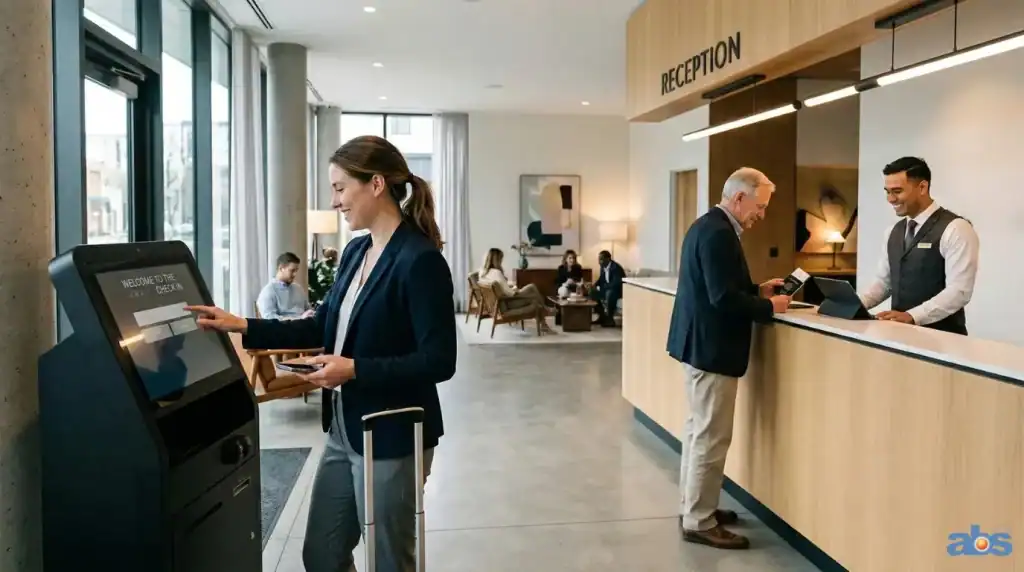
Nothing frustrates a tired traveler quite like standing in line after a grueling journey. Automated hotel check-in eliminates this friction entirely. Guests can walk right up to a terminal, complete their check-in in a matter of minutes, grab their key card, and head straight to their rooms. When guests control their arrival experience, they feel empowered rather than processed, setting a positive tone for their entire stay.
Empowering Staff and Streamlining Operations
Front desk teams spend countless hours handling routine check-ins and check-outs. Hotel kiosks handle this repetitive transactional work, freeing up your staff to focus on what humans do best: providing warm hospitality, answering complex local questions, and fulfilling special requests. Furthermore, modern kiosks integrate directly with your Property Management System (PMS), meaning no manual data entry and zero synchronization errors.
Providing 24/7 Check-In Flexibility
Flights get delayed, road trips hit traffic, and unexpected early arrivals happen. With check-in kiosks, your front desk essentially never closes. Guests arriving at 2:00 AM can get settled comfortably without hunting down a night auditor. This around-the-clock availability isn’t just a convenient perk; it is an expectation of the modern traveler.
Unlocking Automated Upsell Revenue Opportunities
Here is a benefit many hoteliers overlook: hotel kiosks are fantastic salespeople. By utilizing strategically placed upsell prompts during the digital check-in flow such as room upgrades, late checkout add-ons, or breakfast packages that hotels can boost RevPAR without seeming pushy. Guests are often much more receptive to these upgrades when presented cleanly on a screen.
The Cons: Potential Challenges of Hotel Kiosk Systems
Technology Glitches and System Downtime
Technology is not infallible. Hotel kiosk systems rely heavily on hardware, software, and stable network connectivity. If any of these fail during peak check-in times, you risk creating the exact delays the kiosk was meant to prevent. The solution requires robust IT support, regular hardware maintenance, and staff who are trained to step in immediately.
The Risk of Losing the Human Touch
Not everyone wants a purely digital experience. Older travelers, or those less comfortable with technology, often genuinely prefer human interaction at the front desk. They may need reassurance or simply enjoy the personal welcome. Smart hotels use kiosks to complement traditional check-in options, not replace them.
Navigating Language and User Interface Barriers
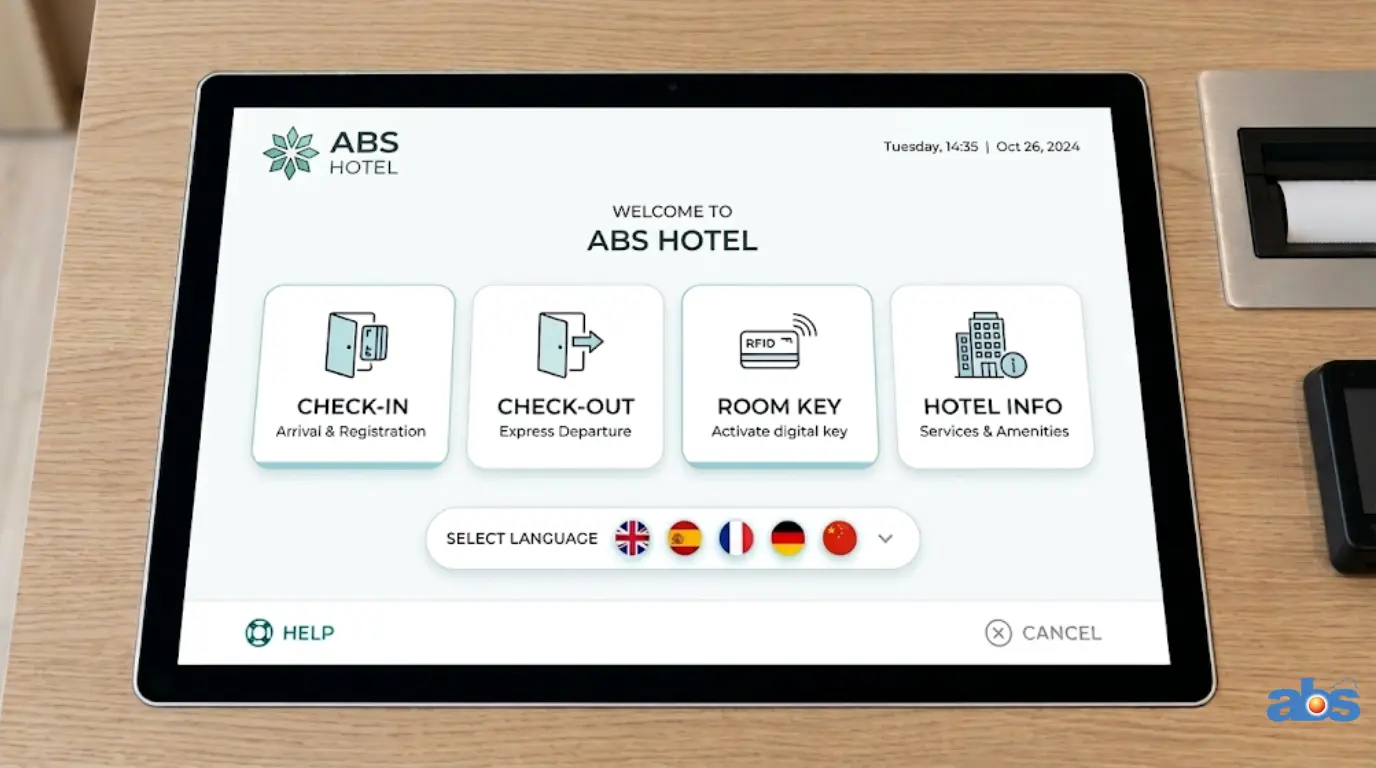
While the best self-service hotel kiosks offer multilingual interfaces, navigating technical terminology or confusing workflows in an unfamiliar language can still frustrate international guests. Intuitive design, clear on-screen guidance, and having a “lobby ambassador” nearby can bridge this gap effectively.
Managing Data Security and Privacy Concerns
Because check-in kiosks collect sensitive guest information—including payment details, passport scans, and contact data—they are potential targets for cyber threats. Hotels must ensure their self-service technology complies with strict data protection regulations (like GDPR) and utilizes robust encryption to maintain guest trust.
Best Practices for Implementing Hotel Self-Service Technology
The properties that succeed with contactless hospitality don’t just plug in a machine and walk away. They think strategically about integration.
Ensuring Seamless PMS Integration
When your hotel kiosks are deeply connected to your PMS and Channel Manager, they become intelligent touchpoints. They can access guest histories and preferences, allowing for personalized moments even during self-service. Imagine a kiosk automatically offering a complimentary drink voucher to a guest checking in on their birthday!
Striking the Perfect Tech-to-Human Balance
The future of hospitality isn’t purely digital, nor is it purely manual—it is a hybrid of both. Automated hotel check-in handles the routine so your staff can focus on the remarkable.
Conclusion: Embracing the Future of Contactless Hospitality
Hotel kiosks offer undeniable advantages: faster arrivals, streamlined operations, and new revenue streams. However, they also present real challenges regarding technology reliability and maintaining the personal touch. Success lies in thoughtful implementation. By choosing robust technology and training your team to support it, self-service doesn’t make your hotel feel less personal. Instead, it makes your property more responsive, professional, and perfectly attuned to the modern traveler’s desire for choice and speed.
Frequently Asked Questions About Hotel Kiosks (FAQ)
Q: Do hotel kiosks replace front desk staff?
A: No. Hotel kiosks are designed to assist staff, not replace them. By automating routine check-in tasks, kiosks free up your front desk team to provide higher-level customer service, act as concierge, and handle complex guest needs.
Q: How much does a hotel check-in kiosk cost?
A: Costs can vary widely depending on the hardware quality, software features, and PMS integration capabilities. Generally, a single terminal can range from a few thousand ringgit up to RM 2500+ monthly, but the ROI is often quickly realized through operational efficiency and automated upselling.
Q: Are self-service hotel kiosks secure?
A: Yes, provided they are sourced from reputable vendors. Modern hotel kiosk systems utilize end-to-end encryption and comply with international data security standards (like PCI DSS for payments) to keep guest data safe.
Q: Can a hotel kiosk dispense physical room keys?
A: Absolutely. Most modern check-in kiosks are equipped with key card encoders that drop a freshly programmed RFID or magnetic stripe key directly to the guest. Many also support mobile key delivery directly to a guest’s smartphone.