The Hotel Leader’s Journey: Mastering the Art of
Transformation
Category: Hotel Technology & Leadership | Reading Time: 6 Minutes | Author: William Tang
The Core Truth: In the hospitality industry, the clock never stops. Because our operations run 24/7, many leaders fear the disruption that comes with systemic change. However, the greatest risk to your property is not the temporary friction of an upgrade; it is the slow decay of standing still.
The hotels that will dominate the future market are not the ones that avoid resistance, but the ones that navigate it with clear purpose. True change management isn’t just a sterile project plan on a spreadsheet. It is the hotel leader’s journey: mastering the art of transformation by guiding your entire community—your staff, your guests, and your daily operations—into a better, more efficient era with absolute confidence.
⚡ Key Takeaways: Quick Summary for Busy Hoteliers
-
The Three Pillars: Successful transformation requires an equal balance of upgrading technology, redesigning workflows, and empowering people.
-
The Pilot Strategy: Never overhaul a hotel overnight. Secure a “beachhead” in one department to prove ROI and build team momentum.
-
Partners over Vendors: Tech vendors sell software licenses; strategic partners actively guide workflow redesigns and complex tech integrations.
-
Train for Confidence: Overcoming high hospitality turnover requires training that makes staff feel safe and supported, not just competent.
Decoding Change Management: The Foundation of Hotel Transformation
Graphic Proposal: A Venn diagram showing the overlap of Technology, Workflows, and People.
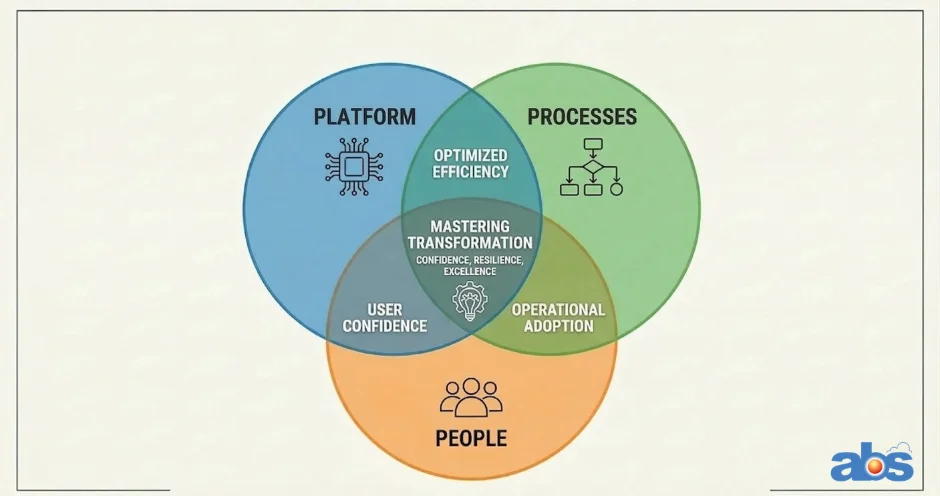
At its core, change management is the deliberate bridge between where your hotel currently stands and where it needs to be to remain competitive. In the hospitality sector, this requires orchestrating a delicate balance between three interconnected pillars.
1.Adopting the Right Hotel Technology
You need a tool that does more than just add a flashy feature. It must seamlessly integrate with your existing payment gateways and central systems, securely handling mobile keys and guest data without creating new data silos.
2.Redesigning Operational Workflows
A new tool demands new operational rituals. With digital check-in, your front desk’s role shifts from a rigid transaction hub to a dynamic guest-support command center. Your communication flows with housekeeping and maintenance must evolve accordingly.
3.Empowering Your People
This is the heart of the matter. Your front-desk team, who traditionally thrive on welcome handshakes and face-to-face check-in chats, must now transition into tech guides. They need to troubleshoot digital hiccups and monitor virtual arrivals.
If any one of these three pillars is weak, the entire structure crumbles. The most elegant hotel technology fails without comprehensive training, and perfect operational processes are ignored without genuine team buy-in. Change management is the mortar that holds your transformation together.
The Hospitality Paradox: Why Mastering the Art of Transformation is Challenging
Hotels are not traditional offices or assembly lines; they are living organisms that never sleep. This makes guiding transformation uniquely challenging for any leader.
1.The 24/7 Operational Stage
There are no “after hours” for a major system upgrade. Every change happens in real-time, often right in front of a live audience of guests. This immense pressure can frequently freeze executive decision-making.
2.High-Turnover and Training Hurdles
With a historically transient workforce—where industry reports show institutional knowledge in a hotel is fragile. Because much of hotel training is peer-to-peer, a new tech system is only as strong as the last person who learned it. A steep learning curve is not just an inconvenience; it is a critical barrier to software adoption.
3.The Emotional Equation of Hospitality
Hospitality professionals chose this career path for human connection. When we introduce heavy automation, we must frame it correctly. It is not a replacement for their human intuition; rather, it is a tool designed to free them from mundane data entry so they can focus on creating memorable guest experiences.
4.Real-Time Guest Visibility
If a bank rolls out a buggy software update, they get a private customer complaint. If a hotel rolls out a buggy update at the check-in desk, they get a public one-star review. The guest experience serves as the immediate canary in the coal mine for any failed tech implementation.
5.The Disconnected Tech Ecosystem
Many properties operate with a tangled patchwork of legacy systems. The mere thought of adding another layer to a fragile IT ecosystem can feel overwhelming, leading to the dreaded “I can’t even integrate what I already have” syndrome.
Yet, these exact obstacles are what make successful change so incredibly powerful. The leaders who master the art of transformation turn these operational hurdles into their ultimate competitive advantage.
The Hotel Leader’s Playbook: Strategies for Guiding Transformation
Successfully navigating hotel transformation is not about checking boxes. Here is a definitive playbook for the journey ahead.
Graphic Proposal: A step-by-step roadmap infographic outlining the change adoption process from pilot to full rollout.
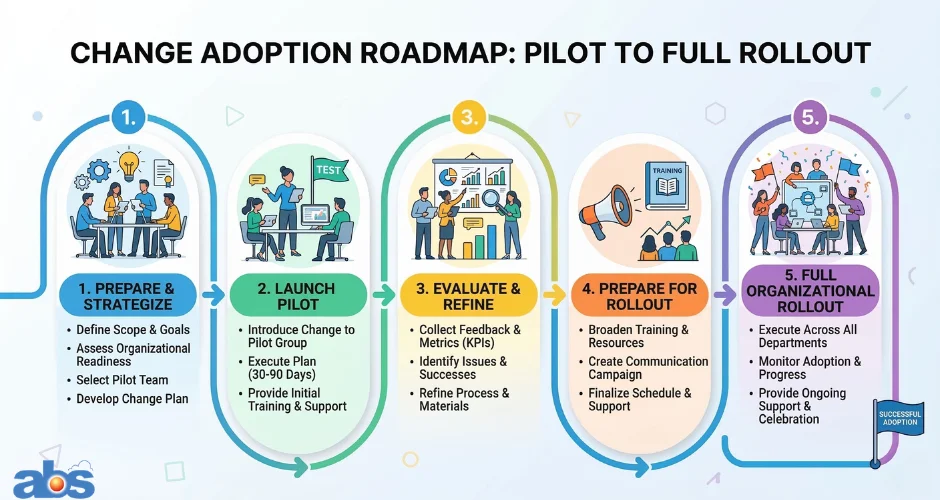
1. Secure a Beachhead and Celebrate Quick Wins
Do not attempt to overhaul the entire hotel at once. Identify one single department, one specific property, or one isolated process where you can achieve an undeniable, quick win. For example, does implementing automated guest messaging immediately boost your online reviews and save the front desk an hour per shift? That is your proof of concept.
Once you achieve it, broadcast it. Make that success story the internal legend that reframes change from a looming threat into an exciting opportunity.
2. Turn System Compliance into a Shared Crusade
Never present a major operational change as a top-down mandate. Involve your department heads and shift leads as co-authors of the transition.
Consider a Revenue Manager installing a new pricing engine. Instead of forcing it, they first sit with the front desk to understand their daily pain points, showing them exactly how the new data will make their shifts easier. By addressing the emotional barrier—proving that the system works for the staff, not the staff for the system—you turn a stressful overhaul into a shared mission.
3. Choose Strategic Partners, Not Just Vendors
When selecting new hotel software, you are choosing an ally for your transformation journey. Here is why the distinction matters:
| Feature Focus | The Software Vendor | The Strategic Partner |
| Integration Approach | Sells an isolated tool; leaves API connections up to you. | Maps out open APIs to ensure systems talk to your existing tech stack. |
| Implementation | Hands over a login and a basic user manual. | Provides scalable resources and workflow redesigns for live rollouts. |
| Long-Term Support | Reactive support ticket systems with long wait times. | Proactive, expert consulting focused on your property’s long-term ROI. |
The right technology partner optimizes your workflows, solves complex puzzle pieces, and saves you from costly integration errors.
4. Train for Employee Confidence, Not Just Competence
Your ultimate goal during onboarding is not just teaching staff which buttons to click—it is making them feel empowered. When a reception team is hesitant to abandon a legacy system they’ve used for a decade, your job is to make the transition feel structurally safe.
Ensure support is minutes away and answers are immediate. When the fear of breaking the system dissolves, your staff won’t just become competent within two weeks; they will become system champions who would never dream of going back to the old way.
Conclusion: The Courage to Evolve Your Hotel Operations
In an era defined by rising staff turnover and sky-high guest expectations, clinging to the status quo is the most dangerous gamble a hotelier can make. The industry desperately needs bold leadership willing to challenge outdated norms.
Mastering the art of transformation means reimagining hospitality roles for a new generation. By blending the timeless art of guest service with the digital fluency that today’s modern workforce expects, we attract top talent with fresh mindsets.
The hotel leader’s journey of transformation is rarely easy. But for those who have the courage to guide it, the reward is an agile, highly profitable hotel that is built to outlast the competition.
Ready to Start Your Transformation Journey?
Stop letting outdated technology hold your team back. Take the first step in mastering your hotel’s transformation today.
👉[ Click Here to Request Demo or Contact Our Software Consultant ]to discuss a customized technology roadmap for your property.
Frequently Asked Questions (FAQs) on Hotel Leadership and Transformation
Q: What is the most common reason hotel technology implementations fail?
A: Implementations usually fail due to poor change management, specifically a lack of team buy-in and inadequate training. When leaders focus solely on the technology and ignore the people and workflows, staff will actively resist adopting the new system.
Q: How can I introduce new hotel software without disrupting the guest experience?
A: The key is to start small. Pilot the new software in a single department or during off-peak hours (your “beachhead”). Train your staff thoroughly in a sandbox environment before going live, ensuring they have the confidence to troubleshoot issues seamlessly in front of guests.
Q: Why should I look for a “partner” instead of a “vendor” for hotel tech?
A: A vendor simply sells you a license to use a tool. A strategic partner deeply understands the hotel leader’s journey. They assist with workflow redesign, offer scalable implementation support, ensure seamless integrations with your existing PMS, and provide ongoing consulting to guarantee long-term ROI.
Q: How do I get older, less tech-savvy staff to embrace digital transformation?
A: Focus the narrative on how the technology removes the most frustrating parts of their job. Show them how automation handles the tedious paperwork, giving them more time to do what they love—interacting with guests. Pair them with “tech champions” on your staff for peer-to-peer encouragement.