Hotel Metasearch Marketing :
The Complete 2026 Guide for Lodging Properties
Category: Hotel marketing | Reading Time: 10 Minutes | Author : Javier
Travelers today are overwhelmed by an endless sea of booking options. They don’t have time to hunt through dozens of individual websites. Instead, they head directly to platforms like Google Hotel Ads, Tripadvisor, and Trivago to compare rates, read reviews, and grab the best deal in minutes.
Here’s the problem for hoteliers: if your property isn’t showing up prominently on those comparison lists, Online Travel Agencies (OTAs) are stealing the click, taking the commission, and owning the direct guest relationship.
Metasearch advertising is one of the most powerful, yet often misunderstood, marketing strategies available today. In fact, metasearch sites now account for a staggering 85% of all hotel search traffic. In this guide, we’ll cut through the noise, explain exactly how metasearch works, and show you how your property can leverage this channel to boost visibility and win back direct bookings.
What is a Hotel Metasearch Engine?
The “Search Engine for Search Engines”
Although the concept may seem new to some operators, metasearch has been a travel industry staple for over 20 years. Simply put, a metasearch engine is an information aggregator. It pulls hotel data, traveler reviews, and real-time room rates from a variety of online distribution channels—including OTAs, wholesalers, and your own hotel website—and displays them all in one unified place.
The Vertical Search Analogy
Think of it this way: metasearch engines are to hotels what Amazon is to consumer products. They are both vertical search engines, meaning they focus exclusively on one specific sector (travel) rather than crawling the entire web for general information. This enables trip planners to compare booking options side-by-side without visiting every individual site.
How Does Hotel Metasearch Marketing Work?
The User Journey to Booking
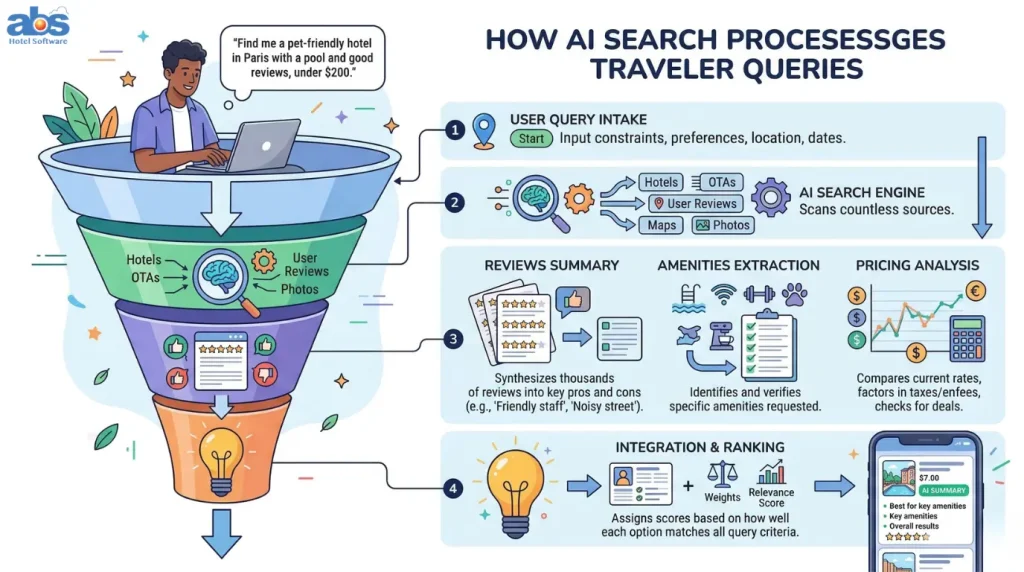
Most metasearch sites operate similarly. A potential guest arrives on the platform and enters a destination and travel dates. When they click on a specific hotel from the search results, a detailed listing appears showing:
-
Hotel information and high-quality photos
-
Aggregated traveler reviews
-
A side-by-side comparison of rates and availability pulled from multiple sources
The Power of the Direct Booking Link
To make a booking, the user clicks on one of the provided links and is taken directly to that source to complete the reservation.
By default, these booking links are heavily dominated by major OTAs like Booking.com and Agoda. Metasearch marketing is the strategy where a hotel actively advertises on the platform to ensure its own direct website rate—and a link to its proprietary booking engine—is displayed alongside the OTAs. It is often the only direct booking option on the page.
Hotel Metasearch vs. Online Travel Agencies (OTAs): Key Differences
Understanding the distinction between these two channels is critical for a profitable distribution strategy.
| Feature | Metasearch Engines (e.g., Google Hotel Ads, Trivago) | Online Travel Agencies (e.g., Booking.com, Expedia) |
| Purpose | Aggregate and compare rates from multiple sources. | Sell rooms directly and exclusively through their own channel. |
| Booking Model | Cost-per-click (CPC) or commission-based (CPA). | Strictly commission-based (a percentage of total booking value). |
| Channel Display | Displays rates from your website + multiple OTAs side-by-side. | Displays only their own specific OTA rates. |
| Goal for Hotels | Drive direct traffic to the hotel’s website for a lower cost. | Generate guaranteed bookings in exchange for a higher commission fee. |
The Strategic Importance of Metasearch Advertising for Hotels
Why pay to advertise on metasearch channels when you already pay OTA commissions? Because metasearch offers distinct operational advantages:
Broaden Reach and Target High-Intent Planners
Metasearch is the cornerstone of a healthy, diversified distribution strategy across Southeast Asia and the globe. Ads are only displayed if you have actual availability for the user’s chosen dates, meaning you are placed in front of high-intent travel shoppers and never pay for clicks when your property is sold out.
Compete with OTAs to Own the Guest Relationship
Metasearch advertising is incredibly crowded with intermediaries. By listing your direct rate, your property stands out. Crucially, when a user clicks your link, they book on your website. This allows you to collect their direct contact information, enabling personalized pre-arrival upsells and long-term retention marketing—something OTAs restrict.
Understanding Hotel Metasearch Payment Models in 2026
Depending on the platform, hotels historically chose between two main payment models. However, the landscape is shifting rapidly.
Cost-Per-Click (CPC) vs. Commission-Based (CPA)
-
Cost-Per-Click (CPC): The hotel pays a small fee every time a user clicks their link. You bid for ad placements, and generally, higher bids yield higher rankings (though rate competitiveness and ad relevance also matter).
-
Commission-Based (CPA): Also known as Pay-Per-Stay, the hotel pays a commission only when a booking is finalized and the guest stays.
Navigating Google’s Shift Away from Commissions
As of April 2024, Google began phasing out commission-based bidding in favor of target Return on Ad Spend (tROAS) and CPC models. While this shift requires a more hands-on approach to budget management, CPC bids actually offer significant benefits:
-
Lower overall fees per transaction compared to flat commissions.
-
Much more flexibility and control over your daily ad spend.
-
A higher ceiling for overall return on ad spend (ROAS).
The 8 Best Hotel Metasearch Platforms to Prioritize
To maximize your budget, here is an overview of the top platforms dominating the hospitality industry today:
-
Google Hotel Ads: The undisputed market leader, accounting for roughly 67% of all metasearch spending. Integrated directly into Google Search, Maps, and Business Profiles, it provides unrivaled exposure. Even without a paid budget, hotels must utilize Google’s free booking links.
-
Tripadvisor: The review giant remains highly trusted. Its “Sponsored Placements” allow your direct link to appear prominently, targeting specific traveler types (couples, families) and dates.
-
Trivago: Connected to over 180 OTAs worldwide, directing users straight to your website when they select your advertised rate.
-
KAYAK: Operates seven brands (including HotelsCombined) and works across 60 international sites.
-
Wego: A vital channel for properties targeting the Asia Pacific and MENA regions, standing as the #1 travel app in those markets.
-
Skyscanner: Used by 100 million people monthly; highly effective for capturing travelers booking holistic flight-and-hotel packages.
-
HotelsCombined: Serves 17 million users globally with deep market penetration.
-
Hopper: Appeals heavily to Gen-Z and Millennial travelers, using big data to predict pricing and push targeted deals.
7 Proven Strategies for Hotel Metasearch Success
To maximize your return on investment and appease both search engine algorithms and generative AI models, follow these optimization strategies:
1. Maintain Strict Rate Parity
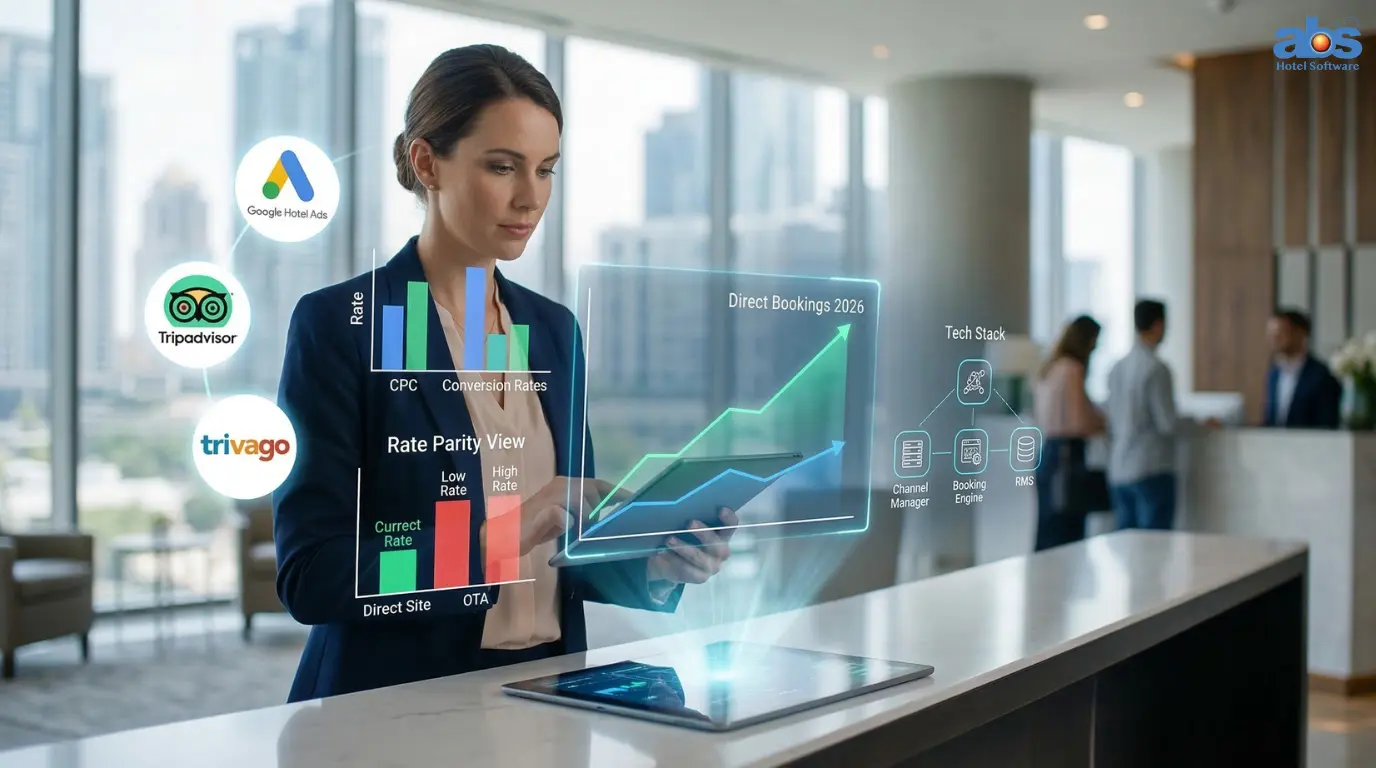
This is non-negotiable. If an OTA is undercutting your direct rate on a metasearch platform, your direct advertising dollars are wasted. Travelers will always click the cheapest option.
2. Optimize Listings with High-Quality Visuals
Platforms like Google Hotel Ads allow you to showcase room photos next to the price. This is a highly effective way to visually stand out from text-heavy OTA links.
3. Diversify Your Room Offerings
Don’t just list your standard non-refundable room. Offer multiple rate plans with value-adds like free breakfast, flexible cancellation, or late checkout to appeal to a broader segment of planners.
4. Actively Manage Guest Reviews
Your hotel’s rating heavily impacts your click-through and conversion rates. Monitor and respond to feedback across all metasearch channels promptly.
5. Optimize Reach Across Selected Channels
Don’t spread your budget too thin. Choose the metasearch channels that best fit your specific property’s target demographic and regional focus.
6. Monitor Performance and Adjust Bids
Keep a close eye on your CPC bids, click volume, and conversion rates. Shift your budget dynamically to the platforms yielding the best tROAS.
7. Understand Cross-Domain Attribution
Customer journeys are complex. A guest might discover you on Tripadvisor but return via Google Hotel Ads to finally book. Ensure your analytics attribute these touchpoints correctly so you aren’t flying blind.
What Hotels Need to Launch a Winning Metasearch Strategy
If your property is already listed on OTAs, you are likely on metasearch channels—but your direct link isn’t. To launch a successful campaign, you need a flawless technological backend.
Claiming Listings and Choosing a Connectivity Partner
First, claim your business profiles on Google and Tripadvisor. Next, understand that you cannot manually upload daily rates to these platforms. You require a certified connectivity partner to integrate your real-time inventory and manage the complex bidding processes.
Essential Hotel Tech Stack Requirements
To convert metasearch traffic into revenue, you must have:
-
A frictionless, mobile-optimized Website Booking Engine to capture the direct reservation.
-
A robust Channel Manager to sync pricing and availability instantly, preventing double bookings.
-
A Revenue Management System (RMS) with rate shopping tools to ensure your direct rates are never undercut by OTAs.
Conclusion: Metasearch is Your Competitive Edge
Metasearch isn’t the future of hotel distribution—it’s today’s competitive edge. Hoteliers who leverage it properly can reclaim significant market share from OTAs, drastically reduce acquisition costs, and grow overall profitability.
Focus on Google Hotel Ads as your primary engine, maintain strict rate parity, and remember that a successful digital strategy relies entirely on the strength of your underlying hotel management software.
Frequently Asked Questions (FAQ) About Hotel Metasearch
Q: Is a metasearch engine the same as an OTA?
A: No. OTAs (like Expedia) sell rooms directly on your behalf for a commission. Metasearch engines (like Google Hotel Ads) show a comparison of room rates from multiple channels and direct the guest to book on either an OTA or your own direct website.
Q: How much does metasearch advertising cost?
A: Costs vary based on platform and market competition. Most hotels utilize a Cost-Per-Click (CPC) model, where fees are only incurred when a user clicks the listing. Generally, this results in a much lower cost of acquisition than standard 15-20% OTA commissions.
Q: Do I need a channel manager for metasearch?
A: Yes. Real-time rate and availability synchronization is critical. Without a channel manager, you risk advertising rooms you no longer have (wasting ad spend) or displaying inaccurate pricing, which ruins the guest experience and damages your conversion rate.