Hotel Room Price Optimization:
The Ultimate Beginner’s Guide
Category: Revenue Management | Reading Time: 10 Minutes | Author: Javier
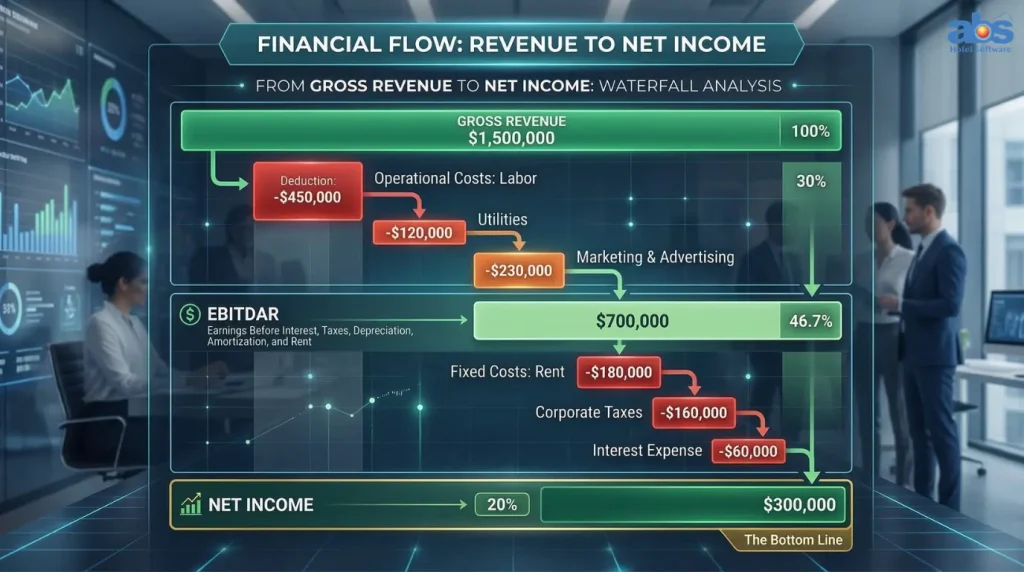
Here is a question that probably keeps you up at night: “How can I boost my RevPAR and finally outpace competitors who seem to be one step ahead?”
If you nodded along (or just sighed deeply), you are in exactly the right place. The answer is not complicated, but implementing it well is where the magic happens. It all comes down to one core strategy: hotel room price optimization.
Get your pricing strategy right and suddenly you are not just hitting your KPIs , you are smashing them. You are no longer just keeping up with competitors; you are watching them fade in your reaview mirror. Let’s dive into what room price optimization actually means and how it can transform your property’s bottom line.
What Is Hotel Room Price Optimization?
In plain English, hotel room price optimization means adjusting your rates in real-time based on what is actually happening in your market. It is the foundation of modern revenue management.
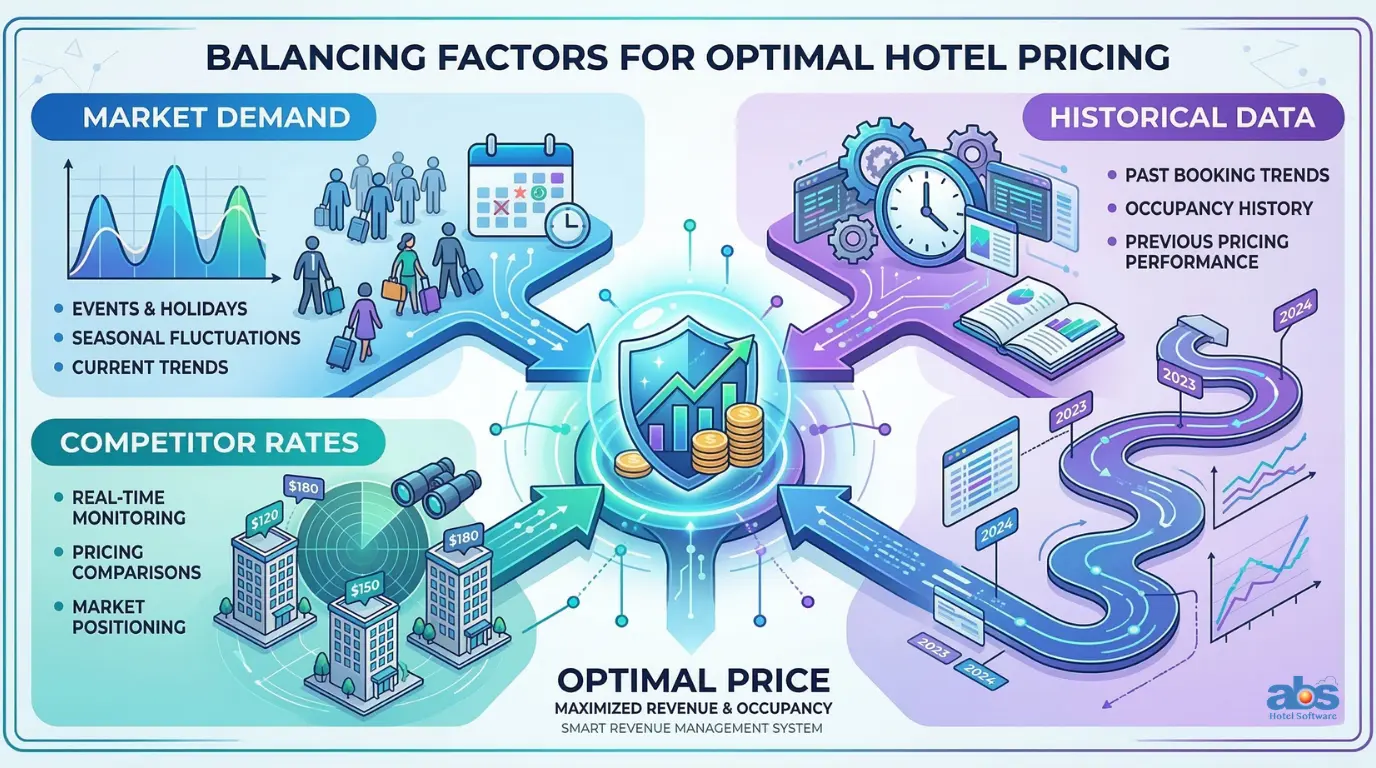
When optimizing your rates, you are analyzing factors like:
-
Market demand and supply: How many travelers want rooms versus how many rooms are available.
-
Competitor pricing: What similar properties in your area are charging.
-
Historical booking patterns: Recognizing seasonal trends and past performance.
-
Customer behavior: Booking windows and length-of-stay preferences.
The ultimate goal? Set the perfect price, at the perfect time, for the perfect guest. When you nail this strategy, revenue grows, and profitability naturally follows.
The Evolution of Hotel Pricing Strategies
If you had to manually crunch all this market data every single day, you would lose your mind. For years, however, that is exactly what hoteliers did.
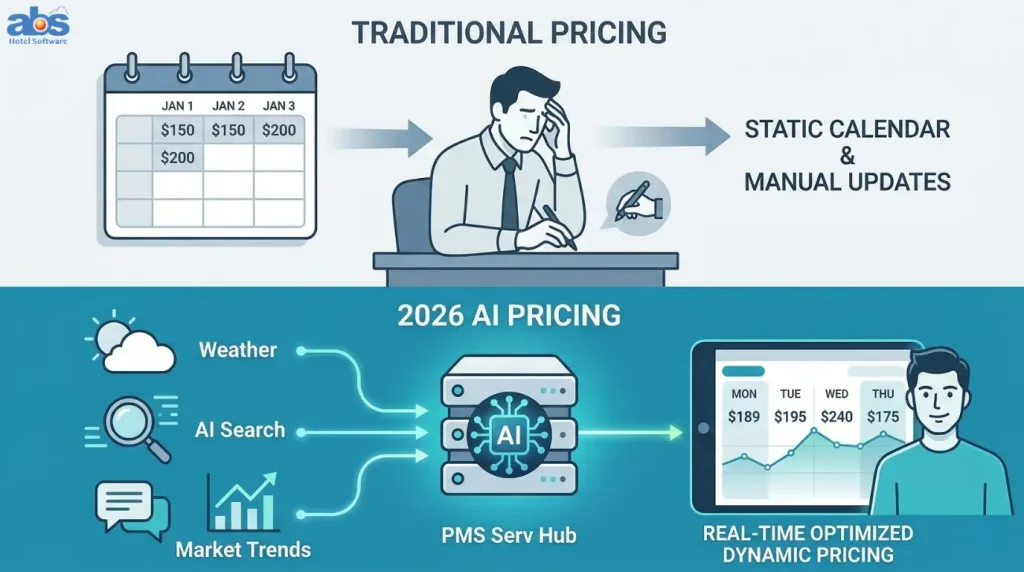
The old way of hotel room pricing relied heavily on flat rates. Properties would set different prices for weekdays versus weekends, make slight seasonal adjustments based on last year’s data, or use simple “cost-plus pricing”calculating expenses, adding a profit margin, and calling it a day.
The problem with these traditional approaches is that by sticking to static rates, you completely ignore real-time market conditions and fluctuating demand. It is like flying blind.
When online travel agencies (OTAs) and metasearch sites exploded onto the scene, the pricing environment evolved at warp speed. Flexible, dynamic hotel pricing went from a “nice to have” to absolutely essential. Today, if you are not optimizing your room prices dynamically, you are essentially handing revenue to your competitors on a silver platter.
Why Dynamic Pricing Software is Your Ultimate Competitive Edge
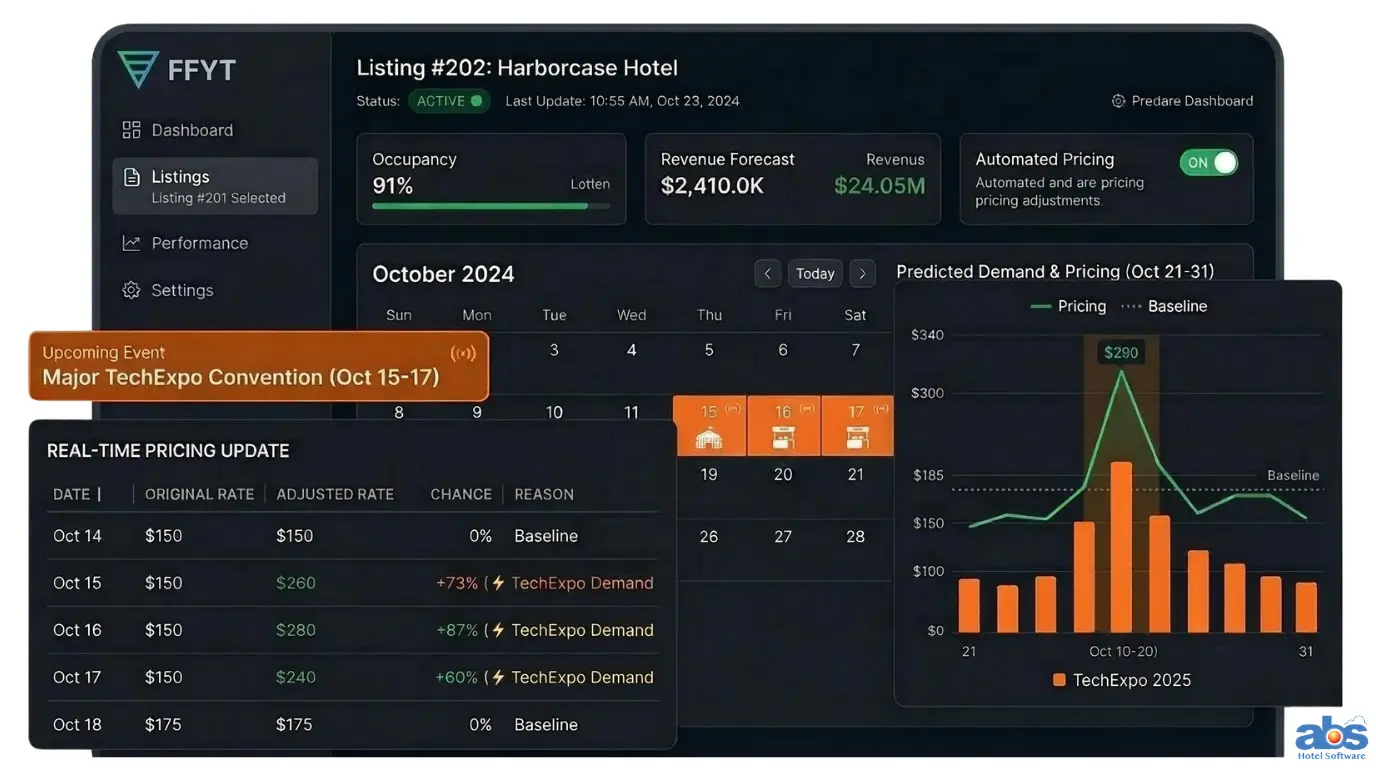
Dynamic pricing is simply adjusting your rates based on real-time market conditions. If demand spikes, prices rise. During the slow season, prices adjust downward to keep rooms filled. The concept is straightforward: charge more when guests are willing to pay more, and charge less when you need to attract bookings.
However, there is no way to do this manually at scale. By the time you gather the data, analyze it, and update your rates, the information is already outdated.
This is where technology saves the day. A robust room price optimization tool handles the heavy lifting automatically, crunching data and serving up rate recommendations so your property is always ready to seize revenue opportunities.
Key Benefits of Automating Your Hotel’s Pricing Strategy
When you implement the right dynamic pricing system, the results speak for themselves:
-
You reclaim your time: No more manual pricing research or midnight spreadsheets. Automation frees you up to focus on your guests.
-
You eliminate revenue leaks: Human error and manual inaccuracies disappear. You no longer accidentally leave money on the table.
-
You capture missed opportunities: Whether demand is surging or dragging, real-time adjustments ensure you are always optimized across different seasons, guest segments, and channels.
-
You hit your occupancy targets: Higher prices during peak season prevent overbooking, while optimized lower rates attract guests during off-peak times.
Essential Human Elements in Room Price Optimization
While a great dynamic pricing tool handles most of the complex calculations, you are still the expert on your specific market. The software acts as your co-pilot, but you remain in the captain’s chair.
Market Factors Your Hotel Management System Needs You to Monitor
To get the most out of your room price optimization efforts, keep a close eye on the following:
-
Distribution Channels: OTAs bring exposure, but commissions eat into profits. You need a strategy that drives direct bookings while managing third-party relationships.
-
Local Events: Big concerts, festivals, or conferences create demand spikes. Always maintain a local calendar to double-check rates for major revenue drivers.
-
Seasonality Context: You know the why behind your high and low seasons better than any algorithm.
-
Your Real Competition: Ensure you are benchmarking against the right properties those with similar star ratings, facilities, and target audiences.
How to Choose the Right Room Price Optimization Tool
Once you have nailed down your competitive set and goals, it is time to choose the right technology. Evaluate your current metrics (ADR, RevPAR, Occupancy) and benchmark them against market leaders to set your targets.
Critical Features for Small and Medium-Sized Hotels
When shopping for a solution, consider these essential factors:
-
Business Needs & Budget: Be honest about what you require. Streamlined, cloud-based tools are often highly effective and budget-friendly for small and medium-sized properties.
-
Usability: Look for clean interfaces and visual insights. If the system is not intuitive, your staff will not use it effectively.
-
PMS Integration: Smooth integration with your existing Property Management System is non-negotiable for real-time accuracy.
-
Setup and Support: Prioritize providers who offer seamless implementation and responsive customer support.
Conclusion: Take Control of Your Pricing Strategy Today
The hotel industry is only getting more competitive. Every hour spent manually crunching pricing data is an hour your competitors are using to capture more market share. By choosing the right pricing optimization tool, you take control, maximize your RevPAR, and build profitability that lasts.
Frequently Asked Questions (FAQ) About Hotel Room Pricing
Q: What is the difference between static pricing and dynamic room price optimization?
A: Static pricing uses fixed rates for specific days or seasons, regardless of real-time market changes. Dynamic room price optimization continuously adjusts rates based on live data, including current supply, demand, and competitor pricing, ensuring you maximize revenue for every available room.
Q: How often should a hotel update its room prices?
A: With modern dynamic pricing software, room rates should be evaluated and updated multiple times a day. Automated systems do this seamlessly in the background to ensure your property responds instantly to market shifts.
Q: Can small and medium-sized hotels benefit from price optimization software?
A: Absolutely. In fact, it is often more critical for smaller properties. Automated tools level the playing field, allowing smaller hotels to compete with larger chains by capitalizing on local demand trends without needing a dedicated, full-time revenue manager.
Q: What is RevPAR and why does pricing optimization impact it?
A: RevPAR stands for Revenue Per Available Room. It is calculated by multiplying your Average Daily Rate (ADR) by your occupancy rate. Price optimization directly impacts RevPAR by finding the perfect balance between charging the highest possible rate and maintaining strong occupancy levels.