
13 Hotel Technology Trends Every Hotelier Needs to Know
in 2026
Category: Hospitality Technology | Reading Time: 7 Minutes | Author: Javier Tang
The TL;DR: Playing it safe won’t cut it in today’s hospitality landscape. As we navigate 2026, hotels that push boundaries are leveraging new technology to outpace competitors and win over the next generation of guests.
Hotels can no longer afford a “wait and see” approach. Guest expectations keep climbing, operations are growing more complex, and new solutions are arriving faster than ever. While not every flashy new gadget will last, the core innovations that do stick will determine which properties gain market share and which fall behind. The ultimate challenge is separating short-term buzz from real, lasting operational opportunities.
Here is a comprehensive breakdown of the 13 technology trends reshaping hospitality right now, and what they mean for the future of your property.
Foundational Property Management Tech Innovations for Hoteliers
Before adding cutting-edge guest-facing features, your backend systems need to be flawless. These backend hotel technology trends in 2026 are all about creating a seamless operational foundation.
1. Cloud-Native Tools With Open APIs
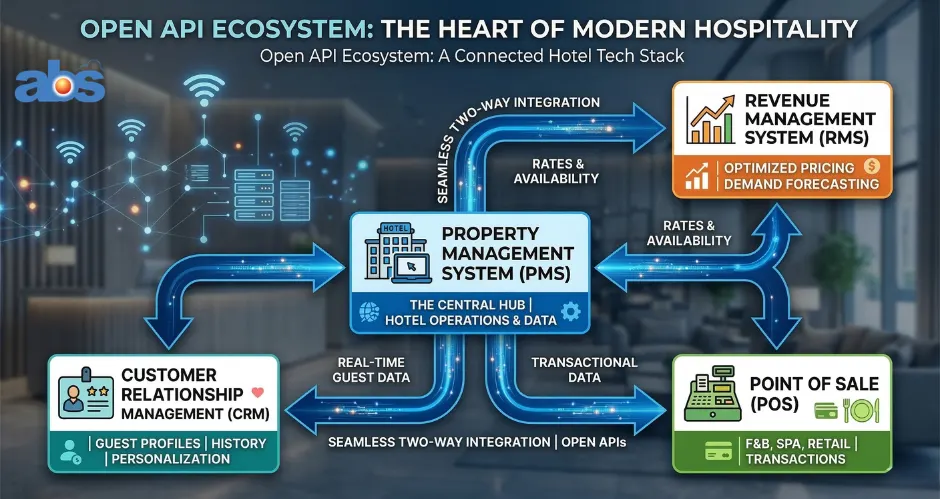
Moving from legacy, on-premise Property Management Systems (PMS) to cloud-based applications isn’t a new concept, but the critical importance of open APIs has reached a boiling point in 2026.
-
The Problem: Hoteliers are flooded with point solutions (like POS or CRM systems). If your Revenue Management System (RMS) doesn’t talk to your PMS, you end up manually updating room rates, completely defeating the purpose of the software.
-
The Solution: Investing in cloud-based platforms with open APIs enables seamless two-way integration. Free-flowing data eliminates silos and creates an integrated ecosystem with consistent, real-time insights.
2. Accessible Revenue Management for Everyone
A major benefit of better tech integration is the widespread adoption of revenue management systems. While RMS tech has been around for decades, advances in machine learning and automation have leveled the playing field. In 2026, predictive pricing algorithms are no longer reserved for massive global brands—independent properties and boutique hotels can now access enterprise-grade revenue optimization.
3. Integrated Payment Processing
Integrated payments are finally seeing rapid adoption. While hotel chains consistently rate integrated payments as crucial, historical implementation has lagged. Why does it matter today? Guests buy services through diverse channels—booking via an OTA, but buying spa services directly.
-
An integrated payment system consolidates all channels into a single platform.
-
It simplifies end-of-day reconciliation and removes the risk of manual data entry errors.
-
It offers guests flexible, modern payment options across your entire property.
Artificial Intelligence: The Leading Hospitality Tech Trend of 2026
If there is one category dominating hotelier technology discussions this year, it is AI. It has moved from a buzzword to a practical operational necessity.
4. Leveraging AI Language Models (LLMs)
Artificial intelligence has made massive inroads through Large Language Models (LLMs) that generate human-like written interactions. Hoteliers are utilizing LLMs to draft perfectly toned responses to online reviews, personalize email ad campaigns, and power intelligent website chatbots that handle complex booking queries. Looking forward, AI’s most profound impact will center on automating guest processing and streamlining staff management.
5. AI-Powered Translation Technology
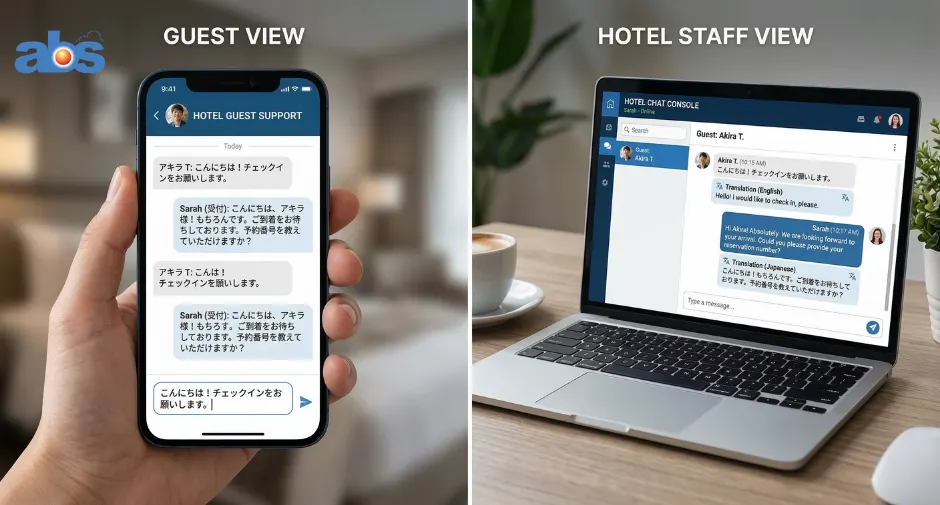
Global travel requires global communication. Research shows 76% of online consumers prefer purchasing when information is in their native language. Machine translation powered by AI has dramatically improved in accuracy and natural phrasing. Integrating real-time AI translation into your messaging platforms helps convert international website visitors into booked guests significantly faster.
Enhancing the Digital Guest Experience Journey
Guest-facing hotel technology trends in 2026 are heavily focused on reducing friction while maintaining a high level of personalization.
6. Digital Check-In and Keyless Entry
Mobile check-in lets guests upload ID documents via secure facial recognition and bypass the front desk entirely with digital keys.
-
For Staff: Reduces administrative bloat and lost key cards.
-
For Guests: Means zero lobby waiting and total control over their arrival. However, data shows a fully faceless experience isn’t the goal. Many travelers prefer a blended digital-human approach—using the tech to skip the line, but still wanting a warm greeting from the staff.
7. Mobile Guest Experience Hubs
Digital check-in is just the beginning. Mobile apps and web-based concierge platforms provide always-accessible information like WiFi passwords, breakfast hours, and local activities. By replacing traditional paper compendiums with interactive digital guestbooks, guests can instantly message the front desk, order room service, or purchase room upgrades from their personal devices.
8. Internet of Things (IoT) Technology in Smart Rooms
IoT connects physical objects through WiFi and sensors, creating highly anticipated “smart rooms.” In 2026, IoT helps properties stand out:
-
Sensors alert housekeeping the moment a guest leaves the room.
-
Voice-controlled smart speakers act as virtual, in-room concierges.
-
Integrated apps allow guests to perfectly adjust smart lighting and climate controls from their beds.
Streamlining Communication: Internal and External Hospitality Solutions
Great service requires great communication. These trends highlight how hotels are connecting the dots between guests, front desk, and backend staff.
9. The Unified Inbox for Omnichannel Support
Guests want to reach you on their preferred channels: SMS, WhatsApp, Google Business Messages, or OTA chats. A unified inbox aggregates messages from every single channel into one centralized dashboard. This ensures your front desk team never misses a message and can respond swiftly, regardless of how the guest reached out.
10. Digital Internal Communication
Promptly resolving a guest issue requires flawless internal teamwork. Traditional walkie-talkies and manual logbooks are being replaced. Modern digital tools allow hotel teams to create dedicated internal messaging channels and trigger automated maintenance workflows the second a guest reports a broken shower or requests extra towels.
11. Conversational Commerce and Upselling
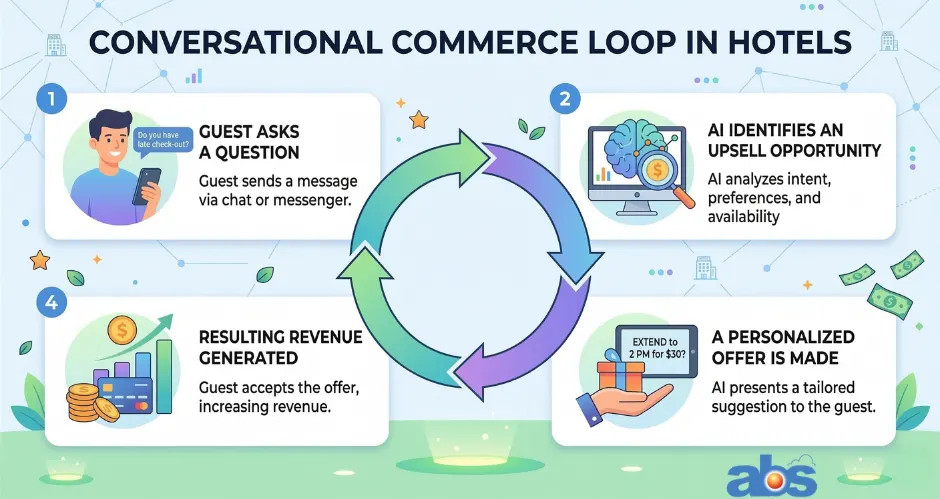
More messaging naturally leads to more interaction—and more revenue. Conversational commerce uses staff or AI virtual assistants to gauge purchase intent during chats. If a guest asks a chatbot about local relaxation spots, the system can seamlessly offer a direct booking link for an in-house spa treatment, driving ancillary revenue effortlessly.
Data, Analytics, and Reputation Management
To stay competitive in 2026, hoteliers must leverage actionable data to protect their brand and maximize their marketing spend.
12. End-to-End Reputation Management Platforms
Reviews dictate revenue. But with feedback scattered across Google, TripAdvisor, and OTAs, managing your reputation is a massive time sink. Modern platforms aggregate all reviews into one dashboard and use AI assistants to help you craft professional responses in seconds. Furthermore, these tools allow for proactive management—pinging guests for feedback during their stay so you can fix issues before they become public 1-star reviews.
13. Advanced Tracking with Google Analytics 4 (GA4)
GA4 has completely shifted how hotel marketers understand website traffic. Instead of just tracking page visits, GA4 focuses on user behavior and event tracking. Using machine learning, it predicts conversion probabilities, allowing you to see exactly which customer segments are booking. For instance, if data proves that users who watch your property video are 40% more likely to book, you can aggressively increase ad spend targeting that specific behavior.
Conclusion: Harnessing the Power of Hospitality Technology
Looking across these 13 hotel technology trends for 2026, a unified theme emerges: the intelligent application of AI and connected systems to elevate the customer experience.
Finding ways to hyper-personalize the guest journey while systematically reducing friction for both travelers and staff is the ultimate goal of today’s emerging technologies. The hotels that thrive this year will be those that carefully evaluate these trends, invest in open, integrated systems, and create the kind of seamless digital-meets-physical experiences that keep guests coming back.
Ready to Upgrade Your Hotel’s Tech Stack for 2026?
Stop letting fragmented systems hold your property back. Discover how our integrated, cloud-native solutions can help you capitalize on these trends, automate your operations, and delight your guests.
Click Here to Request a Demo and Contact our software consultants today!
Frequently Asked Questions (FAQ)
What is the most important hotel technology trend in 2026? While many trends are impactful, the integration of Artificial Intelligence (AI) and Large Language Models (LLMs) into daily operations and guest communication is the most transformative trend. AI helps automate routine tasks, personalize the guest experience, and optimize revenue management.
How can independent and boutique hotels afford new technology? The shift toward cloud-native Software as a Service (SaaS) platforms has made hotel tech much more affordable. Instead of massive upfront hardware costs, independent hoteliers can now pay manageable monthly subscriptions for enterprise-grade tools like Revenue Management Systems (RMS) and Unified Inboxes.
Is keyless entry safe for hotels? Yes, digital keyless entry is highly secure. Modern systems utilize encrypted Bluetooth technology and often require multi-factor authentication or facial recognition on the guest’s mobile device, making it much harder to duplicate or steal compared to traditional plastic RFID key cards.
Will AI replace hotel staff? No, AI is designed to augment hotel staff, not replace them. By automating administrative tasks, answering routine digital queries, and streamlining internal communications, AI frees up your team to focus on what matters most: delivering high-quality, empathetic, face-to-face hospitality to your guests.
About the Author: Javier Tang is a Hotel Technology Consultant at BMS Solution, specializing in the Southeast Asian hospitality market. He helps streamline operations and maximize revenue for over 1,500 hotels across Malaysia, Singapore, Indonesia, and the Philippines.