
Mastering Hotel Photography:
A Comprehensive Guide to Captivating Guests Online
Category: Hospitality Marketing & Visual Branding | Reading Time: 5 Minutes | Author: Javier Tang
In the digital age, your hotel’s photography is the virtual front door. It is often the very first interaction a potential guest has with your property. High-quality, inviting images are no longer a luxury, they are absolutely essential for cutting through the noise, building trust, and driving direct bookings.
Great hotel photography does more than just document a space; it sells an experience and a feeling. If your visual content is outdated or poorly lit, it doesn’t just look unappealing—it actively costs you revenue. To help you capture images that convert casual browsers into guaranteed guests, here are seven essential tips to elevate your visual strategy.
Why High-Quality Hospitality Photography Drives Direct Bookings
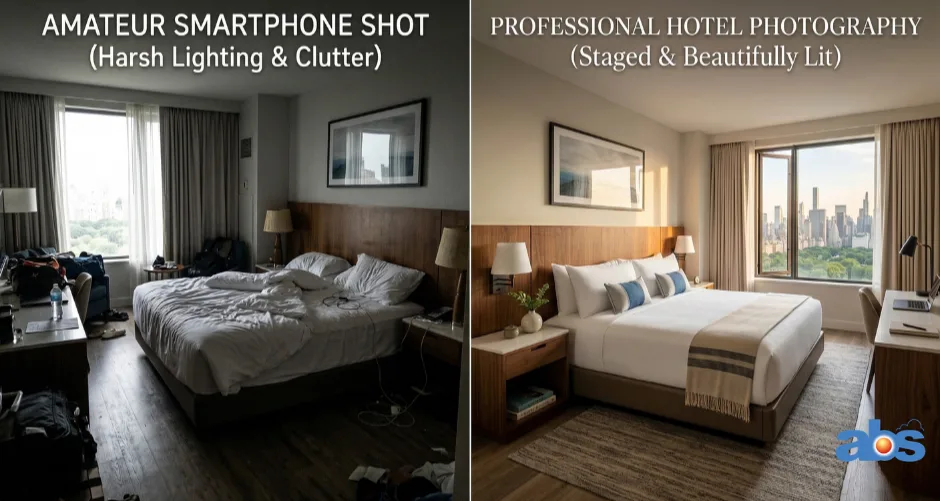
Travelers are primarily looking to visualize their stay. Before they commit their credit card details, they want to picture themselves sleeping in your beds, relaxing by your pool, and enjoying your amenities. Professional hospitality photography bridges the gap between a traveler’s imagination and your actual property. It cuts through the visual clutter of Online Travel Agencies (OTAs) and establishes an immediate sense of quality and trust that encourages guests to book directly on your website.
7 Expert Tips to Elevate Your Hotel Photography
1. Prioritize the Guest Experience in Your Hotel Images

Before you pick up your camera, step into the shoes of your guests to understand what they value most. While architectural details are nice, travelers want to see where they will live during their stay.
Focus your lens on the functional, experiential spaces: a sun-drenched pool, a cozy guest room with crisp linens, or the welcoming glow of the lobby lounge. Don’t overlook the small details. A perfectly set dining table or a neatly stacked pile of plush towels can evoke feelings of comfort and luxury that resonate deeply with viewers.
2. Harness the Power of Natural Light for Property Photography
Lighting can make or break a photograph. While artificial flash can make a room feel harsh, cold, and small, natural light renders colors accurately and creates a warm, authentic atmosphere that guests find irresistible.
-
Timing is everything: Schedule your exterior and lifestyle shoots during the “golden hour”—the hour just after sunrise and the hour before sunset—to capture a soft, flattering glow.
-
Open the curtains: For interior shots, let in as much daylight as possible to naturally illuminate the space.
3. Master the Best Angles for Taking Pictures of Hotel Rooms
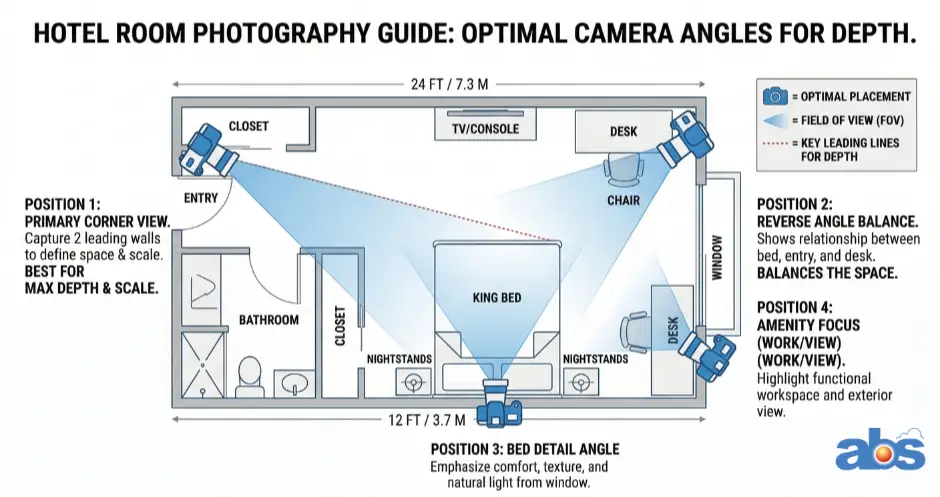
The angle of your camera directly dictates how a viewer perceives the scale and flow of a room. When taking pictures of hotel rooms, positioning matters immensely.
-
Shoot from the corner: Positioning yourself in a corner allows you to capture two walls, providing a much greater sense of depth and dimension than shooting straight-on.
-
Use wide-angle lenses wisely: A wide-angle lens is a hotelier’s best friend for showcasing the full scope of a room. However, be careful not to distort the space so much that it misrepresents the actual size.
-
Experiment with height: Lower camera angles can make ceilings feel higher and rooms more expansive, while eye-level shots create a natural, relatable perspective.
4. Style for Success: Decluttering for Resort Photography
A guest room looks very different when prepared for a photo shoot versus standard daily operations. Before you start snapping photos, meticulously de-clutter the space. Remove visible toiletries, tangled cables, random magazines, and housekeeping carts. A clean, minimalist canvas allows the architecture and design to shine.
Once the space is clear, add subtle, intentional styling. A vase of fresh flowers, an open book on a side table, or a neatly arranged coffee tray can suggest a lived-in, welcoming atmosphere. The key here is restraint—the goal is to enhance the room, not overwhelm it.
5. Identify and Emphasize Your Unique Selling Points
What makes your property stand out from the competition down the street? Whether it’s a breathtaking rooftop view, a signature infinity pool, a historic fireplace, or locally-sourced artwork, these unique features deserve to be the star players in your visual story. Dedicate specific hotel images to highlighting these elements. They create a memorable identity and are often the deciding factor for a traveler seeking a distinctive experience.
6. Refine Your Shots with Professional Hotel Photo Editing
Post-processing is where good photos become great. Using software like Adobe Lightroom or Photoshop allows you to correct minor imperfections and ensure your images look polished and professional.
-
Aim for authenticity: Adjust brightness, contrast, and white balance to make colors pop while keeping the image true to life. Over-saturating colors or using heavy filters can mislead guests and lead to negative reviews upon arrival.
-
Remove distractions: Use editing tools to clean up small blemishes, stray reflections, or distracting shadows that you might have missed during the physical shoot.
7. Optimize Your Hotel Website Images for SEO
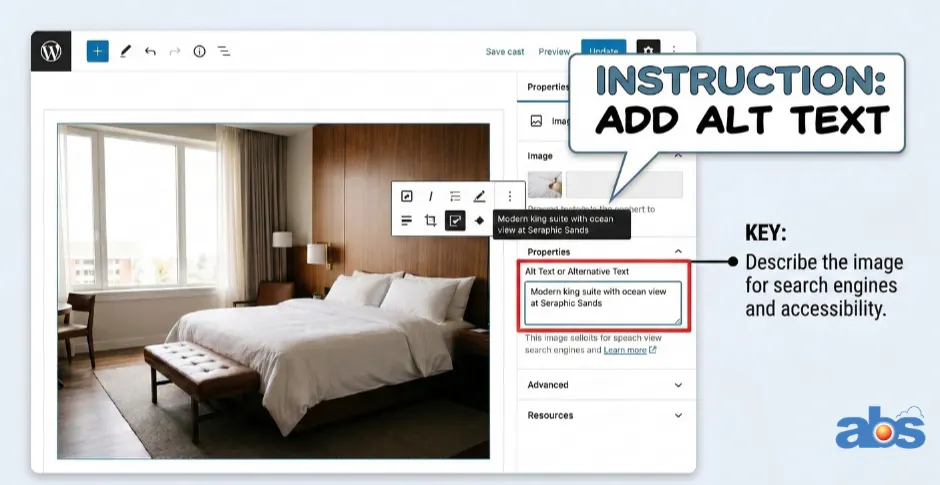
Once your images are perfectly edited, you must ensure they perform well online. Large, uncompressed files can drastically slow down your website’s loading speed, harming both the user experience and your SEO rankings.
Use compression tools to reduce file sizes without sacrificing visible quality. Additionally, take a moment to add descriptive “alt text” to every image (e.g., “Modern king suite with ocean view at Sunset Hotel”). This crucial step helps search engines understand your visual content, making your property much more discoverable.
Top Free Photo Editing Tools for Hoteliers
If you’re not quite ready to invest in professional Adobe software, there are excellent free tools available to help you edit your resort photography and get started right away:
Best Alternatives to Professional Software
-
Canva: Great for quick lighting adjustments, cropping, and adding stylish text overlays for your social media campaigns.
-
Snapseed: A highly powerful mobile app perfect for detailed touch-ups, perspective corrections, and subtle filters on the go.
-
Pixlr: A robust, browser-based alternative to Photoshop that offers advanced editing layers without the heavy price tag.
Conclusion: Elevate Your Brand with Exceptional Hotel Photography
In a crowded marketplace, exceptional photography is one of the most effective and high-ROI marketing investments you can make. By thoughtfully styling your spaces, harnessing the beauty of natural light, and highlighting exactly what makes your hotel unique, you create a powerful visual narrative. This narrative invites guests to imagine themselves walking through your doors. Master these techniques, and you’ll do more than just showcase your hotel—you’ll inspire your next direct booking.
Frequently Asked Questions About Hotel Photography (FAQ)
Do I need a professional photographer for my hotel?
While modern smartphones are excellent for capturing quick, candid moments for social media updates, investing in a professional photographer is highly recommended for your core website gallery. Professionals bring specialized lighting equipment, high-quality wide-angle lenses, and the advanced editing skills necessary to make your property look its absolute best.
What is the best time of day to take pictures of a hotel?
For exterior shots, the “golden hour” shortly after sunrise and just before sunset provides the most flattering, dramatic natural light. For interior rooms, shooting during the mid-morning or early afternoon is ideal, as it allows the maximum amount of natural sunlight to flood through the windows.
How many photos should a hotel have on its website?
To give guests a complete and trustworthy picture of your property, aim for at least 4 to 5 high-quality photos per room type (showcasing the bed, bathroom, view, and unique details). You should also include a comprehensive gallery of all your amenities, including the lobby, exterior architecture, pool, dining areas, and fitness center.
About the Author: Javier Tang is a Hotel Technology Consultant at BMS Solution, specializing in the Southeast Asian hospitality market. He helps streamline operations and maximize revenue for over 1,500 hotels across Malaysia, Singapore, Indonesia, and the Philippines.