Beyond the Rack Rate : Mastering Hotel Revenue
Management for Maximum Profit
Category: Hotel Marketing | Reading Time: 10 Minutes | Author : William Tang
In the fiercely competitive landscape of the hospitality industry, setting a room rate is far more complex than simply picking an attractive number. Your pricing is the linchpin of your entire business strategy. A well-calibrated price doesn’t just drive maximum profit; it actively shapes guest perception and defines your market standing.
This guide moves beyond basic pricing to explore the sophisticated best practices that define modern hotel revenue management, ensuring your property remains highly competitive and consistently profitable.

Building a Foundation for Your Hotel Revenue Management Strategy
Before analyzing external market trends, effective hotel revenue management requires looking inward. A successful pricing strategy must be built on the solid bedrock of cost accounting and brand identity.
Anchor Rates in Financial Reality
Understanding your financial structure is step one. You must clearly distinguish between your operational costs:
-
Hard Costs: These are your non-negotiable fixed expenses (mortgage/rent, property insurance, salaried staff) that must be covered regardless of your daily occupancy rate.
-
Soft Costs: These are variable expenses (housekeeping, utilities, guest amenities) that scale up or down with your bookings.
Your room rate is the primary vehicle to cover these costs and secure your profit margin. If your baseline pricing doesn’t support this reality, no amount of high occupancy will save your bottom line.
Aligning Price with Your Brand Positioning
Your hotel pricing strategy is a direct reflection of your brand promise. A disconnect between what you charge and what you offer creates guest distrust.
-
Economy/Budget: The goal here is penetration pricing – offering the most competitive cost to capture high volume.
-
Midscale/Select Service: Focus on value alignment. Your rates should accurately reflect the quality of your amenities and the consistency of your service.
-
Luxury: In this tier, you are employing prestige pricing. The rate itself signals exclusivity. Luxury guests inherently equate higher prices with superior standards and bespoke experiences.
Leveraging Competitive Intelligence in Hotel Pricing
You do not operate in a vacuum. To maximize hotel profitability, you need to know exactly what the property down the street is doing.
Conducting a Rigorous Competitive Landscape Audit
To position your property effectively, conduct a continuous analysis of your competitive set (CompSet). Use Online Travel Agencies (OTAs) like Booking.com and Expedia not just for distribution, but as vital research tools.
-
Compare Parity: Is your property being positioned as a budget option or a premium alternative compared to local rivals?
-
Analyze Offerings: Are competitors bundling breakfast, Wi-Fi, or parking into their base rate while you charge extra?
-
Spot Trends: Identify their discount patterns and seasonal spikes. This competitive intelligence allows you to either compete head-on or differentiate your offerings to justify a price variance.
The Psychology of Value-Based Pricing
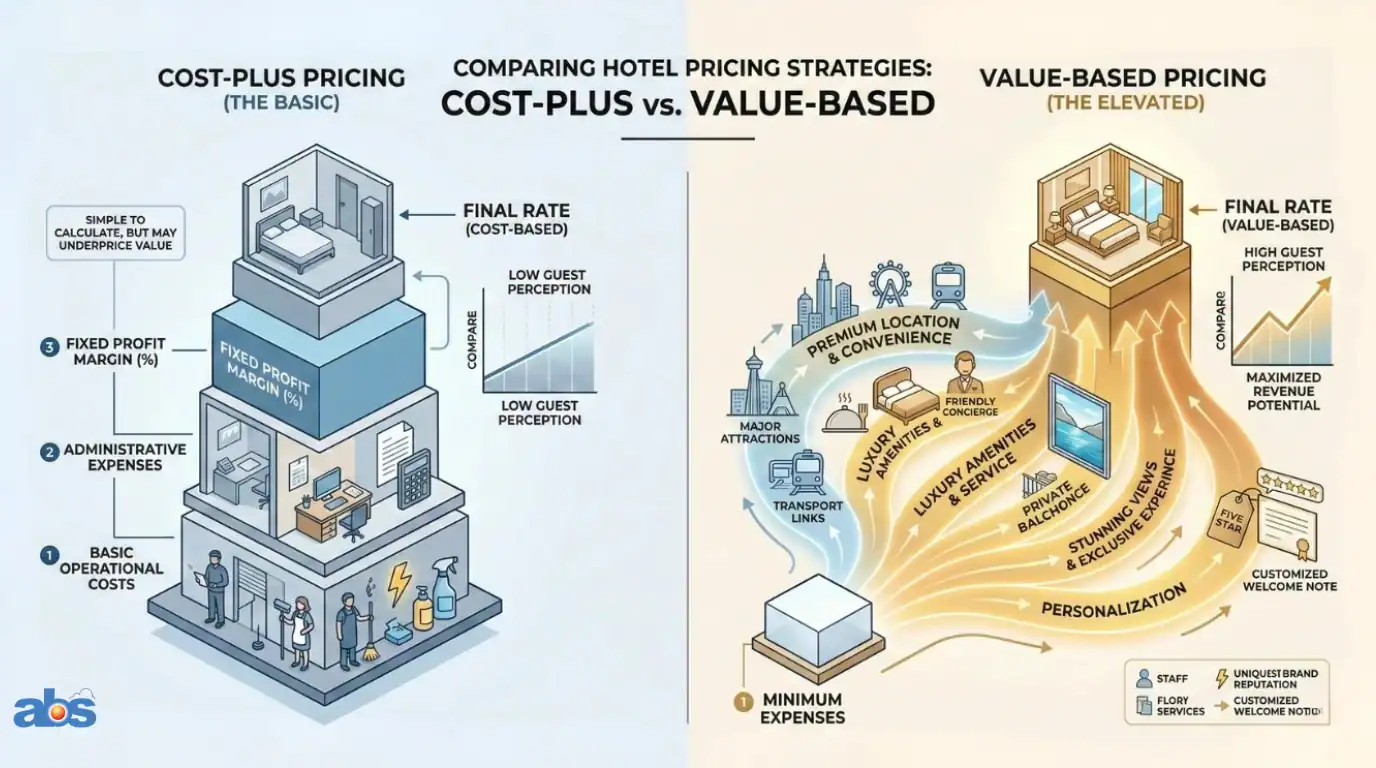
Cost-plus pricing tells you what you need to charge to survive. Value-based pricing tells you what you can charge to thrive. If your hotel boasts a coveted sunset view, resides in a historical building, or provides award-winning concierge service, your price should capture that intrinsic value. Remember, guests are paying for the experience and the solution to their travel needs, not just a bed for the night.
Dynamic Hotel Pricing and Managing Market Demand
Hospitality is inherently cyclical. Smart hotel revenue optimization adapts seamlessly to the rhythms of the market.
Harnessing Seasonality and Demand Cycles
-
Peak Demand: Implement surge pricing. During high-demand periods – such as local festivals, major sporting events, or peak holiday seasons – rates should naturally rise to capture the market’s increased willingness to pay.
-
Low Demand: Shift to promotional pricing. Instead of simply slashing your rack rates and starting a race to the bottom, create value-add packages or partner with local events to actively stimulate demand.
The Rise of Dynamic Pricing Technology
Static rate sheets are a relic of the past. Today’s hotel revenue management relies heavily on dynamic pricing algorithm-driven adjustments that respond to real-time market signals. These sophisticated software tools analyze competitor rates, booking pace, local demand generators (like a sudden change in weather or an unannounced concert) and historical occupancy data. This automates your pricing decisions, ensuring you never leave money on the table or inadvertently price yourself out of the market.
Advanced Revenue Optimization Techniques
Effective pricing isn’t just about valuing the physical room; it’s about understanding and influencing guest booking behavior.
Behavioral Economics: Lead Time and Length of Stay (LoS)
-
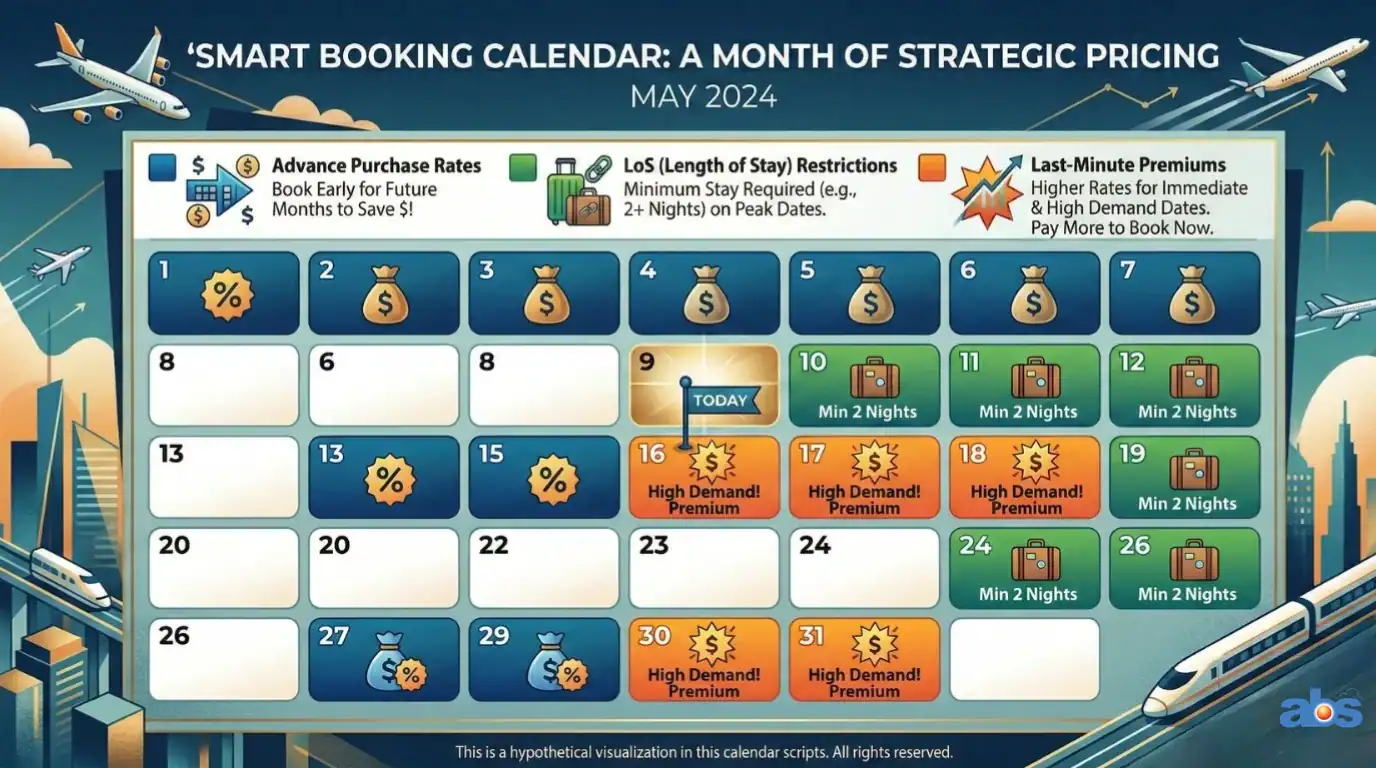
The Advance Purchase Incentive: Offer strategic discounts to guests who book well in advance. This secures early cash flow, builds your base occupancy, and rewards planners.
-
The Last-Minute Premium: As your room inventory shrinks closer to the arrival date, rates can incrementally increase, capturing the premium that last-minute business travelers are generally willing to pay.
-
Length of Stay (LoS) Management: Offer targeted discounts for extended stays. This reduces expensive turnover and housekeeping costs while securing guaranteed occupancy. Conversely, you can restrict single-night stays during busy weekends to maximize overall revenue.
Strategic Promotions for Targeted Revenue Growth
Discounts should always be tactical, never habitual. Use targeted promotions to achieve highly specific revenue goals:
-
Fill the Gaps: Launch mid-week or off-season packages to boost traditionally low-occupancy periods.
-
Drive Loyalty: Create exclusive “member-only” rates that incentivize direct bookings and reduce your reliance on costly OTA commissions.
-
Increase Total Guest Spend: Bundle rooms with on-property experiences (spa treatments, dining credits) to increase perceived value while boosting lucrative ancillary revenue.
The Cycle of Continuous Hotel Profit Optimization
A successful hotel pricing strategy is a living document. It requires constant, active attention. If your occupancy suddenly dips, is it a pricing error, or simply the season? If a new promotion sells out in hours, were your rates too cheap? To master hotel revenue management, you must regularly audit your performance data against broader market trends to constantly refine and optimize your approach.
Conclusion
Mastering hotel revenue management is the delicate art of balancing hard data with consumer psychology. By grounding your strategy in cost realities, leveraging modern technology for dynamic shifts, and consistently monitoring performance, you transform pricing from a static administrative chore into a powerful, automated engine for maximum profit growth.
Frequently Asked Questions (FAQ) About Hotel Revenue Management
Q: What is the difference between revenue management and yield management in hotels?
A: While often used interchangeably, yield management is a narrower concept focused purely on selling the right room to the right guest at the right time to maximize room revenue. Hotel revenue management is broader; it encompasses yield management but also includes optimizing all revenue streams, including food and beverage, spa, and event spaces.
Q: Why is dynamic pricing important for hotels?
A: Dynamic pricing allows hotels to automatically adjust room rates based on real-time supply and demand. This ensures maximum profitability during peak times and helps maintain occupancy during slower periods by staying competitively priced, far outperforming static seasonal rates.
Q: How do I calculate my hotel’s base room rate?
A: Your base rate should be calculated by summing up your fixed (hard) costs and variable (soft) costs, then factoring in your desired profit margin. This establishes the absolute minimum rate required to break even before applying dynamic pricing or value-based markups.
Q: What is RevPAR and why is it a crucial metric?
A: RevPAR stands for Revenue Per Available Room. It is calculated by multiplying your Average Daily Rate (ADR) by your occupancy rate. It is the gold standard metric in hotel revenue management because it provides a clear picture of how successfully a hotel is filling its rooms at a profitable rate.