
What Is a Hotel Payment Terminal? A Simple
Guide for Small Hoteliers
Category: Hotel Management & Hospitality Tech | Reading Time: 8 Minutes | Author: Javier
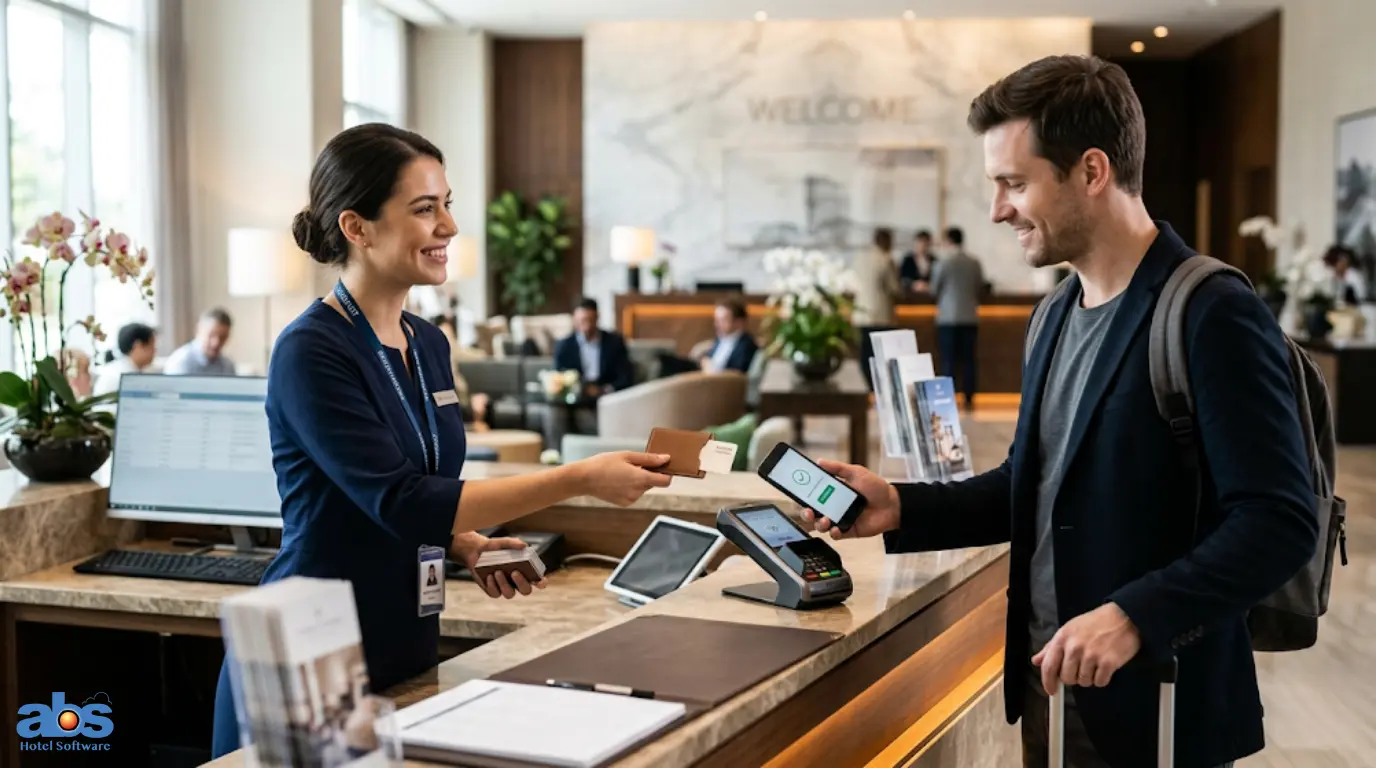
hotel payment terminal is an essential piece of hardware or software that hotel staff use to process guest payments securely and efficiently. Whether it’s during check-in, check-out, or for incidental charges during a guest’s stay, this tool is the financial heartbeat of your front desk.
You might also hear it referred to as a hotel POS terminal or a hotel card payment machine. Today, these solutions range from standalone countertop devices to fully mobile systems integrated into smartphones, tablets, and desktop computers.
The absolute best hospitality payment terminals go a step further: they integrate directly with your Property Management System (PMS). This seamless connection streamlines billing, drastically reduces human error, and saves independent hoteliers countless hours.
In this comprehensive guide, we will cover why your property needs a dedicated hotel payment system, what these terminals can do, and how to choose the right one for your boutique or small hotel.
Why Small Hoteliers Need a Dedicated Hotel POS Terminal
For small, independent hoteliers, a payment terminal does much more than just swipe credit cards. It is a vital tool for securing revenue and providing guests with the frictionless payment flexibility they expect.
Automation and Reduced Admin Work
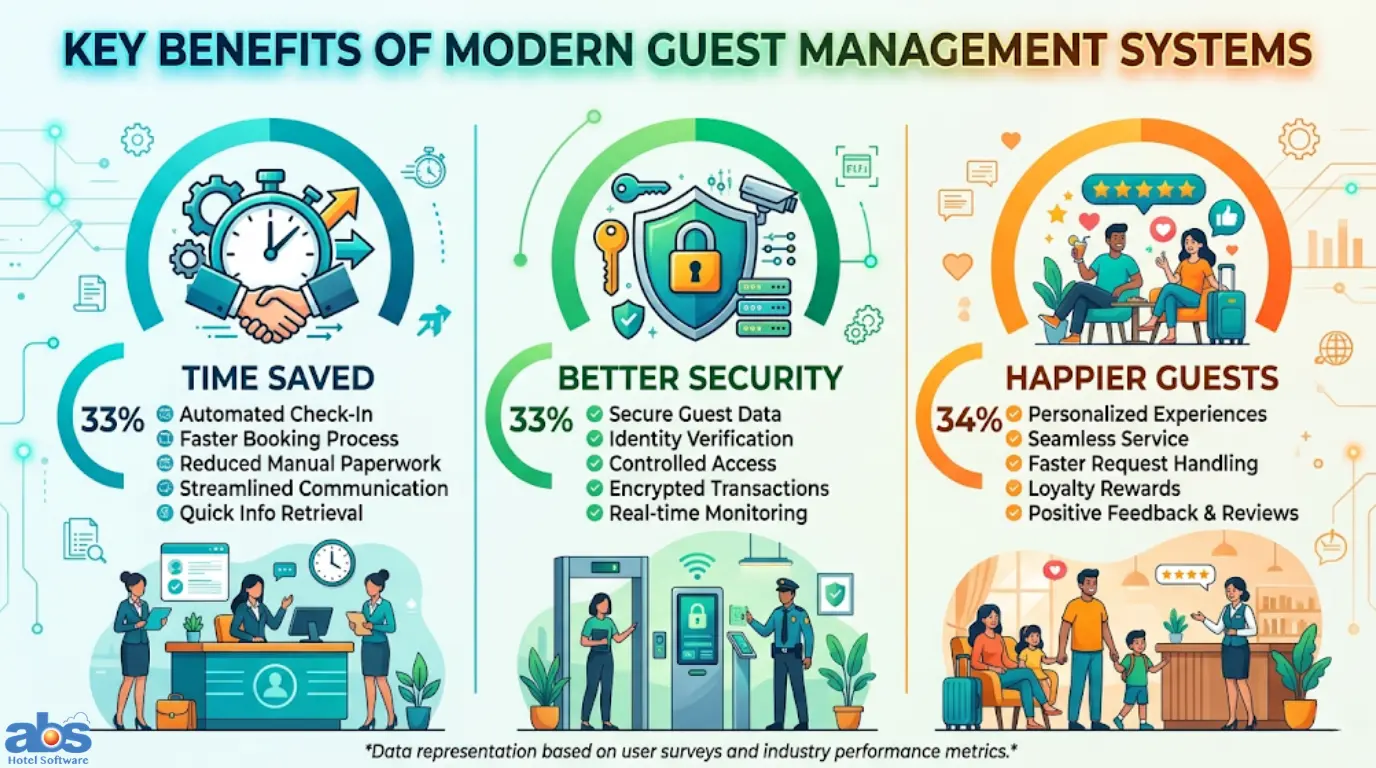
When your payment terminal integrates with your PMS, it automates a massive chunk of your financial administration. Transactions sync instantly, meaning less manual data entry, faster reconciliations at the end of the day, and fewer chances for costly billing mistakes.
Meeting Modern Guest Expectations
Travelers today expect convenience. A modern hotel card payment machine helps you meet these expectations by speeding up check-in and check-out processes. Charges are processed and finalized instantly, so guests aren’t waiting in line.
Enhanced Security and Mobile Flexibility
Security is a non-negotiable benefit. Payment terminals come with built-in encryption and compliance features that protect both your business and your guests from fraud. Additionally, if your small property operates without a traditional front desk, mobile payment terminals allow you to securely process payments anywhere on-site—from the lobby lounge to the poolside.
Key Takeaways:
-
Guests expect fast, secure, and fully digital payment options.
-
Integrated terminals reduce admin work, human errors, and check-in delays.
-
Strong built-in security helps prevent fraud and keeps your property compliant.
What Payment Methods Should Hospitality Payment Terminals Accept?
Before investing in a hotel POS terminal, it is crucial to understand how modern guests actually prefer to pay. Recent industry data highlights the shift toward digital and contactless methods:
-
72% of global hotel payments are made via credit or debit cards at POS terminals.
-
In 2024, 65% of hospitality businesses prioritized contactless (tap-to-pay) infrastructure.
-
1 in 6 guests now pays online using a digital wallet.
-
More than half of all hoteliers rely on third-party payment gateways.
To stay competitive, your hotel payment terminal must accept a wide variety of methods:
1. Credit and Debit Cards
The foundation of hotel payments. Modern cards feature magnetic strips, EMV chips, and contactless technology. Your system should also allow staff to manually key in card information through a secure portal when necessary.
2. Digital Wallets
Powered by Near-Field Communication (NFC) technology, digital wallets like Apple Pay and Google Pay are quickly replacing physical leather wallets. Your terminal must be equipped to accept these swift transactions.
3. Contactless Payments (Tap-to-Pay)
Many portable hospitality terminals are now designed specifically for contactless payments, offering the fastest possible transaction times.
4. Prepaid Cards
Prepaid cards function similarly to standard credit cards, but with one major caveat for hoteliers: most payment providers only accept pre-authorizations on traditional credit cards. This can make securing room deposits tricky, so it’s vital your staff knows how to handle them.
Payment Method Priorities for Hotels:
-
Digital wallets, contactless, and secure online payments.
-
Physical credit and debit cards (Chip and PIN).
-
Prepaid cards.
-
Cash, checks, and legacy analog methods.
How to Choose the Right Hotel Card Payment Machine for Your Property
Selecting the right hotel POS terminal isn’t just about comparing hardware features; it’s about finding a tailored solution that scales with your business. Mobile and tablet POS solutions are growing rapidly because hoteliers love their flexibility.
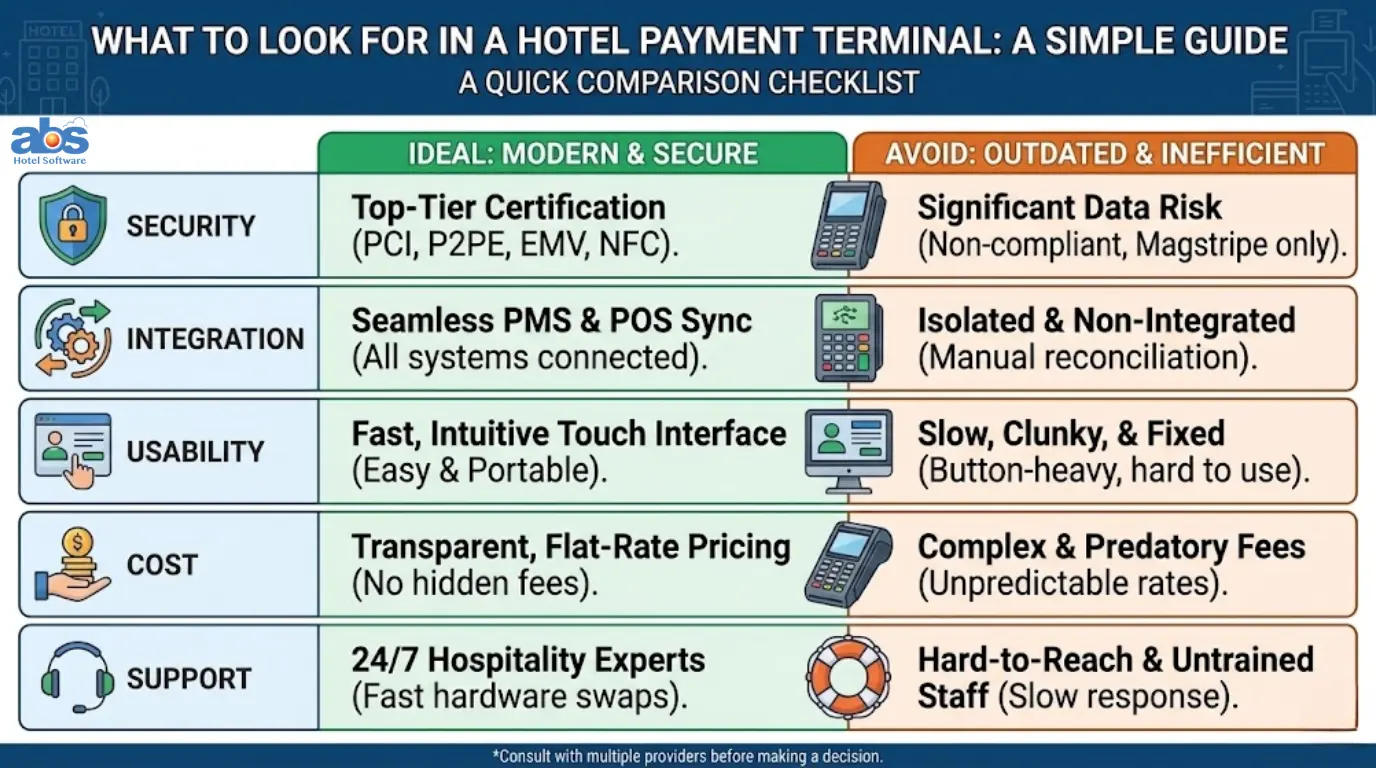
Do not overlook system integration. A terminal that doesn’t communicate with your existing software will lead to manual errors, reporting delays, and frustrated guests. Here is what small hoteliers should look for:
Ironclad Security (PCI DSS)
Your terminal must meet the highest Payment Card Industry Data Security Standards (PCI DSS). It needs to securely verify PINs, encrypt data end-to-end, and safely process chip, contactless, and card-not-present online payments.
Seamless System Integration
Look for a hospitality payment system that integrates seamlessly with your PMS. Better yet, choose an all-in-one solution where the payment processing is natively built-in—eliminating the need for clunky third-party integrations entirely.
User-Friendliness for Staff
Choose a terminal with a clean, intuitive interface that requires minimal staff training. The simpler the system, the fewer errors your front desk will make during the rush of check-in and check-out.
Cost-Effectiveness and Transparent Fees
Evaluate both the upfront hardware costs and the ongoing processing fees. Keep an eye out for hidden charges. A terminal that seems “cheap” on day one can end up costing you significantly more in long-term transaction fees.
Reliable 24/7 Support
Hospitality is a 24/7 industry, and your support should be too. Look for vendors that offer round-the-clock support from real humans—not just automated chatbots—so technical issues never disrupt your guest experience.
Integrating Your Payment System with a Hotel Booking Engine
To maximize efficiency, your hotel payment terminal should communicate directly with your online booking engine. This ensures that online deposits are processed automatically, and transaction details sync instantly to your PMS.
Steps for Manual Integration
If you are connecting separate systems, follow these steps:
-
Check compatibility between your chosen terminal provider, booking engine, and payment gateway.
-
Enable API or plugin integrations provided by your software vendor.
-
Work with technical support to properly configure the syncing of guest data, room charges, and digital receipts.
-
Run test transactions to ensure all financials reconcile accurately before going live.
The Simpler Option: All-in-One Platforms
For small, independent owner-operators, the smartest choice is often an all-in-one hotel management platform. These systems provide everything you need—booking engine, PMS, and payment processing—in one unified dashboard, completely removing the hassle of manual IT integration.
Conclusion: Elevate Your Guest Experience
A hotel payment terminal is no longer just a “nice-to-have” accessory for small hotels—it is an operational necessity. Modern guests demand fast, flexible, and highly secure payment options. The right hotel POS terminal delivers exactly that, while simultaneously saving your staff time and minimizing costly accounting errors.
To sum it up:
-
Versatility: Terminals allow you to accept everything from credit cards to digital wallets and contactless taps.
-
Automation: PMS integration is the secret to automating financial tasks and speeding up the front desk.
-
Smart Selection: Prioritize security, ease of use, transparent pricing, and 24/7 support.
By investing in the right hospitality payment terminal today, you will not only meet the high expectations of modern travelers but also run a more secure, efficient, and profitable hotel.
Frequently Asked Questions (FAQs) About Hotel Payment Systems
Q: What is the difference between a standard retail POS and a hotel payment terminal?
A: While both process card payments, a hotel payment terminal is specifically designed to handle hospitality-specific functions, such as pre-authorizations for room damages, holding deposits, and integrating directly with hotel Property Management Systems (PMS) to sync room folios.
Q: Can I use a mobile phone as a hotel payment terminal?
A: Yes. Many modern payment processors offer “Tap to Pay” technology on smartphones, turning a standard mobile device into a secure, contactless hotel POS terminal. This is highly popular for boutique hotels or properties without a traditional front desk.
Q: Why is PMS integration so important for my payment terminal?
A: Without integration, your staff has to type the payment amount into the terminal, and then manually record that payment in the PMS. This double-entry process causes human errors, lost revenue, and slower check-outs. Integration automates this entirely.
Q: Are contactless payments safe for hotels?
A: Absolutely. Contactless payments and digital wallets (like Apple Pay) use tokenization and encryption, making them one of the most secure ways to process transactions and significantly reducing the risk of card skimming or fraud.