6 Hotel Upselling Trends to Maximize Revenue in 2026
Category: Hotel Technology & Revenue Management| Reading Time: 5 Minutes | Author: William Tang
The TL;DR: The landscape of hotel upselling is shifting rapidly. As we move through 2026, successful upselling is no longer about a check-in kiosk aggressively pushing a late checkout. It is about anticipating the nuanced needs of travelers and leveraging predictive data to curate real-time, highly relevant experiences. By delivering seamless value that guests are genuinely excited to pay for, properties are transforming simple stays into lasting memories while significantly boosting ancillary revenue.
Key Takeaways for Hoteliers in 2026:
-
Multi-Generational Adapting: Upselling must cater to the frictionless digital needs of Gen Z and the high-touch service expectations of Boomers.
-
Phygital Experiences: Blending physical local culture with digital booking ease is paramount.
-
RevPAM² Focus: Hotels are shifting to maximizing Revenue Per Available Square Meter to monetize all physical spaces.
-
Generative AI: Artificial intelligence is now creating bespoke, real-time upgrade packages rather than static offers.
-
Invisible Upselling: Seamless upgrades are being integrated automatically into the guest journey via live data triggers.
-
Conscious Commerce: Upsells tied to verifiable sustainability metrics are driving conversions among eco-conscious travelers.
Here is a deep dive into the definitive 6 upselling trends defining the hospitality market this year.
1. The Blended Traveler: Adapting to Multi-Generational Hotel Upselling Trends
Guest demographics are no longer a simple split. While Millennials and Gen Z continue to dominate travel statistics, their preferences are maturing, and Gen Alpha is actively influencing family travel decisions.
Serving Gen Z to Baby Boomers with Hyper-Flexibility
Different generations require different engagement strategies:
-
Younger Cohorts: Expect frictionless, hyper-personalized digital interactions. An AI-driven chat offer for a social media-worthy pool cabana works best here.
-
Gen X & Baby Boomers: Holding significant spending power, they seek efficiency paired with high-touch service. The same underlying data might prompt a personalized pre-arrival email offering a quiet, upgraded room with premium bedding and guaranteed concierge dinner reservations.
The winning strategy in 2026 is hyper-flexibility. Hoteliers must use advanced guest experience technology to create dynamic profiles that adapt to the specific medium the guest prefers.
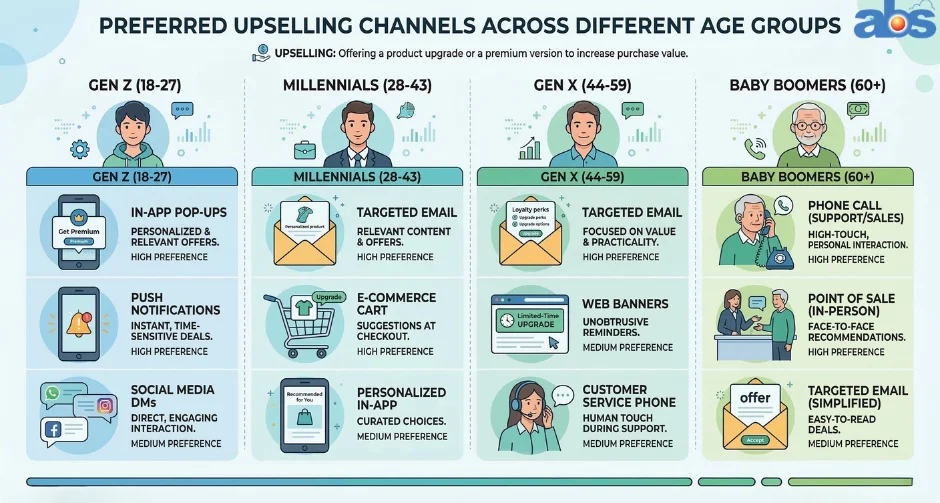
- Infographic showing digital versus high-touch hotel upselling preferences across Gen Z, Millennials, Gen X, and Boomers
2. The “Phygital” Experience: Blending Local Culture with Digital Ease
Experiential travel is the industry standard. Travelers are moving past the generic tourist checklist to seek authentic, immersive connections. According to the 2025 Global Wellness Institute studies, “transformative travel”—trips focused on personal growth and deep cultural connection—remains the fastest-growing sector.
Curating Transformative Travel and Insider Access
This presents a massive opportunity to provide a “Phygital” Experience: the seamless blending of physical, localized cultural events with digital booking accessibility. Hotels are now curating and selling “insider access.”
Instead of a generic city tour, modern properties are offering highly localized experiences:
-
A private, VR-previewed heritage street food tour in Penang.
-
A hands-on batik textile workshop with indigenous artisans in Indonesia.
-
Exclusive access to hidden culinary spots in Singapore or Manila.
By integrating these local partnerships directly into a central platform like the ABS Property Management System (PMS), hotels offer these packages pre-arrival, ensuring guests secure sought-after Southeast Asian experiences before they even pack their bags.
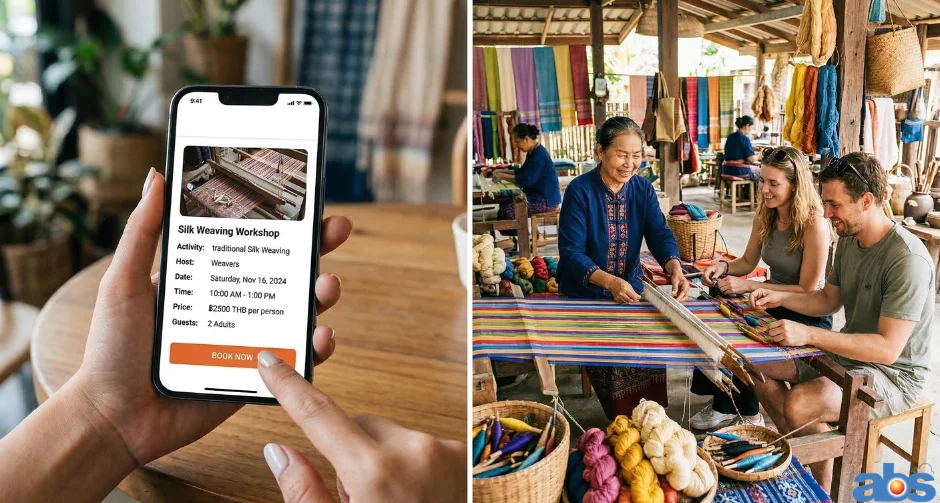
- Mobile hotel booking app displaying phygital local cultural experiences in Southeast Asia
3. The RevPAM² Revolution: Maximizing Hospitality Revenue in 2026
With economic pressures remaining a critical consideration for operators, the focus on maximizing ancillary revenue generation is sharper than ever. The industry has fully embraced the shift from RevPAR (Revenue Per Available Room) to RevPAM² (Revenue Per Available Square Meter).
Monetizing Every Square Meter of Your Property
RevPAM² views the entire hotel as a holistic ecosystem of revenue potential. Upselling is now about dynamically repurposing physical space:
-
Morning: A rooftop that sits empty on a Tuesday is upsold as a “silent coworking space” to remote workers.
-
Evening: A ground-floor meeting room is transformed into a speakeasy-style pop-up bar, with priority access sold to in-house guests via a mobile app.
Using intelligent hotel revenue management software allows properties to identify underutilized spaces and target the right guests with automated, time-sensitive offers that unlock entirely new revenue streams.
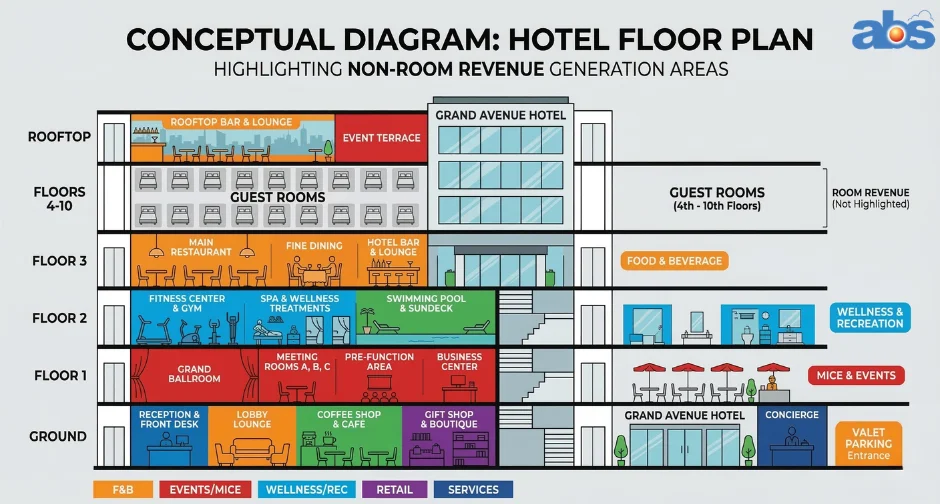
- Hotel floor plan diagram demonstrating RevPAM2 ancillary revenue generation areas
4. Generative AI: The Architect of Hyper-Personalized Hotel Offers
Artificial Intelligence has moved from purely analytical to highly generative. In 2026, AI doesn’t just look at past behavior to suggest a generic room upgrade; it generates entirely new, bespoke offers in real-time. By processing vast amounts of data—from booking origin and social media sentiment to real-time weather—AI acts as a virtual, 24/7 revenue manager.
Real-Time Customization for Unpredictable Scenarios
Imagine a guest who booked a standard room and whose flight was just delayed. The hotel’s AI system, integrated with flight tracking data, automatically generates an offer for a “Relax & Unwind” package. This might include:
-
Guaranteed late check-in.
-
A pre-stocked minibar with their favorite drink based on a previous stay.
-
A 20% credit at the 24-hour spa.
This level of automated upselling makes the offer feel like a thoughtful rescue rather than a sales pitch.
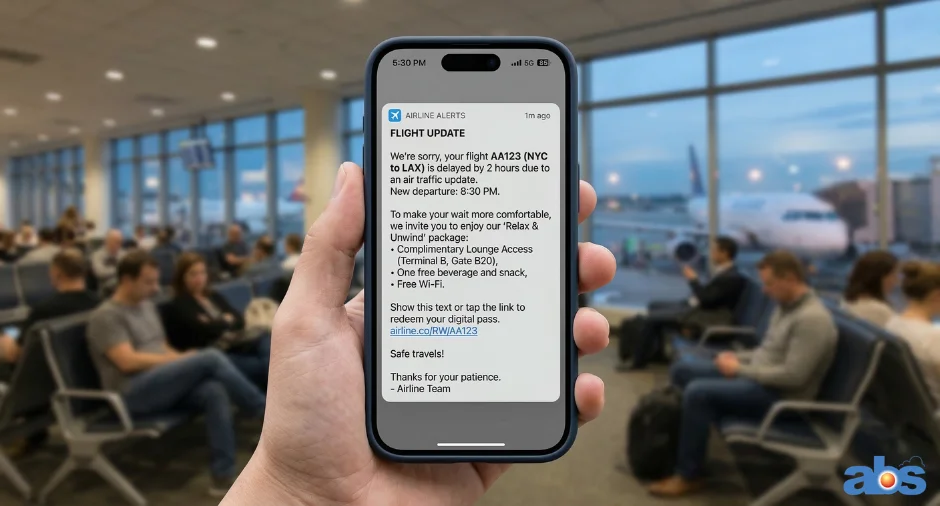
- Generative AI SMS notification offering a personalized hotel room upgrade due to a delayed flight
5. Hyper-Contextual and Invisible Upselling Strategies
Taking personalization a step further, the most effective upselling is virtually “invisible.” It’s not about presenting a rigid list of options, but seamlessly integrating upgrades into the guest’s journey using live triggers.
Seamless Upgrades Integrated into the Guest Journey
Invisible Upselling modifies the stay experience automatically based on context:
-
A guest who habitually orders late-night room service is automatically “upgraded” to a 24-hour dining credit as part of their package at booking.
-
A family checking in on a rainy afternoon finds their outdoor “City Adventure” upsell seamlessly swapped for an indoor “Museum & Movies” package.
Executing this requires a robust PMS capable of handling conditional logic based on real-world triggers, making the upsell an integrated part of standard operational flow.
6. Conscious Commerce: Eco-Friendly Upselling with Verifiable Impact
Sustainability is now a baseline expectation. However, modern travelers are wary of “greenwashing.” They want verifiable proof of how their money contributes to positive change.
Providing Transparency for the Sustainable Traveler
This demand has given rise to Conscious Commerce: offering upsells tied directly to a transparent impact narrative.
-
Carbon-Neutral Suites: A portion of the room upgrade revenue funds a verified local reforestation project.
-
Farm-to-Table Feasts: Dining experiences come with a digital passport showing the sourcing journey of local ingredients.
Recent data from Booking.com shows that 75% of travelers want to travel more sustainably. By using a PMS to tag and track these eco-offers, hotels provide the transparency guests demand, building brand loyalty that translates directly to revenue.
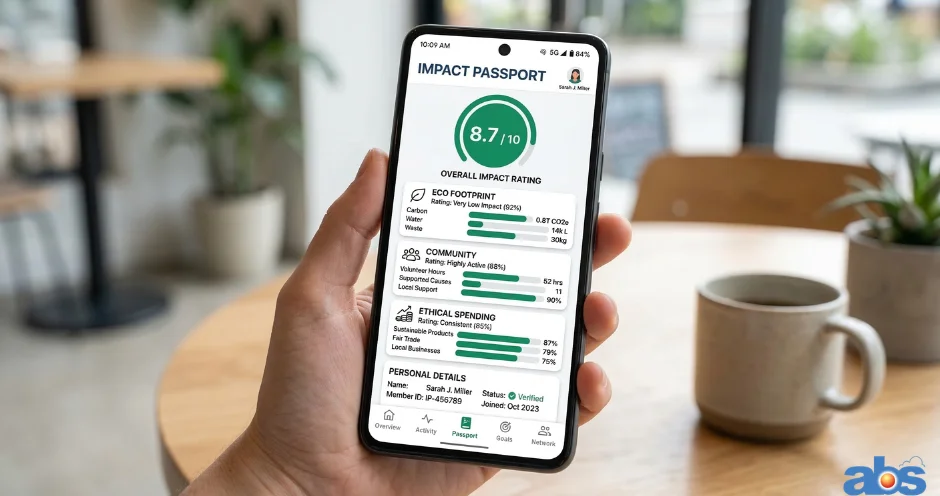
- Digital impact passport on a smartphone showing eco-friendly conscious commerce hotel upgrades
Final Thoughts on 2026 Hotel Upselling
Upselling is the strategic language of guest-centric hospitality. It is the art of using data not just to sell more, but to serve better. By embracing generative AI, hyper-contextual triggers, and verifiable sustainability, hoteliers can craft experiences that resonate on a deeply personal level. The future of upselling isn’t about offering more—it’s about offering exactly what matters, exactly when it matters.
Ready to transform your revenue strategy? Discover how your property can use the data within the ABS Property Management System to orchestrate more meaningful guest experiences and automate your upselling workflows.
👉 [Click Here to Request Demo or Contact Our Software Consultant]
Frequently Asked Questions (FAQ)
1.What are the top hotel upselling trends in 2026?
The most critical hotel upselling trends in 2026 include adapting to blended, multi-generational travelers, offering “phygital” (physical + digital) local experiences, maximizing space via RevPAM², leveraging generative AI for real-time offers, using hyper-contextual “invisible” upselling, and adopting conscious commerce for eco-friendly upgrades.
2.How does Generative AI improve hotel upselling?
Generative AI improves hotel upselling by analyzing real-time data—such as flight delays, weather, and past guest preferences—to instantly create highly personalized, bespoke upgrade packages rather than relying on static, generic offers.
3.What is RevPAM² and why is it important for hotels?
RevPAM² stands for Revenue Per Available Square Meter. It is important because it shifts a hotel’s focus from merely selling sleeping rooms to monetizing all physical spaces, such as turning empty lobbies into pop-up bars or rooftops into daytime coworking spaces to maximize total revenue.
4.How can a Property Management System (PMS) help with upselling?
A modern PMS, like the ABS Property Management System, centralizes guest data, automates communication, and executes conditional logic. This allows hotels to trigger personalized offers at the exact right moment in the guest journey, track inventory for local experiences, and manage dynamic pricing seamlessly.